

English Pottery Dog Ornament
These figures bring unmistakable character to a mantelpiece, offering the timeless appeal of an english pottery dog ornament.
English Pottery Dog Ornament
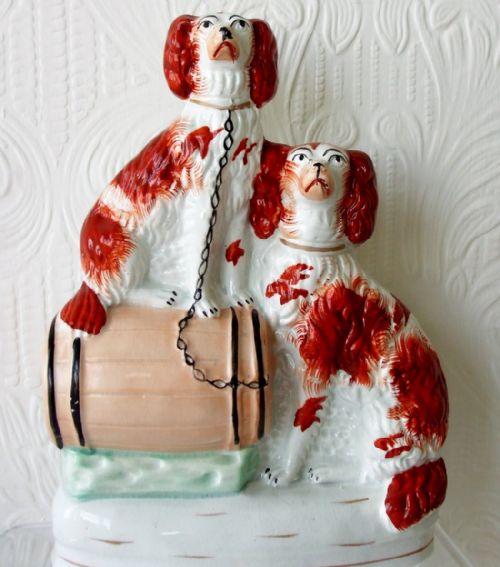
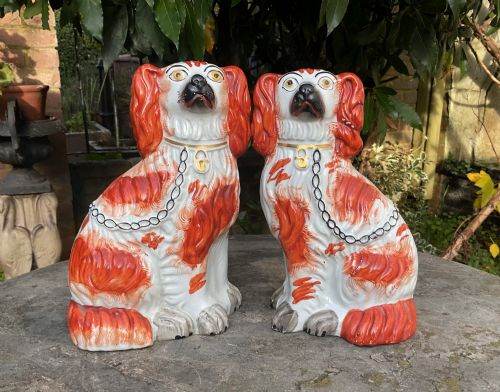
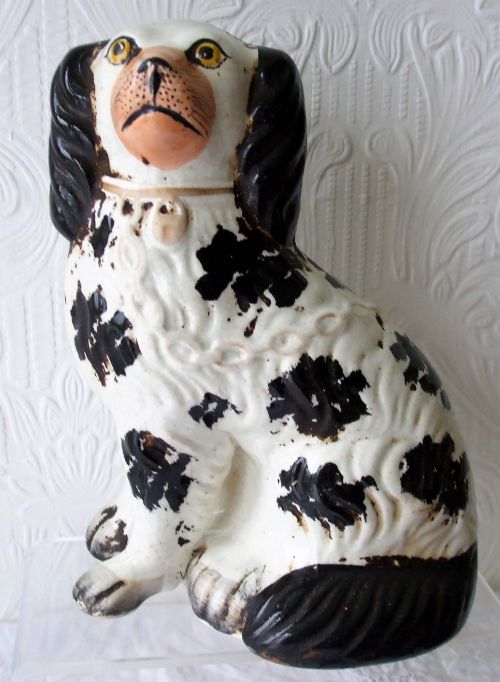
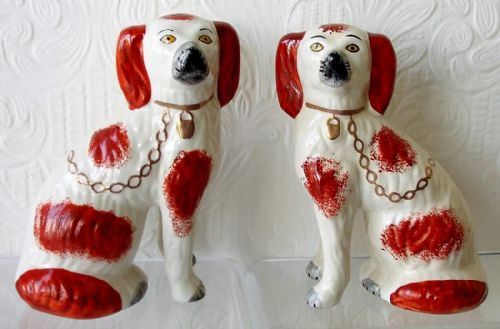
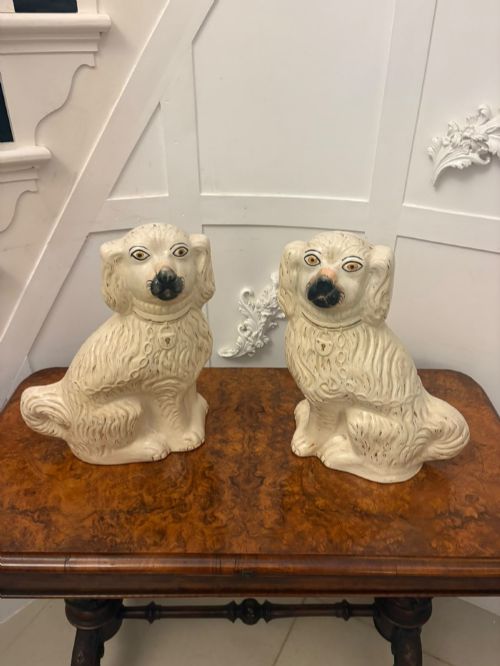
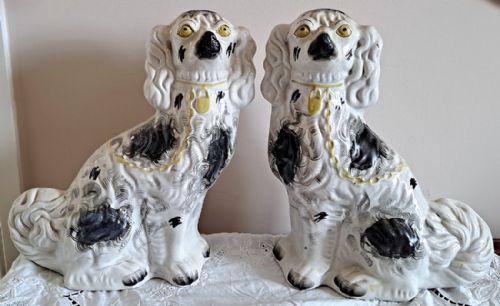
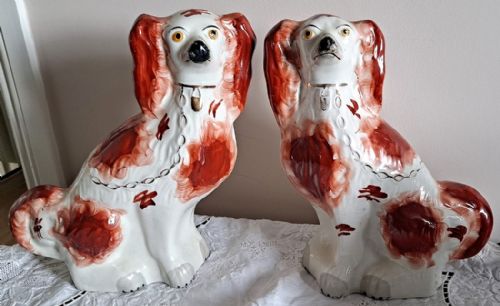
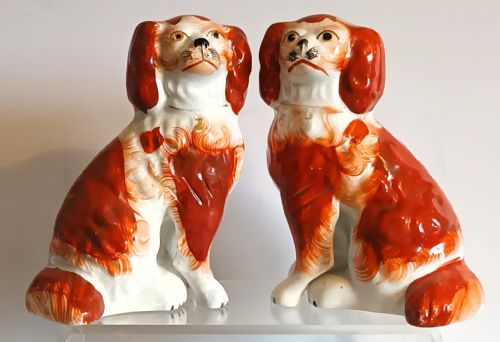
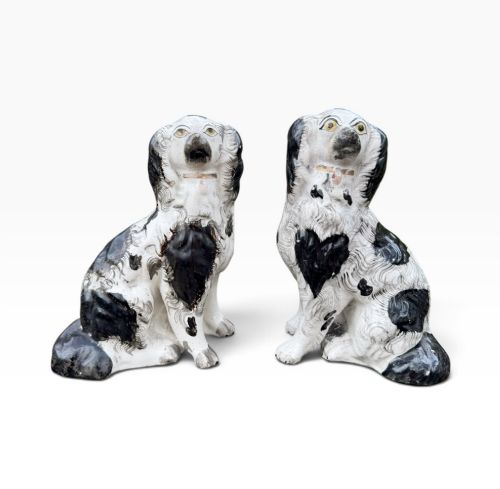
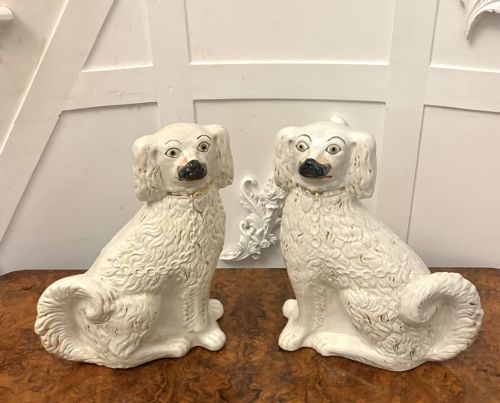
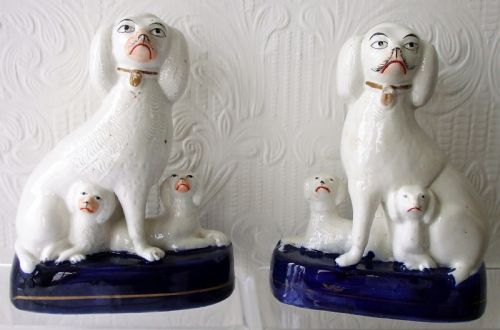
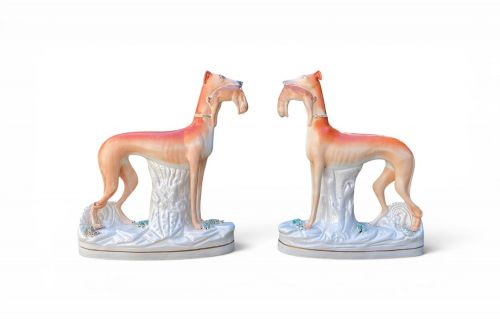
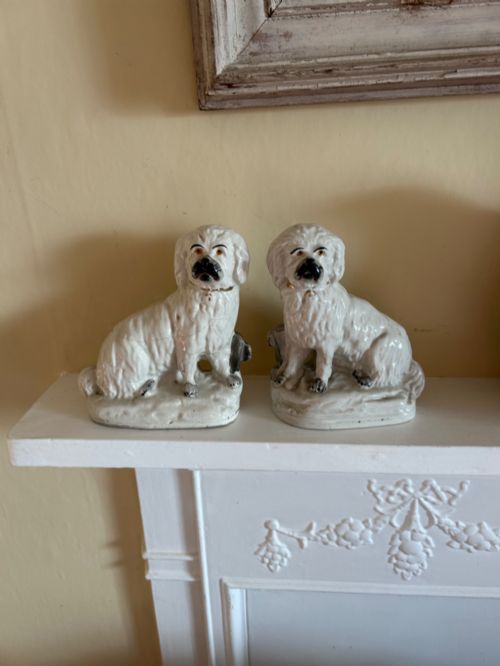
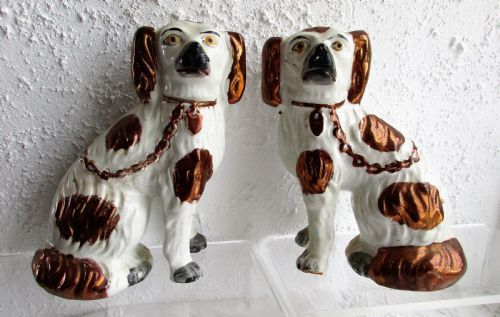
When searching for an english pottery dog ornament, buyers encounter charming figurines produced across the nineteenth century, most frequently taking the form of paired spaniels. These earthenware items span Victorian and Georgian periods, originating predominantly from the Staffordshire potteries.
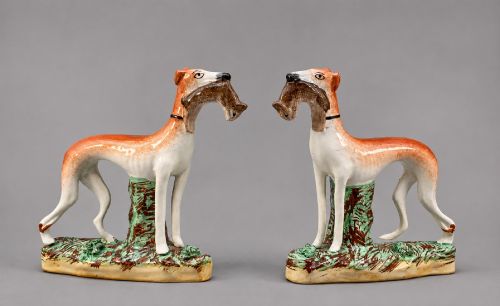
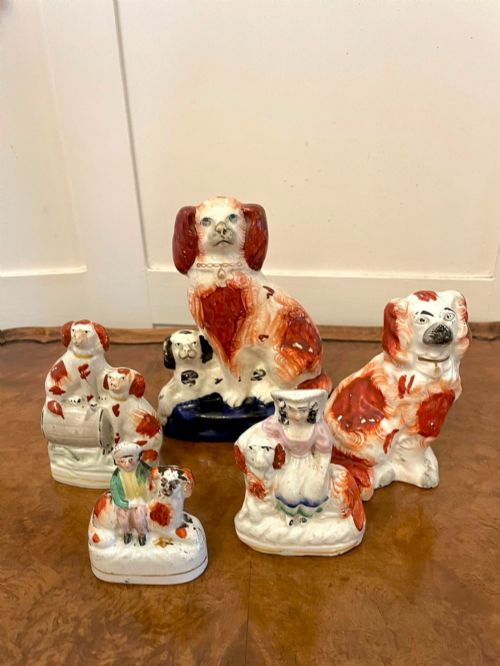
The selection ranges from classic comforter spaniels to greyhounds, poodles with pups, pugs, dalmatians, and hunting dogs with game. Many examples appear in pairs designed to sit symmetrically on either side of a fireplace or shelf, though single figures and miniature models also emerge.
Makers produced these decorative objects to satisfy domestic demand for mantelpiece ornaments, capturing various canine breeds with distinct postures. Collectors find both plain white glazed versions and richly decorated multi-coloured subjects.
How They Were Made
Potters shaped these figures from earthenware and stoneware, often utilising press moulds to form the body halves before joining them together. Artisans then applied lead glaze to create a smooth, protective surface over the ceramic body.
Colour came from enamel paints and gold leaf highlights applied by hand, sometimes augmented with gilt details or glass eyes. Firing in kilns set the glazes and fixed the pigments onto the ceramic substrate.
English Pottery Dog Ornament Retail Price Guide 2026
Typical asking prices for english pottery dog ornament among the pieces listed under this phrase on Sellingantiques today, from the lower quarter to the upper quarter. They describe what is for sale here now, not the wider market.
Periods represented span from Georgian beginnings through the Victorian era.
What Varies In Quality
Proportion and scale also separate standard figures from desirable matched pairs with accessories like barrels, baskets, or game. The preservation of original enamel colours and gold leaf intact adds substantially to an item's visual appeal.
The English Pottery Dog Ornament Glossary
- Comforter spaniel
- A Staffordshire pottery dog modelled on the King Charles spaniel, typically displayed on mantelpieces in mirror-image pairs.
- Lead glaze
- A glossy coating containing lead oxide applied to earthenware to create a smooth and waterproof surface.
- Earthenware
- A porous ceramic fired at a lower temperature than stoneware, serving as the primary body for these figures.
- Enamel
- Opaque glass-like paint applied over the fired glaze to provide colour to the canine coats and collars.
English Pottery Dog Ornament: Frequently Asked Questions
What breeds do these figures represent?
The listings show spaniels, greyhounds, poodles, pugs, dalmatians, and setters.
Spaniels dominate the selection, especially comforter pairs.
Are they sold as pairs?
Many figures appear in matched pairs intended for symmetrical display.
Single pieces and small collections also occur.
How old are these pottery dogs?
Most examples date from the nineteenth century, spanning Georgian and Victorian eras.
Production dates cluster around the mid to late eighteen-hundreds.
Where were these ornaments made?
The pieces originate from Staffordshire potteries in England.
Country pottery workshops also contributed to the wider tradition.