



English Pottery Dog Figures
English pottery dog figures bring the character of nineteenth-century hearths directly into modern rooms.
English Pottery Dog Figures
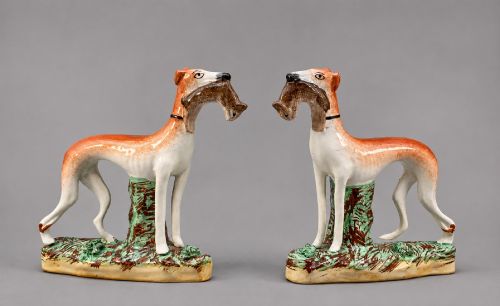
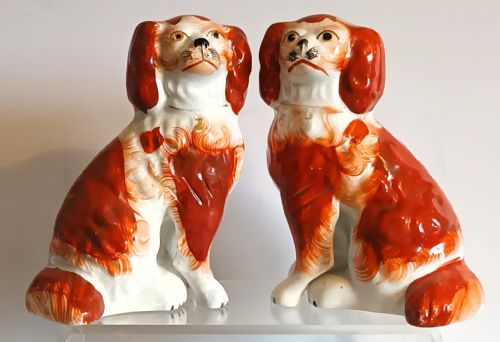
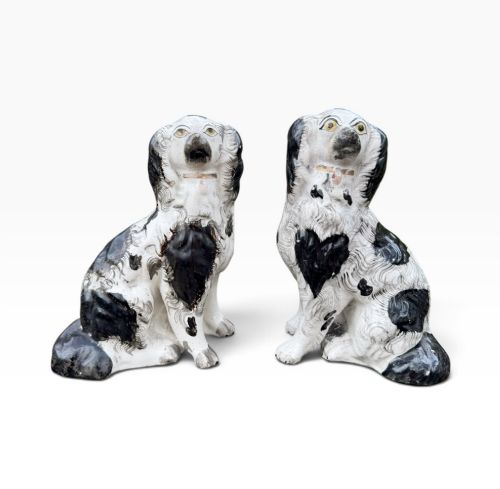
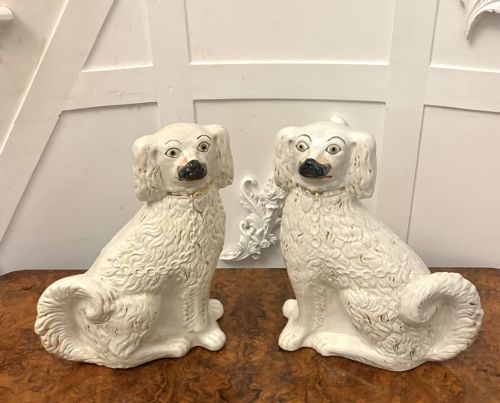
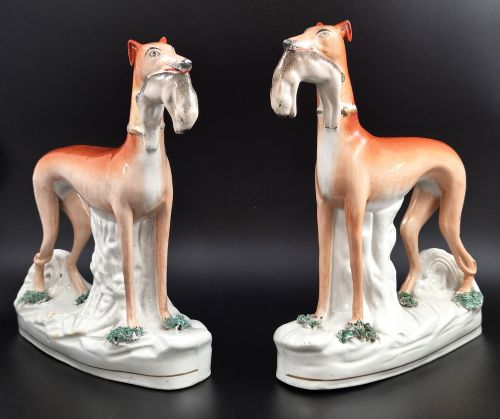
These English pottery dog figures comprise earthenware spaniels, poodles, greyhounds and hunting dogs modelled across the nineteenth century. Most pieces on this page belong to the Victorian era, spanning styles from Georgian origins through to late Victorian productions.
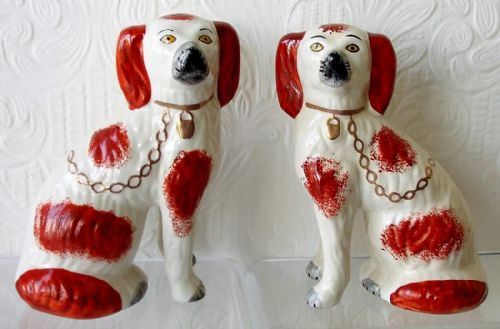
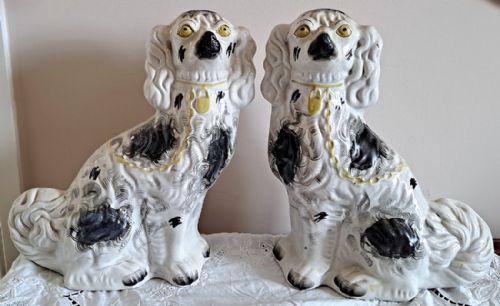
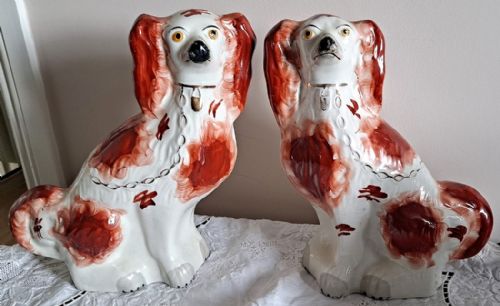
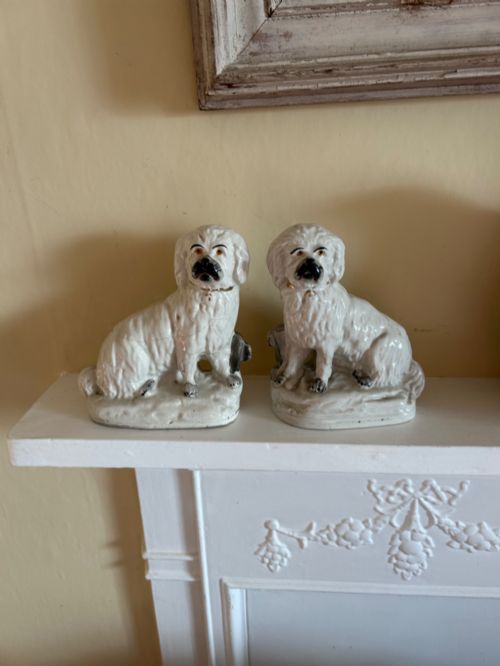
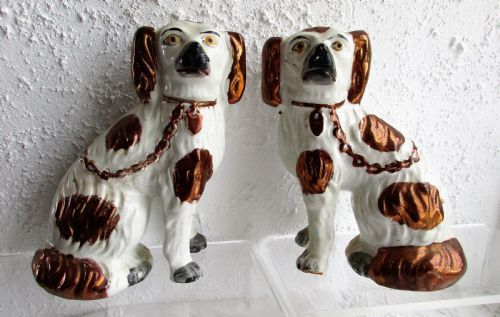
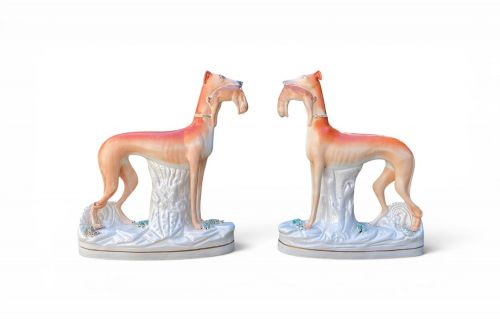
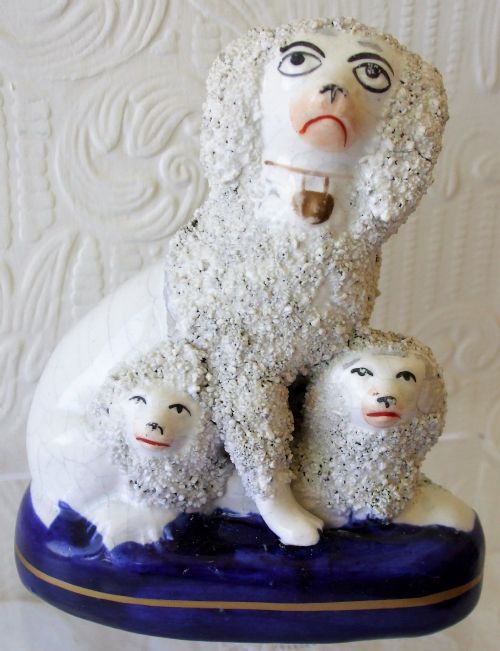
The most common forms are pairs of mantelpiece comforter spaniels, though poodles with pups, greyhound quill holders and hunting groups also appear. They range from small tabletop ornaments to large fireside pairs intended to anchor a room.
Makers produced these ceramic figures largely in Staffordshire, employing local clays to shape domestic pets and sporting hounds. The inventory reflects a heavy concentration of Victorian Staffordshire pottery alongside earlier Georgian examples.
Materials and methods
Potters shaped these ceramic figures from earthenware, using moulds to cast the bodies of spaniels, poodles and greyhounds. Artisans then applied lead glazes to seal the porous clay before firing the pieces in kilns.
English Pottery Dog Figures Retail Price Guide 2026
Typical asking prices for english pottery dog figures among the pieces listed under this phrase on Sellingantiques today, from the lower quarter to the upper quarter. They describe what is for sale here now, not the wider market.
Some nineteenth-century poodles emerge from the kiln sporting finely sculpted clay curls that resemble oversized popcorn.
Judging the range
The presence of secondary elements, such as underlying puppies, hares or functional quill holder additions, separates standard pairs from more ambitious sculptural groups. Weight, scale and the preservation of the original gilt and lead glaze further distinguish the standard of the modelling.
James Dudson
The English Pottery Dog Figures Glossary
- Comforter spaniel
- A ceramic representation of the King Charles spaniel designed to sit on Victorian mantelpieces. These figures frequently appear in matched pairs facing each other.
- Staffordshire pottery
- Earthenware produced in the potteries of North Staffordshire. This region dominated the manufacture of nineteenth-century animal figures.
- Lead glaze
- A glossy coating containing lead oxide applied to earthenware before firing. It gives the pottery surface its smooth, reflective finish.
- Quill holder
- A desk accessory incorporating a ceramic figure with an integrated channel or receptacle for writing feathers. Greyhounds and hunting dogs often served this dual purpose.
- Enamel paint
- Vitreous coloured decoration applied over the fired glaze and fixed with a low-temperature second firing. It provides the distinct spots, patches and collars seen on the dogs.
English Pottery Dog Figures: Frequently Asked Questions
What are English pottery dog figures?
These pieces are nineteenth-century ceramic sculptures modelled primarily as spaniels, poodles and greyhounds. Potters in regions like Staffordshire created them as ornamental furnishings for domestic interiors.
They capture domestic pets and sporting hounds in various sizes, ranging from small shelf ornaments to large pairs meant for display on mantelpieces.
How were these dog figures displayed?
Victorian households traditionally placed matched pairs of spaniels on either side of the fireplace mantelpiece. People often called them comforter spaniels because they provided a comforting presence in the parlour.
Other varieties, such as greyhound quill holders, served functional roles on writing desks while maintaining a decorative sculptural form.
How do I tell Georgian pieces from Victorian ones?
Early pieces originating in the Georgian era tend to display simpler modelling and earthier lead glazes. They reflect the transitional styles before Victorian production standardised the popular comforter spaniel format.
Victorian pieces often feature brighter enamel paint, gilt highlights, and sometimes added details like glass eyes or accompanying puppies.
What materials make up these figures?
The core structure consists of moulded earthenware or ceramic clay. Artisans coated this body in a protective lead glaze to give it a smooth, glossy surface texture.
Surface details including coats, eyes and collars rely on hand-painted enamel and occasional touches of gold leaf or applied glass.