






English Pine Console Table
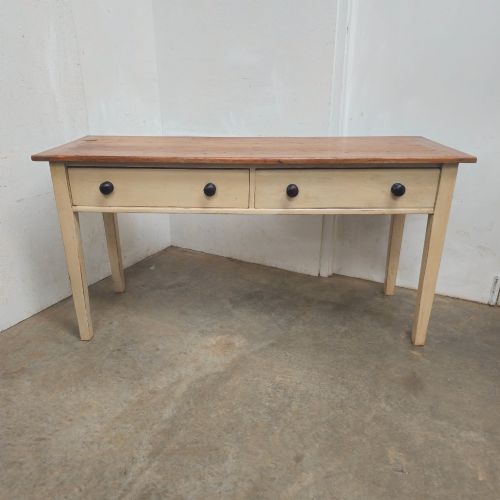
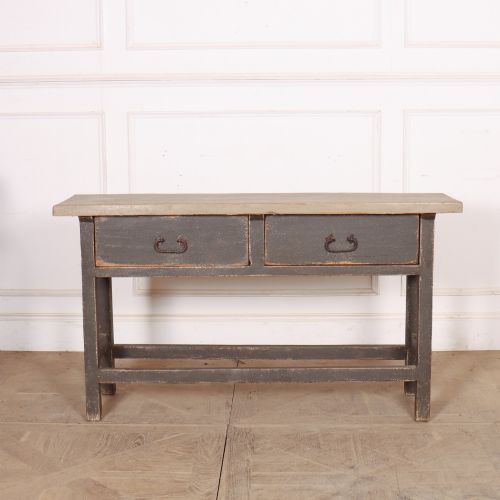
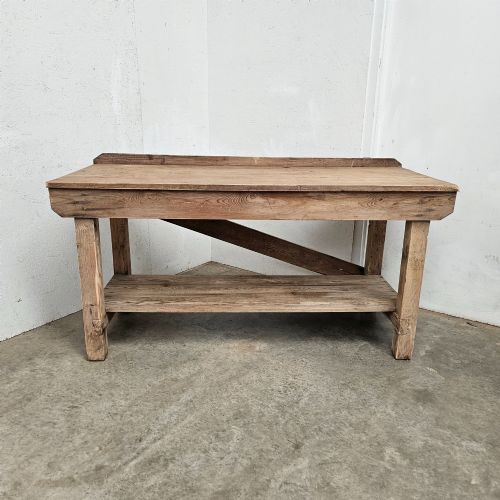
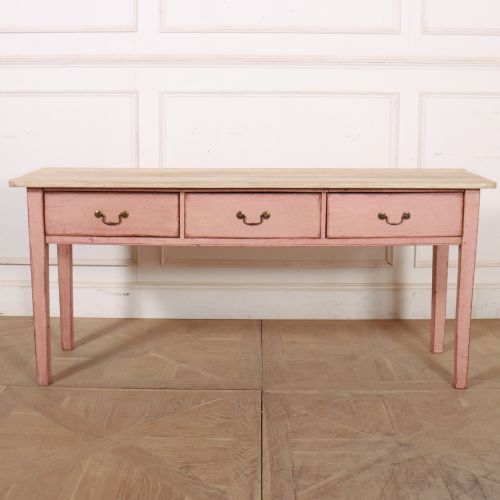
These pieces are practical English pine console tables, built for utility and hall spaces from the eighteenth century onwards.
English Pine Console Table
An English pine console table sits flush against a wall in a hallway or living space, offering a surface for display without demanding deep floor space. Buyers seeking this form will find straightforward utilitarian designs, scrubbed surfaces, and painted finishes originating from domestic and institutional settings.
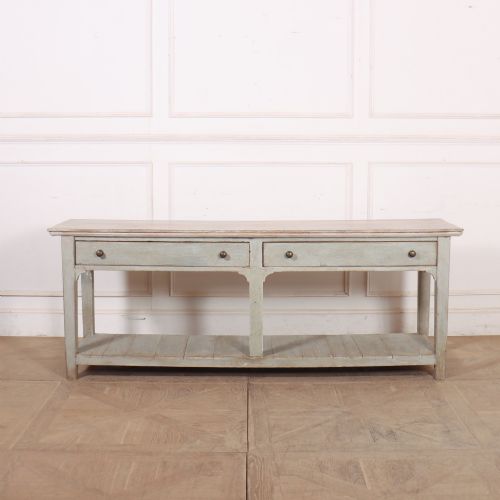
The selection ranges from eighteenth-century Georgian side pieces and dresser bases to nineteenth-century Victorian ecclesiastical and industrial variants. Many examples show their working origins through potboards, drawers, or simple trestle structures.
The aesthetic leans towards English country and rustic farmhouse traditions, where sturdy construction matters more than decorative carvings. Simple proportions make these tables adaptable for modern interiors that value functional historic furniture.
Materials and construction methods
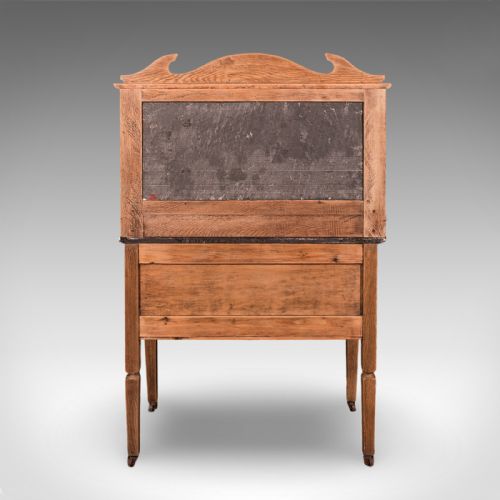
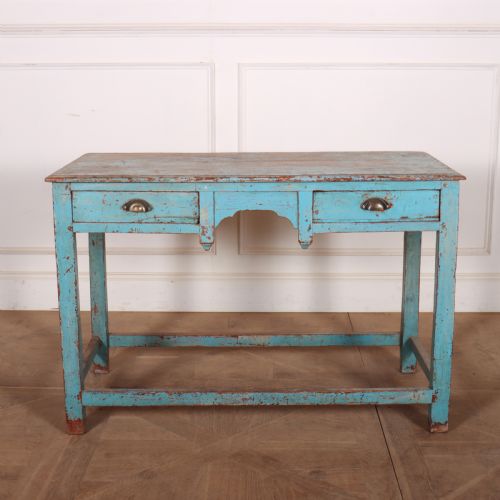
Makers built these tables primarily using solid pine, sometimes combining it with iron, slate, or marble inserts depending on whether the piece served a domestic, industrial, or ecclesiastical function. Painted timber surfaces appear frequently, often showing layers of historic colour.
Construction relies on traditional joinery techniques suited to utility furniture, producing robust frames designed to handle heavy daily use. Simple pine boards form the tops and shelves, supported by straightforward turned legs, trestles, or straight framing.
Listings feature pieces spanning from the eighteenth century through to the Edwardian period, utilising pine, paint, iron, and marble.
Assessing quality in pine tables
Quality rests in the integrity of the timber, the honesty of the surface wear, and the proportion of the frame. Tables retaining original paint layers or deep patination command greater interest than those stripped down bare without regard for their history.
Construction details distinguish standard domestic pieces from finer examples, such as the thickness of the top boards, the dovetailing of drawers, and the balance of the legs. The presence of secondary woods or specialised tops like marble or slate elevates the form.
The English Pine Console Table Glossary
- Console table
- A table designed to be fixed against a wall, often supported by brackets or legs at the front. These pieces provide surface space in narrow areas like hallways.
- Potboard dresser base
- A lower sideboard featuring an open lower shelf used historically for storing pots and pans. This form appears across eighteenth and nineteenth-century examples.
- Pitch pine
- A durable, resinous variety of pine timber used in heavier nineteenth-century construction. It often displays a distinct reddish hue and prominent grain patterns.
- Ecclesiastical
- A style relating to the church, often seen in nineteenth-century Gothic revival pieces built for chapels or vestries. These items utilise sturdy framing and architectural details.
English Pine Console Table: Frequently Asked Questions
Where should I place a pine console table?
These tables suit narrow circulation areas like hallways, entrance passages, or landings where depth is limited. Their shallow profiles keep walkways clear while offering a surface for lamps or correspondence.
They also function effectively behind sofas or along dining room walls in place of larger sideboards.
How do I care for historic pine surfaces?
Maintain painted or scrubbed pine by dusting with a dry cloth and avoiding excessive moisture. Direct heat sources can dry out historic timber and cause warping.
Applying a traditional beeswax helps nourish unpainted pine surfaces without building up heavy synthetic gloss.
What is the difference between a side table and a console?
While both provide flat surfaces, console tables are traditionally designed to stand against a wall and may rely on the wall for stability or feature flat backs. Side tables are typically freestanding items finished on all four sides.
In practice, historic listings often use the terms interchangeably based on proportion and height.
Are these tables suitable for daily use?
Pine utility furniture was originally built for demanding domestic, working, or institutional environments. Their solid construction makes them robust enough for contemporary household routines.
Care should be taken with unsealed tops to prevent water marks from everyday items.