


English Pastoral River Artwork
English pastoral river artwork captures quiet waterways and rural idylls across the nineteenth and early twentieth centuries.
English Pastoral River Artwork
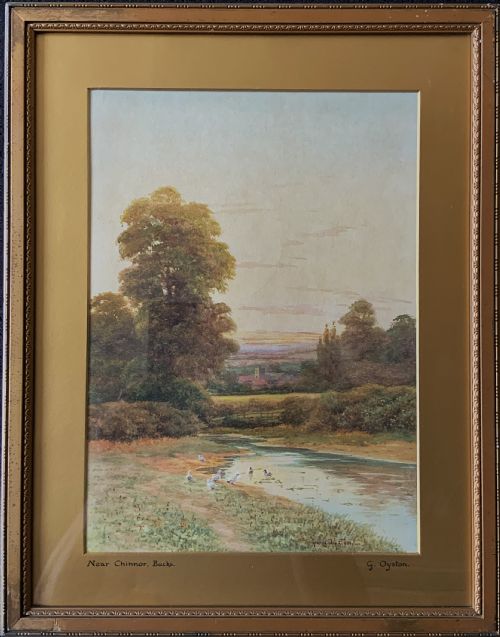
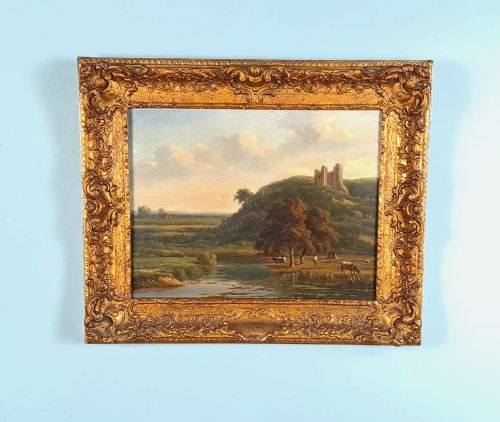
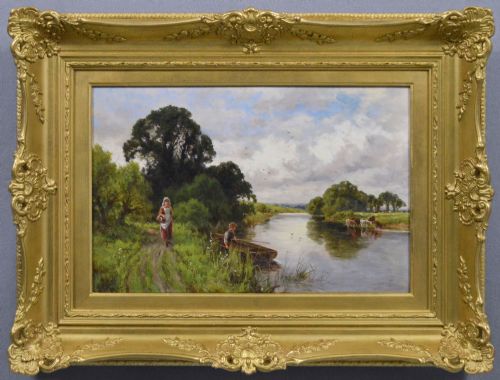
English pastoral river artwork depicts traditional country waterways, riverbanks, and locks accompanied by figures, cattle, and cottages. These pieces reflect a sustained nineteenth and early twentieth-century artistic interest in rural British landscapes.
Watercolours and oil paintings predominate within this category. Mediums range from detailed oil on canvas and oil on board to delicate watercolours framed under glass in gilt wood.
Materials and technique
Artists painted primarily with oil or watercolour pigments upon prepared canvas, wooden board, or heavy paper. Canvases are frequently housed in ornate gilt wood frames.
Execution combines studio composition with direct observation, recording specific locations such as the Thames, the Severn, and regional countryside settings.
Cows and sheep appear so frequently by these painted rivers that one might wonder if nineteenth-century artists ever visited a dry field.
Quality and execution
The distinction between standard works and exceptional pieces lies in the vitality of the composition and the artist's ability to evoke a convincing rural mood.
George Oyston·Henry H Parker·Thomas Baker of Leamington·Henry John Kinnaird·Benjamin Williams Leader
The English Pastoral River Artwork Glossary
- Watercolour
- A painting method in which the paints are made of pigments suspended in a water-based solution. These works are traditionally executed on paper.
- Oil on Canvas
- A technique utilising pigments bound in a drying oil medium applied to stretched fabric. This combination allows for rich colour depth and textural variation.
- Gilt Wood
- Timber framing finished with a thin layer of gold leaf. Such frames often complement the tonal warmth of nineteenth-century pastoral paintings.
- Victorian Naturalism
- An artistic approach focusing on the detailed observation of the natural world. This style informs many depictions of British rivers and agricultural life.
English Pastoral River Artwork: Frequently Asked Questions
What periods do these artworks represent?
The pieces span the nineteenth century through to the early decades of the twentieth century. This encompasses Victorian, Edwardian, and Regency aesthetic movements.
Most items date specifically between the eighteen-fifties and nineteen-twenty, reflecting the height of British pastoral fine art production.
Where are the locations depicted?
Artists recorded specific named rivers and rural counties across England. Prominent waterways include the Thames, the Severn, and the Avon.
Settings often feature recognisable regional landmarks, Berkshire villages, Yorkshire dales, and Berkshire riverbanks.
How should these paintings be displayed?
These works require stable indoor environments away from direct sunlight and excessive humidity. Protecting watercolours behind glass prevents fading of the pigments.
Traditional gilt wood frames should be dusted gently with a dry cloth without applying liquid cleaning agents.
What subjects appear alongside the rivers?
Compositions frequently incorporate figures harvesting, fishing, or boating by the water. Cattle, sheep, and drovers crossing bridges are also common pastoral motifs.
Cottages, locks, and rural pathways complete the traditional English countryside narrative.