

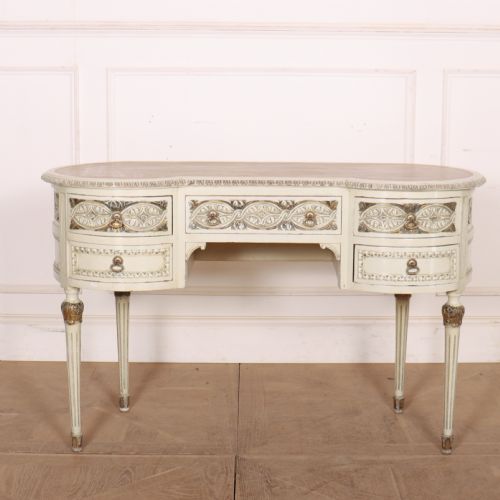



English Painted Desk
An English painted desk brings surface pattern and practical writing space together, carrying the colour and brushwork of past centuries into a modern room.
English Painted Desk
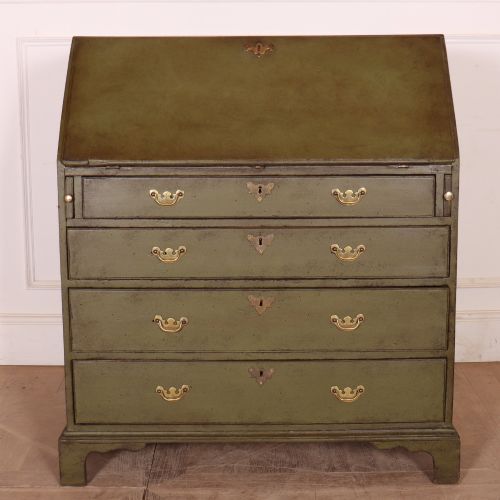
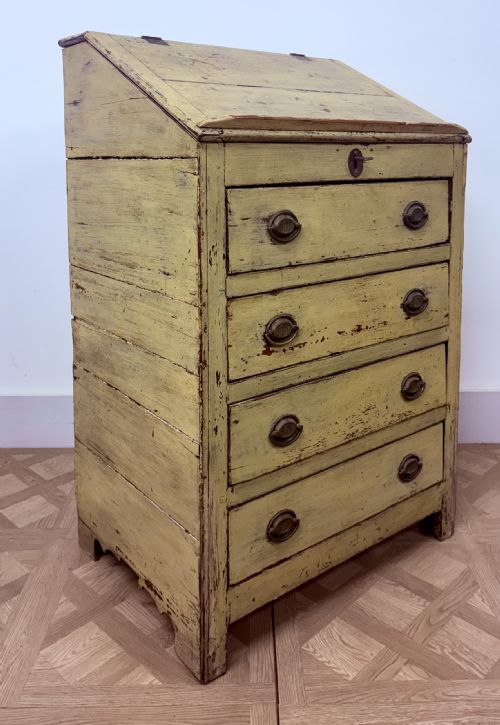
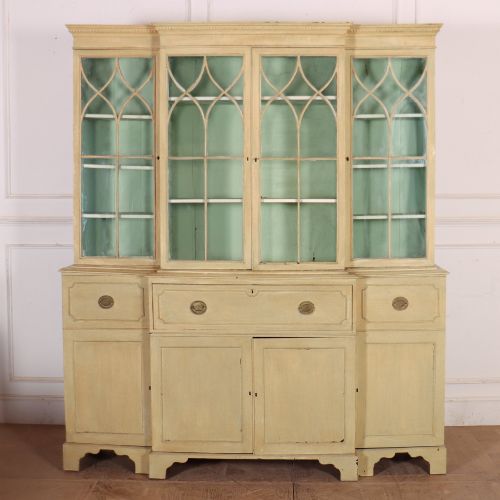
When you search for an english painted desk, you encounter pieces that range from substantial writing cabinets and kneehole tables down to compact writing boxes and slope-front bureaux. The selection spans the eighteenth, nineteenth, and early twentieth centuries, drawing on Georgian, Regency, Victorian, and Sheraton Revival styles.
The most frequent examples on this page are pine writing desks and side tables finished with original paint, alongside occasional walnut and cedar pieces. Provincial workshops and formal cabinet-makers alike produced these items, employing finishes from simple ochre coats to elaborate Chinoiserie and floral brushwork.
Materials and construction
Makers built the foundational carcass of these desks using solid native timbers such as pine, oak, and cedar, occasionally turning to papier-mâché for portable lap desks and stationery boxes. Surfaces were prepared with gesso or priming layers before receiving oil-based paints, simulated wood graining, or lacquer.
Decoration often involved hand-painted motifs, gold leaf highlights, or japanning, sealed to protect the pigments. Brass fittings, including drop handles, escutcheons, and hinges, were standard functional additions across most periods.
Featured styles span Georgian elegance, Regency bamboo turns, Victorian Gothic Revival, and twentieth-century Art Deco forms.
Assessing craftsmanship
The distinction between ordinary and exceptional pieces lies in the survival of the original decorative surface and the precision of the underlying joinery. Desks retaining their first coat of paint without extensive later overpainting command greater interest from collectors.
Proportion, timber selection, and the finesse of the brushwork separate utilitarian workshop pieces from high-style cabinet-work. Subtle details such as hand-cut dovetails in the drawer construction indicate a higher standard of manufacture.
Royal Worcester·Flight And Barr·Duesbury And Kean·Franze Bergman
The English Painted Desk Glossary
- Bureaux
- A sloping desk with a hinged writing flap that covers small drawers and pigeonholes. These items frequently stand on bracket feet.
- Kneehole desk
- A flat-topped writing table featuring a central recess flanked by pedestals of drawers. This form allows the user to sit comfortably underneath.
- Lap desk
- A portable box with a slanted writing surface designed for use on the knee or a table. They often incorporate compartments for inkwells and pens.
- Japanning
- A European imitation of East Asian lacquerwork using varnishes and metallic dust. It appeared frequently on decorative furniture of the eighteenth and nineteenth centuries.
English Painted Desk: Frequently Asked Questions
How do I date an English painted desk?
Dating relies on observing construction methods, timber types, and the composition of the paint layers. Cabinet-makers of different eras utilised distinct jointing techniques and hardware.
Style indicators such as Sheraton Revival proportions or Regency bamboo turnings also help assign a piece to a specific century or decade.
Were these desks originally painted?
Many pieces retain their original decorative schemes, ranging from simple pine coats to intricate Chinoiserie or faux wood graining. Surviving primary paint surfaces show specific craquelure and wear patterns consistent with age.
Later overpainting is common, making surface examination essential for understanding the history of the object.
How were lap desks used?
Lap desks served as portable writing surfaces for travellers and writers before fitted study rooms became universal. They folded shut to secure paper, ink, and pens inside.
Users placed them on tables or across their knees to write correspondence away from a fixed desk.
How do I care for painted wood surfaces?
Maintenance requires keeping painted furniture away from direct sunlight and fluctuating humidity to prevent pigment fading and wood movement. Dusting with a dry, soft cloth preserves the delicate brushwork.
Avoid chemical cleaning products that can strip historic varnishes and binders from the paint layer.