

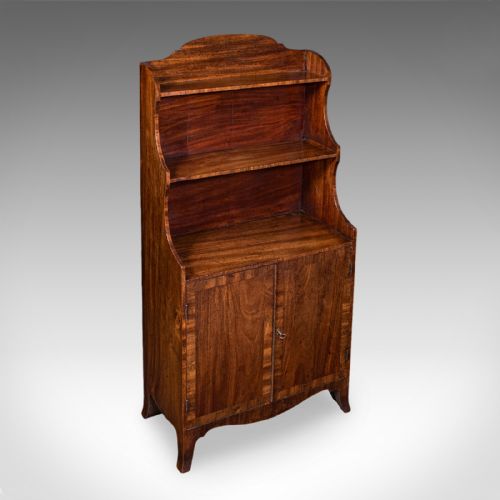


English Open Shelving
When you search for english open shelving, you find bookcases, wall shelves, whatnots, and bakers racks that bring accessible display space to a room.
English Open Shelving
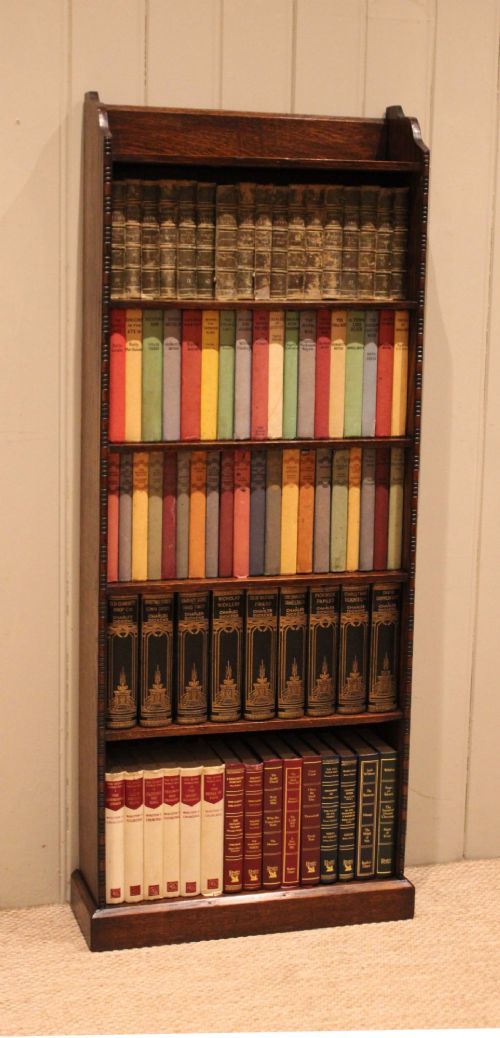
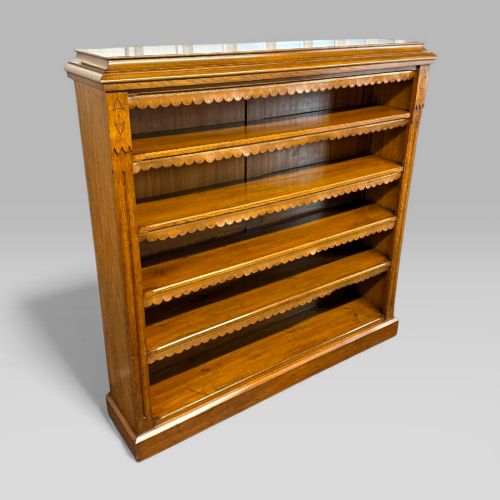
Searching for english open shelving reveals a variety of forms designed to hold books and display objects, predominantly taking the shape of bookcases, wall shelves, and whatnots. These pieces span centuries, including examples from the Georgian, Regency, and Victorian periods, alongside later twentieth century interpretations.
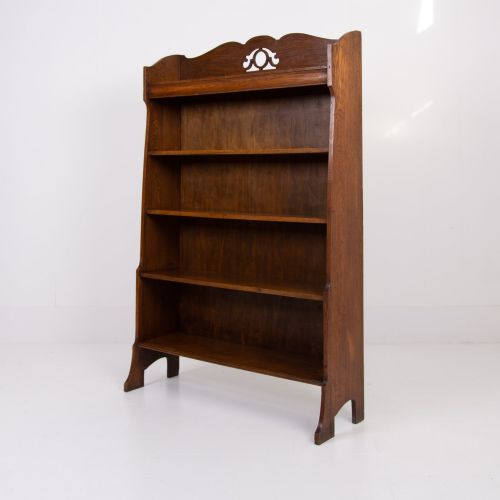
Makers utilised timber and metal to construct these practical units, drawing on styles such as the Aesthetic Movement, Gothic Revival, and Arts and Crafts. Their primary function remains the exhibition and storage of household items in an accessible manner.
Materials and construction methods
The construction of these pieces relies heavily on traditional timber selection, with cabinet makers utilising mahogany, oak, walnut, pine, birdseye maple, and rosewood. These woods are often polished, painted, or finished with a grained surface to highlight the natural grain.
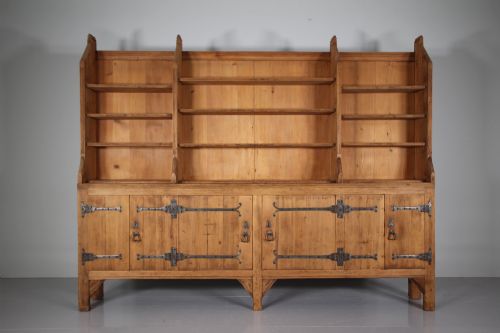
Metal components appear in specific forms, incorporating brass details, ormulu mounts, and wrought iron framework as seen in bakery racks and mounted cabinets. Joinery techniques and carved decoration define the structural integrity and aesthetic of each piece across the centuries.
English Open Shelving Retail Price Guide 2026
Typical asking prices for english open shelving among the pieces listed under this phrase on Sellingantiques today, from the lower quarter to the upper quarter. They describe what is for sale here now, not the wider market.
Listings feature timbers such as mahogany, oak, walnut, pine, and rosewood across Georgian, Regency, and Victorian periods.
Distinctions in quality
The distinction between standard domestic items and superior examples lies in the choice of timber and the sophistication of the joinery. Finer pieces employ figured veneers, careful carving, and high-status secondary woods.
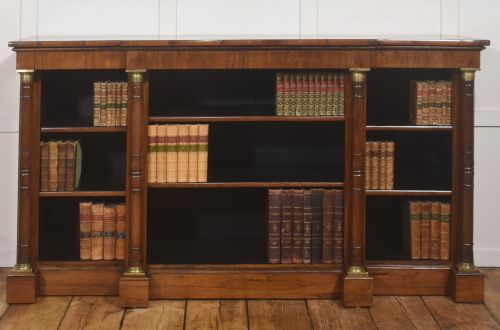
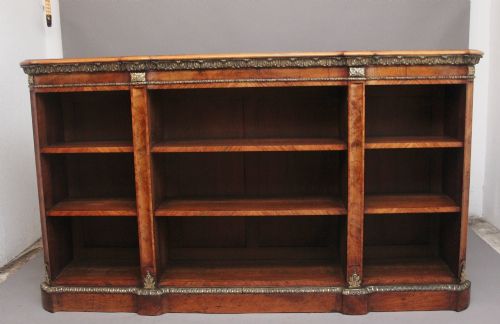
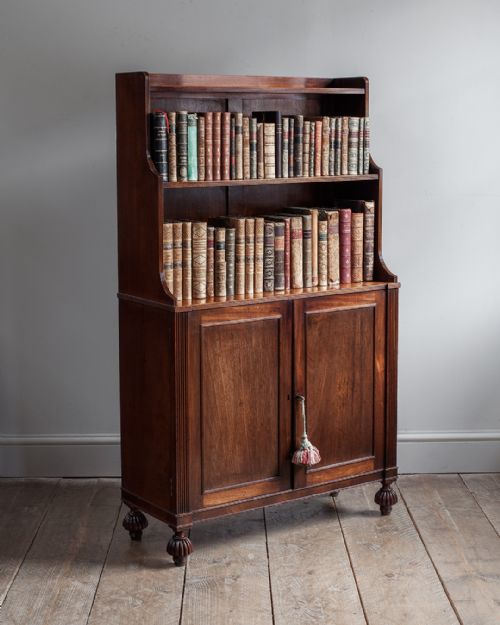
Proportion and architectural detailing also separate the ordinary from the exceptional, particularly in larger breakfront libraries and structured waterfall bookcases. The retention of original finishes, such as grained paint or polished rosewood, elevates the standing of a piece.
JOHNSTONE AND JEANES·Sir Charles Barry
The English Open Shelving Glossary
- Waterfall bookcase
- A set of graduated open shelves where each tier is narrower than the one below, creating a stepped profile.
- Whatnot
- An open movable piece of furniture with shelves placed one above the other, used for displaying ornaments and small objects.
- Breakfront
- A cabinet or bookcase whose central section projects forward from the flanking sections.
- Ormulu
- Gilded bronze used for decorative mounts and ornamentation on fine furniture.
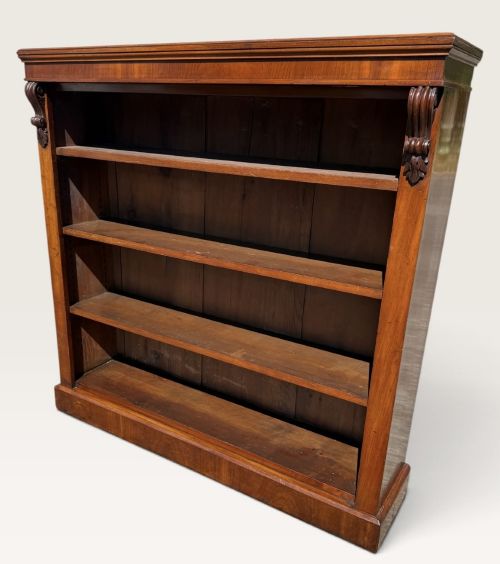
- Dwarf bookcase
- A low bookcase, typically standing below eye level, designed for easy access to volumes.
English Open Shelving: Frequently Asked Questions
What is english open shelving used for?
These units serve as practical furniture for organising books, displaying ornaments, and holding household collections within domestic spaces.
Their open structure allows for easy access and visibility of the items placed upon them, functioning as both storage and display.
How do I identify a georgian piece?
Georgian pieces often feature dense mahogany timbers, restrained classical proportions, and careful craftsmanship suited to formal libraries.
Details such as graduated shelves and subtle carving help distinguish items from this era compared to later Victorian revivals.
Where should I place a whatnot?
Whatnots fit well in corners, against empty walls, or beside seating areas where small display surfaces are useful.
Their multi-tiered open shelves make them practical for holding collectibles without dominating the floor space of a room.
What distinguishes regency shelving?
Regency shelving often incorporates exotic timbers like rosewood alongside brass inlay or ormulu mounts, reflecting neoclassical tastes.
Pieces from this period frequently display architectural symmetry and refined proportions designed for fashionable interiors.