


English Oak Trestle Table
An English oak trestle table brings solid structural joinery and time-worn timber directly into daily dining and working spaces.
English Oak Trestle Table
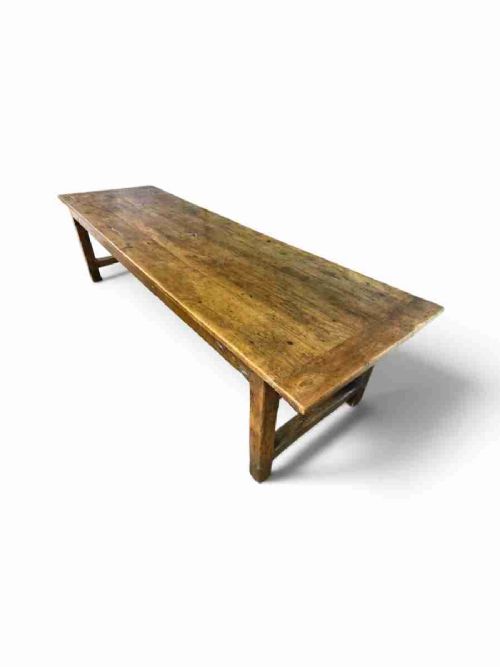
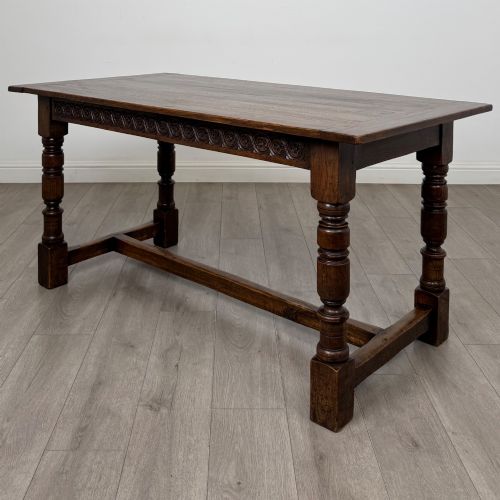
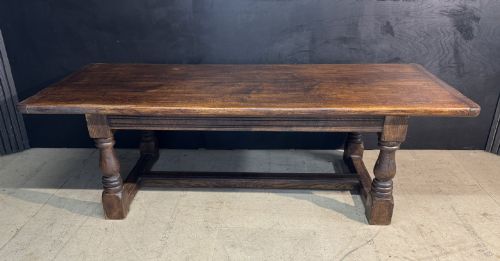
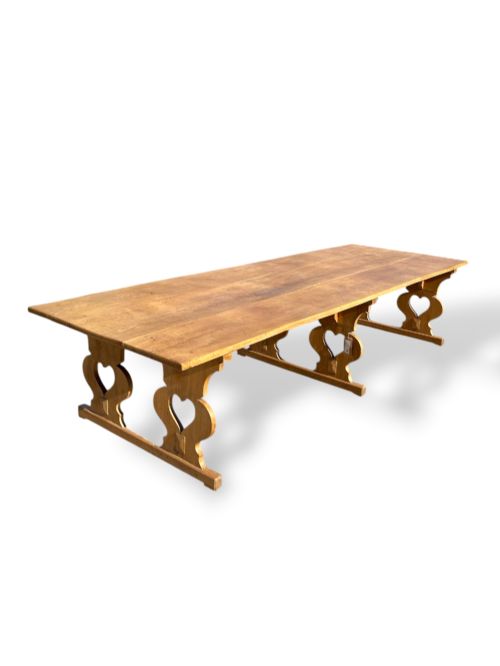
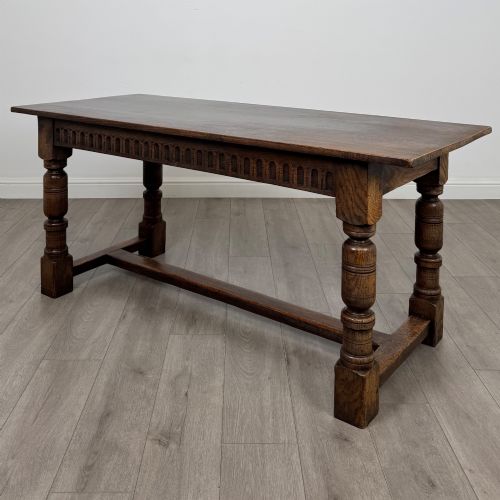
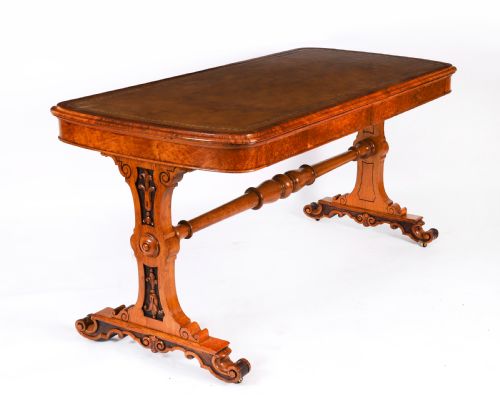
When you search for an english oak trestle table, you encounter robust dining surfaces, refectory boards, and compact writing desks spanning the seventeenth century through to the Edwardian era. These pieces draw upon early domestic and tavern forms, featuring substantial timber tops supported by end trestles or heavy central stretchers rather than standard corner legs.
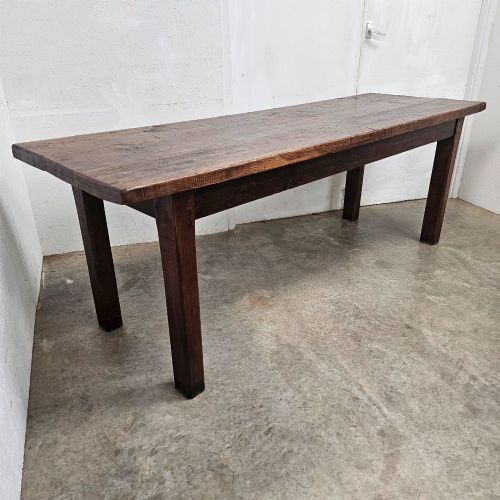
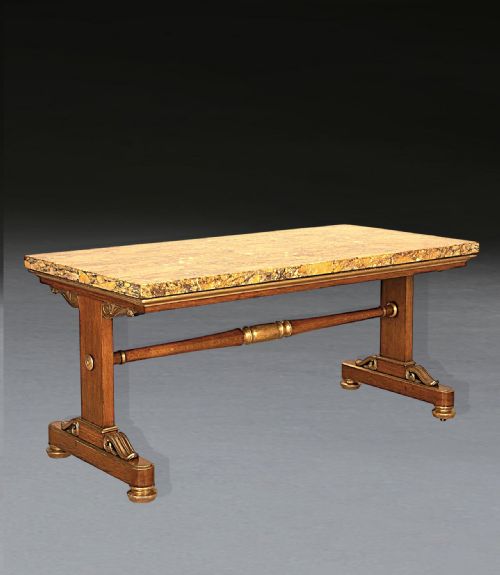
The versions most common on this page date from the nineteenth and twentieth centuries, taking inspiration from earlier seventeenth-century refectory styles and rustic farmhouse traditions. You will find large six-to-eight seater dining boards alongside smaller coffee tables and writing desks constructed with the same foundational trestle design.
Makers and workshops across different centuries adapted this architectural format for varied rooms, producing everything from heavy kitchen boards to refined library desks. The fundamental character relies upon visible timber construction, honest joints, and generous proportions designed to anchor a room.
Quality and Construction Differences
The distinction between standard examples and superior pieces rests in the thickness of the timber top and the integrity of the underlying trestle frame. Tables featuring wide, single-growth planks and traditional pegged joinery demonstrate a higher grade of historical craftsmanship than later adaptations.
Proportion and surface preservation further differentiate the selection, as untouched natural patinas and crisp carving details command greater appreciation. The balance between massive structural weight and refined edge moulding defines the superior end of the range.
Listings feature oak alongside beech, pollard oak, leather, and Siena marble across centuries ranging from the seventeenth to the twentieth.
Gillows·Howard & Sons
The English Oak Trestle Table Glossary
- Trestle
- A structural support consisting of a horizontal beam fixed to two splayed legs at each end. This arrangement leaves maximum legroom beneath the table top.
- Refectory
- A long dining table traditionally used in monastic dining halls. These examples feature substantial length and a central longitudinal stretcher.
- Plank top
- A surface constructed from several long boards joined edge to edge. Earlier tables often utilise three wide boards rather than multiple narrow strips.
- Patina
- The deep surface sheen and colour acquired by wood through age, wear, and repeated polishing. It serves as an indicator of genuine period use.
- Stretcher
- A horizontal wooden rail connecting the legs of a table to provide lateral stability. They sit close to the floor or higher up near the table top.
English Oak Trestle Table: Frequently Asked Questions
How do I seat guests comfortably around a trestle table?
The absence of corner legs allows chairs to slide fully beneath the perimeter, maximising seating capacity along the entire length of the boards.
Position benches or independent dining chairs to utilise the open space between the end trestle feet.
Are these tables suitable for daily family dining?
Solid oak surfaces withstand regular daily use and develop further character from minor marks accumulated over years of meals.
Maintain the timber using natural beeswax to protect the grain while preserving the historical finish.
How do I distinguish a seventeenth-century table from a later revival piece?
Examine the underside and joints for hand-cut peg holes, tool marks, and timber shrinkage patterns unique to early hand-felled oak.
Revival pieces from the nineteenth and twentieth centuries often display uniform machine sawing and cleaner, less altered internal framing.
What is the difference between a refectory table and a standard farmhouse table?
Refectory tables traditionally feature a long, narrow proportion supported by a low stretcher connecting two heavy end trestles or pillars.
Farmhouse tables frequently rely on four distinct corner legs rather than end trestles, though the terms often overlap in vernacular furniture.