





English Oak Farmhouse Table
An English oak farmhouse table brings honest grain and enduring utility into the heart of any home.
English Oak Farmhouse Table
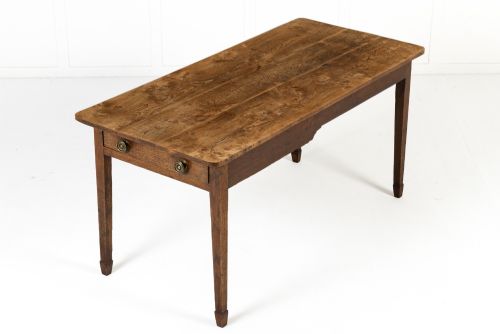
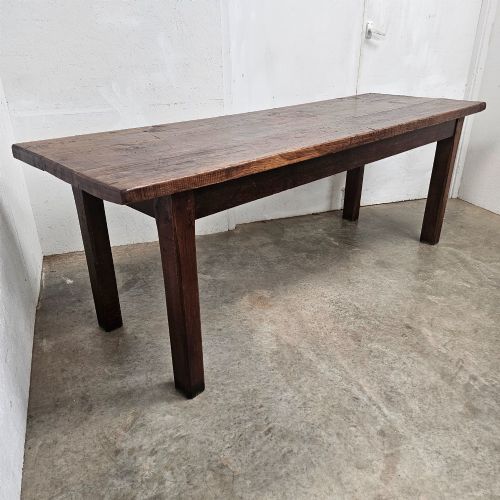
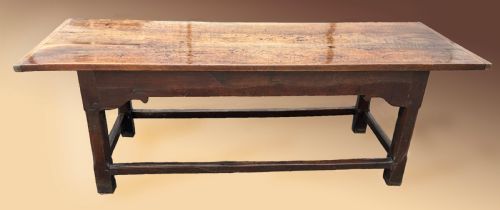
An English oak farmhouse table is a sturdy domestic surface designed for everyday labour and family meals, appearing across this page in forms ranging from grand Georgian refectory tables to compact Victorian gate-leg versions.
The selection on this page spans several centuries, drawing heavily upon 18th century and 19th century craftsmanship while also including rustic 1930 interpretations.
Buyers will encounter dining tables, serving tables, and tavern tables built primarily in oak, often accompanied by elm, beech, or pitch pine elements.
How they were made
These tables rely on solid timber construction, frequently uniting thick oak planks for the top with sturdy frames of beech or elm.
Joinery methods reflect traditional English country workshop practices, utilising heavy boards and robust stretchers to handle daily weight and movement.
English Oak Farmhouse Table Retail Price Guide 2026
Typical asking prices for english oak farmhouse table among the pieces listed under this phrase on Sellingantiques today, from the lower quarter to the upper quarter. They describe what is for sale here now, not the wider market.
Several tables proudly wear the deep impressions of centuries of family meals, rolling pins, and ink stains right in the grain.
What varies in quality
The distinction between standard examples and superior pieces rests on timber selection, such as heavy three-plank tops and the thoughtful integration of secondary woods like pitch pine.
Proportion and surface integrity dictate value, with untouched patination and solid structural timber separating utilitarian tables from finer period specimens.
The English Oak Farmhouse Table Glossary
- Refectory table
- A long narrow dining table traditionally used in monasteries and large domestic halls. These examples often feature simple stretcher bases beneath thick wooden tops.
- Gate-leg table
- A drop-leaf table with hinged legs that swing out to support the opened leaves. This design allows the surface area to expand when required.
- Plank top
- A table surface constructed from multiple parallel boards joined together. The width and thickness of these individual boards indicate the age and quality of the piece.
- Tavern table
- A heavy-set functional table built for public house or domestic use. They are characterised by robust legs and thick tops designed for heavy loads.
English Oak Farmhouse Table: Frequently Asked Questions
How do I date an oak farmhouse table?
Dating relies on examining the construction methods, tool marks, and timber shrinkage visible across the top and undercarriage. Eighteenth century examples often display wider planks and hand-planed surfaces.
Later Victorian and 1930 pieces generally incorporate tighter machine milling and standardised framing techniques. Comparing the primary oak components with secondary woods like beech or elm helps clarify the era.
Can I use a farmhouse table every day?
These pieces were built specifically for heavy daily use in kitchens and dining rooms. Their robust frames and solid wood construction handle regular family life with ease.
Applying appropriate care to the finish ensures the timber remains protected against daily moisture and heat. The natural grain simply absorbs the marks of history over time.
What is the difference between a refectory and a farmhouse table?
A refectory table typically presents a longer, narrower silhouette designed for communal dining halls, often featuring an unbroken stretcher base. A farmhouse table encompasses a broader range of domestic forms, including gate-leg and tavern styles.
Both types share a reliance on heavy oak construction and utilitarian roots, though farmhouse tables often feel more suited to informal spaces.
How do I clean an antique oak table?
Maintenance requires only a soft, dry cloth to remove dust and debris from the surface. Avoiding harsh modern chemical cleaners preserves the historic patination of the wood.
Occasional application of natural wax nourishes the dry oak and maintains its protective barrier against everyday spills. Gentle care ensures the timber retains its natural lustre.