
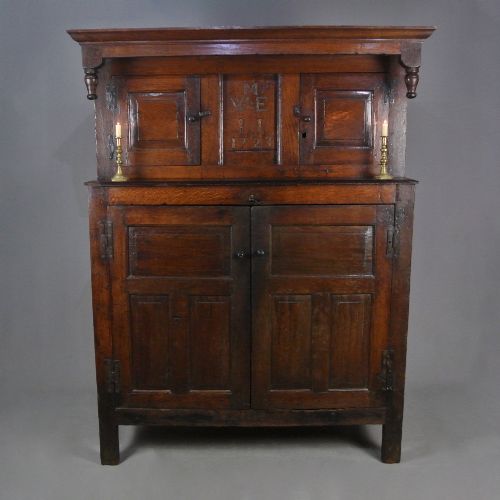
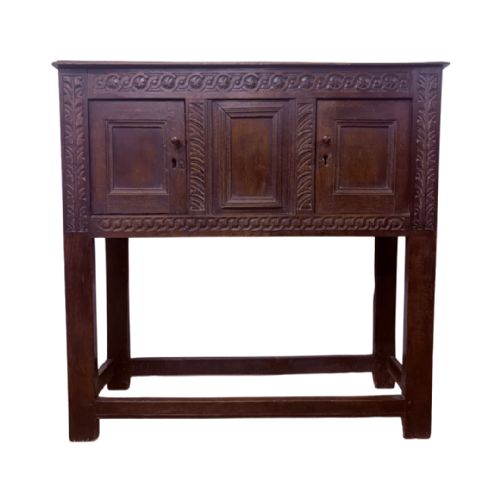

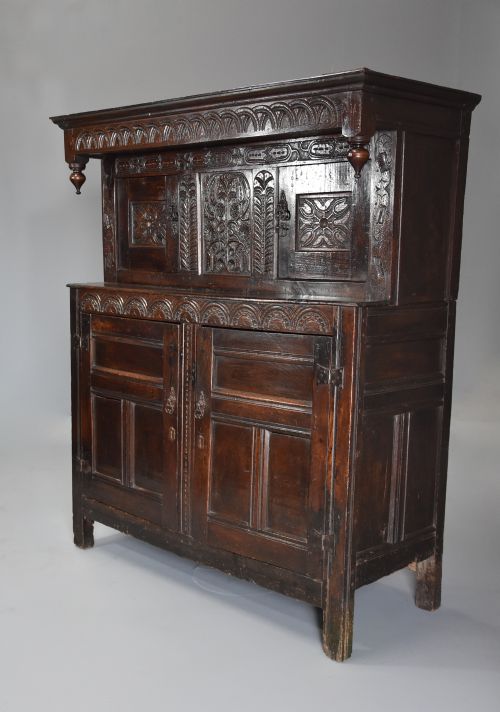
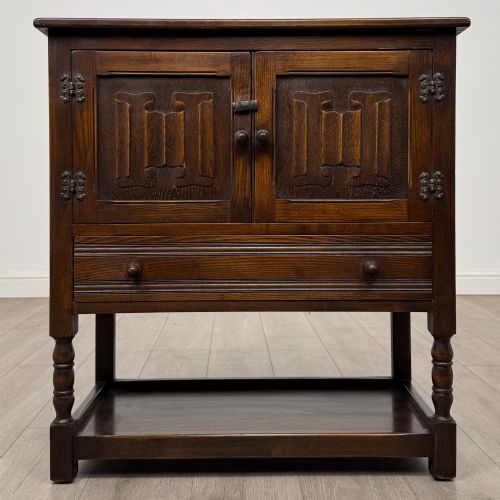
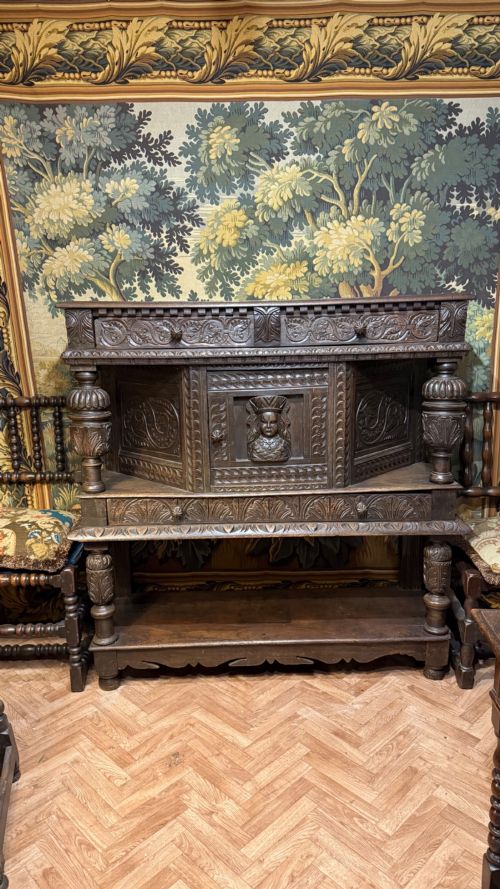

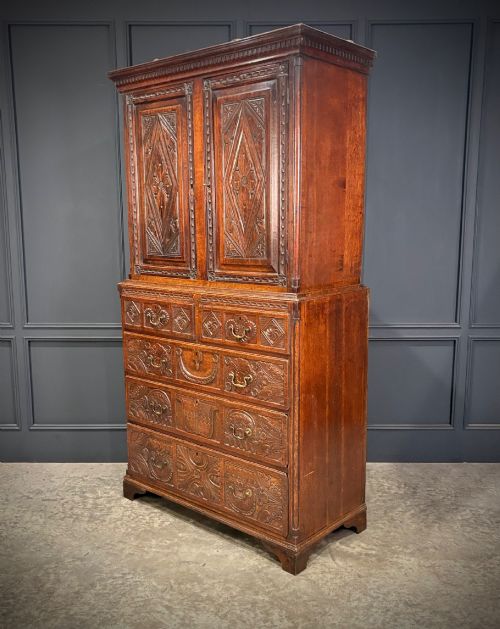


English Oak Court Cupboard
An English oak court cupboard is a substantial storage piece built for domestic use, prized for deep carving and panelled timber.
English Oak Court Cupboard
An English oak court cupboard provides heavy storage through enclosed lower sections and recessed upper tiers. These items appear across the seventeenth and eighteenth centuries, with revival examples from later periods.
The version most commonly met on this page dates from the seventeenth century, displaying joined construction and rich patination. Other iterations include eighteenth-century pieces and later Arts and Crafts or revival interpretations.
Makers utilised native hardwoods to build these cupboards for domestic halls and dining rooms, incorporating cupboard and cabinet forms. Regional pieces from locations such as the West Country show distinct local variations in proportion and ornamentation.
What varies in quality
The depth and crispness of the carved detailing separate standard vernacular items from finer provincial workshops. Crisp panels, balanced proportions, and the survival of original surface finishes elevate certain pieces above heavily altered examples.
The integrity of the joined frame and timber selection dictate structural longevity. Pieces retaining untouched surfaces and period hardware hold greater historic completeness than those with replaced elements.
The inventory records regional English pieces alongside Jacobean styles, Arts and Crafts cabinets, and Georgian vernacular housekeepers cupboards.
The English Oak Court Cupboard Glossary
- Court cupboard
- A traditional short-cased storage furniture form featuring an upper recess flanked by cupboards, common in the sixteenth and seventeenth centuries.
- Joined oak
- Furniture constructed using mortise and tenon joints locked with wooden dowels rather than nailed framing.
- Livery cupboard
- A domestic cabinet used originally for storing food and candles, frequently associated with court cupboard forms.
- Press cupboard
- A heavy enclosed storage piece featuring lower doors and upper cupboard space, closely related to court cupboards.
- Patina
- The surface sheen and colour developed on timber through age, handling, and wax application over generations.
English Oak Court Cupboard: Frequently Asked Questions
What is an english oak court cupboard?
An English oak court cupboard is a heavy timber storage piece featuring a recessed upper section above a broader base. These items served prominent domestic roles in early homes.
Surviving examples date mainly from the seventeenth and eighteenth centuries, with later revival interpretations appearing from the Victorian and Edwardian periods.
How were court cupboards used?
These pieces provided secure storage for household valuables, linens, and provisions in the main living spaces of large houses. The upper and lower tiers allowed for both display and concealed storage.
Over time, their function shifted from active domestic storage to status furniture displayed in dining rooms and halls.
How do I date a court cupboard?
Dating relies on examining construction techniques, joinery methods, and decorative styles such as Jacobean carving or linenfold panelling. Seventeenth-century pieces typically show hand-split timber and pegged mortise and tenon frames.
Later nineteenth- and twentieth-century revivals copy these earlier motifs but often reveal machine-sawn components and different assembly methods.
Where should I place a court cupboard?
These cupboards require solid walls and adequate floor space due to their heavy timber construction and substantial proportions. Keep them away from direct heat sources and strong sunlight to protect the oak and prevent timber splitting.
Pairing them with period dining furniture or placing them in a hallway allows the form to sit comfortably within a room.