



English Nursing Chair
An English nursing chair is a low-slung seat designed for comfort near the hearth, offering supportive upholstery and graceful lines.
English Nursing Chair
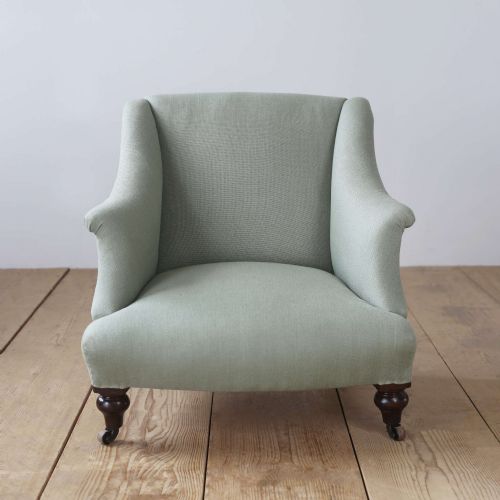
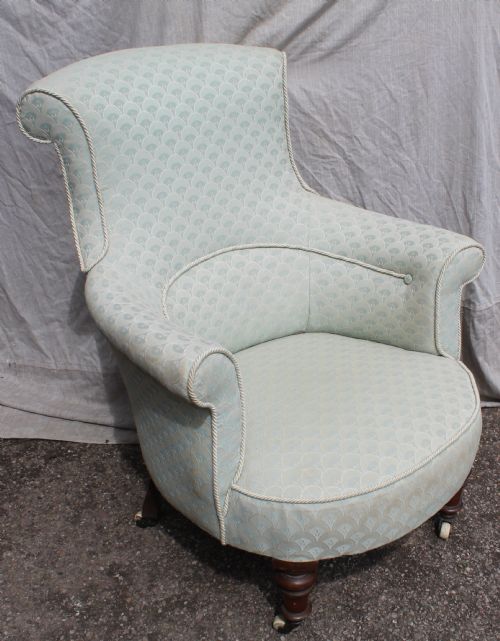
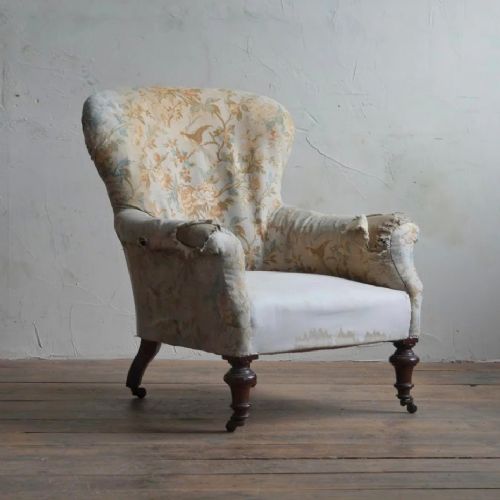
When you search for an english nursing chair, you find low seats designed for domestic comfort during the nineteenth century. These pieces appear across Victorian, Edwardian, and early periods, taking forms such as slipper chairs, bedroom chairs, and low drawing room seats.
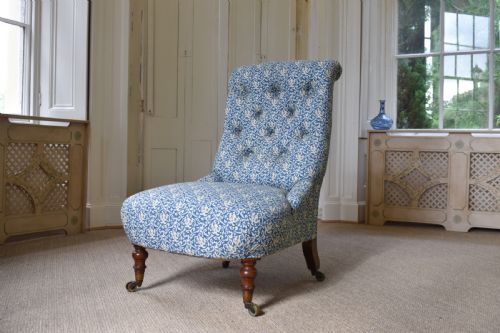
The versions most common here feature button upholstery, low wooden frames, and supportive spoon backs or padded seats. Makers fashioned them for sitting close to the fire or for resting in private chambers, resulting in compact proportions and generous padding.
Makers utilised mahogany, walnut, and rosewood for the exposed frames, while upholsterers covered the seats in damask fabric, cotton, vintage mulberry linen, and tapestry. Brass castors often support the low legs, allowing easy movement across carpets.
How they were made
Cabinet makers turned solid timbers like mahogany and walnut to form the curved backs and short legs of each english nursing chair. Carpenters joined these elements using traditional methods, ensuring structural stability despite the low, compact scale.
Upholsterers built up deep padding using horsehair or natural stuffing, securing the springs before applying top covers of cotton, damask, or linen. Buttoning techniques created the characteristic tufted patterns seen on Victorian spoon backs and drawing room seats.
English Nursing Chair Retail Price Guide 2026
Typical asking prices for english nursing chair among the pieces listed under this phrase on Sellingantiques today, from the lower quarter to the upper quarter. They describe what is for sale here now, not the wider market.
Some chairs sit so low to the floor that household pets frequently claimed them as private sleeping platforms.
What varies in quality
Quality rests in the elegance of the timber turning and the proportion of the low frame. Finer examples display carefully shaped walnut or rosewood with refined carving, whereas simpler pieces rely on plain turned mahogany without ornamentation.
The execution of the upholstery work marks the division between standard production and higher workshop output. Expert stitching, durable period fabric choices like tapestry or damask, and well-sprung interiors distinguish the superior pieces from basic bedroom seating.
Howard & Sons·Wheeler·Maple & Co·Gillows
The English Nursing Chair Glossary
- Spoonback
- A chair back carved into an oval depression resembling the bowl of a spoon. This nineteenth-century shape provides ergonomic support for the spine.
- Button upholstery
- A technique where depressions are pulled into padded fabric and secured with covered buttons. It creates a tufted surface that keeps stuffing evenly distributed.
- Prie Dieu
- A low devotional chair featuring a high back designed for kneeling and sitting during prayer. Victorian examples often incorporate rich needlework or tapestry covers.
- Damask
- A reversible figured fabric woven on a jacquard loom with patterns formed by contrasting warps and wefts. It provided a durable and decorative surface for drawing room seating.
- Aesthetic Movement
- A late nineteenth-century design style that emphasised visual beauty over moral narrative. Pieces from this movement often feature simplified forms and Japanese-inspired details.
English Nursing Chair: Frequently Asked Questions
What is an english nursing chair?
An english nursing chair is a low-seated nineteenth-century chair designed for domestic comfort in bedrooms or drawing rooms.
These chairs feature short legs and supportive upholstered backs, allowing sitters to rest easily close to a fireplace.
How do I date an antique nursing chair?
Dating relies on observing the timber species, frame style, and upholstery methods used in the piece. Victorian examples often show walnut frames and buttoned spoon backs, while Edwardian pieces display different turning.
Examining the underlying construction and materials helps place the chair within the nineteenth or early twentieth century.
Were these chairs used for nursing?
The low seat height made these chairs practical for mothers tending to infants near the hearth or in bedrooms.
Over time, the term expanded to describe various low bedroom and drawing room chairs from the Victorian era.
What woods were used in these chairs?
Cabinet makers utilised dense hardwoods such as mahogany, walnut, and rosewood for the exposed frames.
These timbers allowed craftsmen to turn slender legs and carve curved backs while maintaining structural strength.