








English Mahogany Tray
An English mahogany tray balances utility with timber character, offering sturdy serving surfaces framed by rich grain and raised edges.
English Mahogany Tray
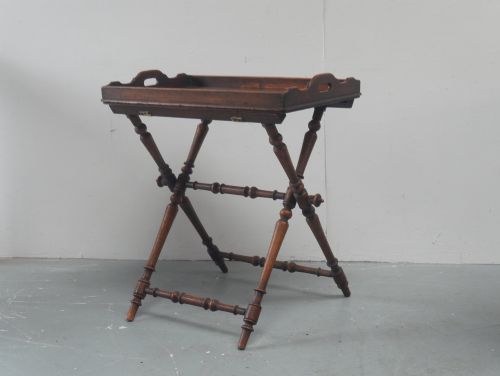
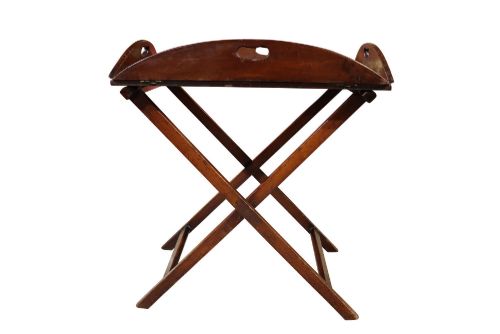
An English mahogany tray encompasses utilitarian serving pieces, butler's trays on folding stands, and two-tier dumb waiters originating across the Georgian, Victorian, and Edwardian periods. These domestic objects served various household needs, from afternoon tea presentation to carrying silver or managing dining rooms.
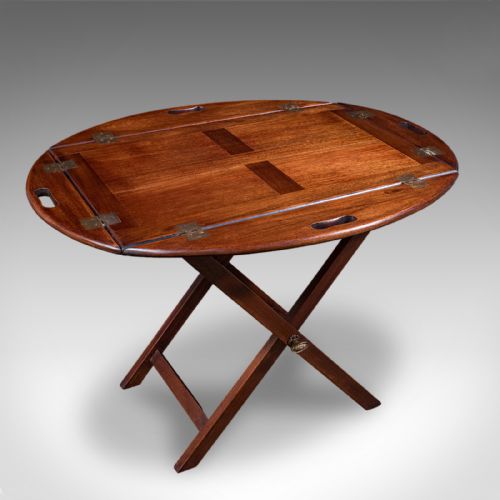
The versions most frequently encountered on this page include removable butler's trays fitted to dedicated folding stands, serving platters, and occasional tray tables spanning 18th-century craftsmanship through to later revival styles. Their forms reflect the practical demands of country houses and domestic service.
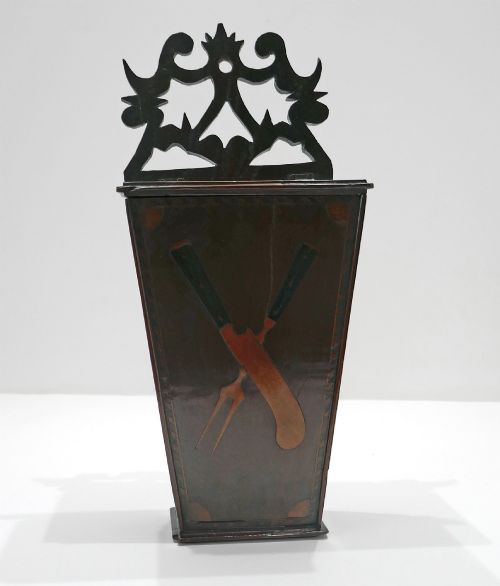
Beyond standard serving trays, the selection includes related timber furniture forms such as bedside night cupboards, etagere tray tables, and revolving lazy susans constructed in dense hardwoods. Each piece demonstrates how period cabinetmakers utilised mahogany for everyday utility and formal display.
Materials and construction methods
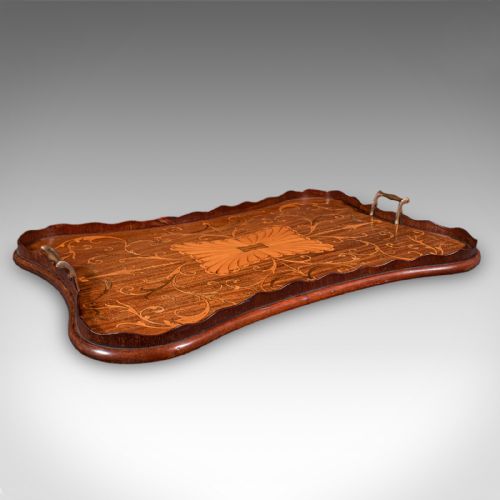
Cabinetmakers constructed these pieces primarily using solid mahogany, valued for its durability and deep reddish-brown grain, often supplemented by contrasting secondary timbers. Workshops integrated boxwood, ebony, and satinwood stringing or geometric inlays to edge panels and surfaces.
Hardware details typically involved brass handles, hinges, and mounting brackets fitted to folding stands, drop-flap mechanisms, or serving platters. Joinery methods combined structural stability with functional folding designs to allow servants to pack away serving stands after use.
English Mahogany Tray Retail Price Guide 2026
Typical asking prices for english mahogany tray among the pieces listed under this phrase on Sellingantiques today, from the lower quarter to the upper quarter. They describe what is for sale here now, not the wider market.
Listings feature pieces spanning the Georgian, Regency, Victorian, and Edwardian periods, constructed primarily in solid mahogany with brass, satinwood, and boxwood details.
Indicators of refinement and build quality
Quality in an English mahogany tray rests on the selection of timber figures, where rich, active grain patterns on the primary board distinguish finer cabinetwork from plain utility pieces. The crispness of inlaid boxwood and ebony stringing further separates standard items from more decorative examples.
The integration of brass hardware, such as hinged corners or drop-flap fittings on folding stands, demonstrates the original maker's investment in durable function. Pieces that retain their matching stands show cohesive design rather than later pairings of trays and unrelated bases.
The English Mahogany Tray Glossary
- Butler's tray
- A removable rectangular serving tray featuring hinged or shaped sides, designed to lift off a folding wooden stand. These portable surfaces saw extensive use in country houses for serving meals and clearing rooms.
- Dumb waiter
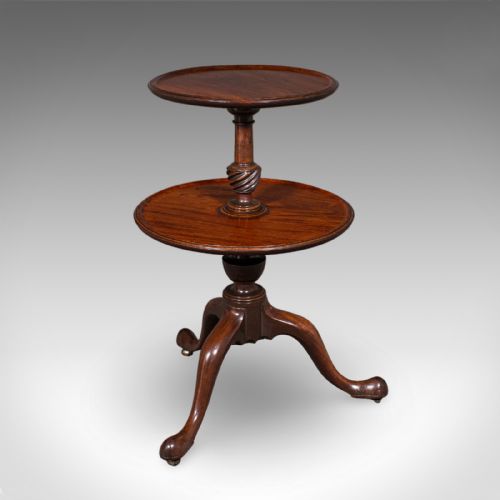
- A multi-tiered revolving serving stand or tiered table used in dining rooms to hold dishes without requiring constant servant attendance. They typically feature graduated circular trays mounted on central pedestals.
- Inlay
- A decorative technique where contrasting woods such as boxwood, ebony, or satinwood are set flush into the mahogany surface to create geometric borders or patterns.
- Drop-flap
- A hinged section on the side of a tray or table top that lowers when not in use and locks into a horizontal position with brackets to expand the surface area.
- Etagere
- An open multi-tiered display or serving piece designed for afternoon tea items, tableware, or decorative objects.
English Mahogany Tray: Frequently Asked Questions
How were dumb waiters used in period dining rooms?
Dumb waiters served as multi-tiered revolving stands positioned beside dining tables during the 18th and 19th centuries. They held extra courses, silverware, and afternoon tea items so guests could help themselves.
This reduced the need for servants to remain in the room during private meals. The tiered circular trays allowed multiple dishes to occupy a small floor footprint.
How do I care for a mahogany tray with brass hardware?
Maintain mahogany surfaces by dusting with a dry, soft cloth and occasionally applying traditional beeswax to nourish the timber grain. Avoid placing wet items or hot serving dishes directly on antique polished wood.
Keep brass handles and hinges unpolished unless tarnish interferes with the mechanism, as gentle ageing preserves the original character of the metalwork.
Can I use an antique butler's tray as a coffee table?
Butler's trays on folding stands adapt readily to modern living spaces as low coffee tables or occasional side tables. Their sturdy mahogany construction and raised edges make them practical surfaces for everyday domestic use.
Ensure the folding stand remains stable and secure before placing heavy objects on the surface.