



English Ladderback Chairs
English ladderback chairs are robust vernacular seating built for everyday utility, offering clean horizontal slats and rush or solid timber seats.
English Ladderback Chairs
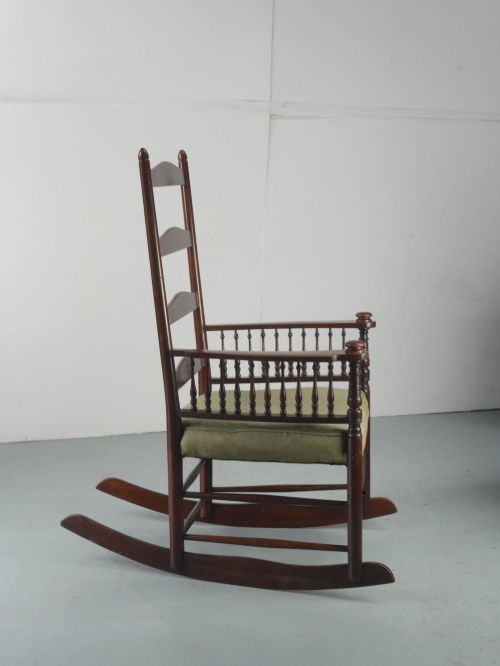
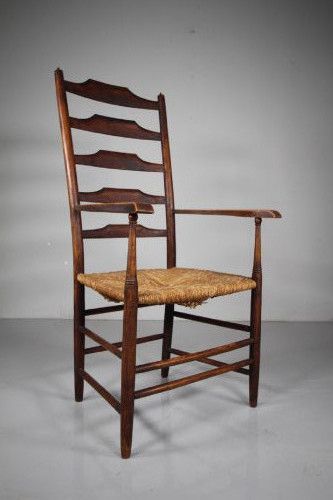
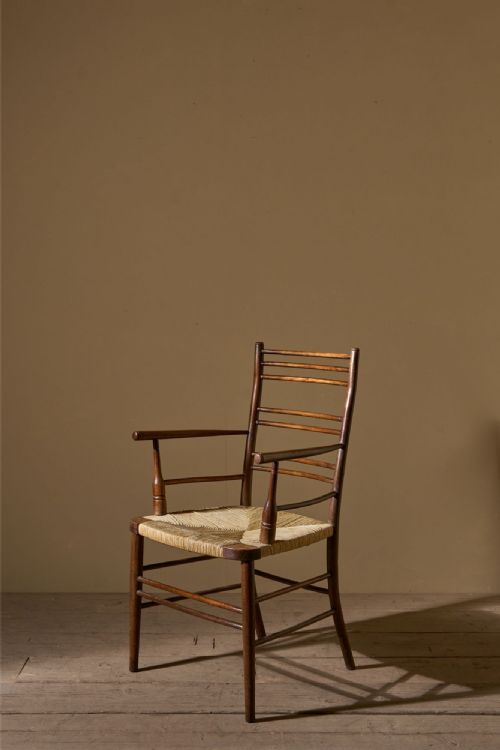
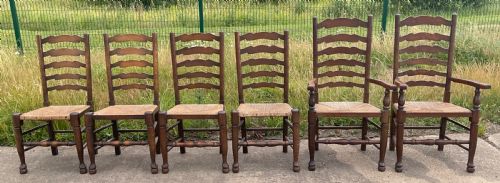
When you search for English ladderback chairs, you encounter traditional seating defined by horizontal rungs set between upright rear posts. These pieces range from simple country dining chairs to substantial armchairs and rocking chairs produced across several centuries.
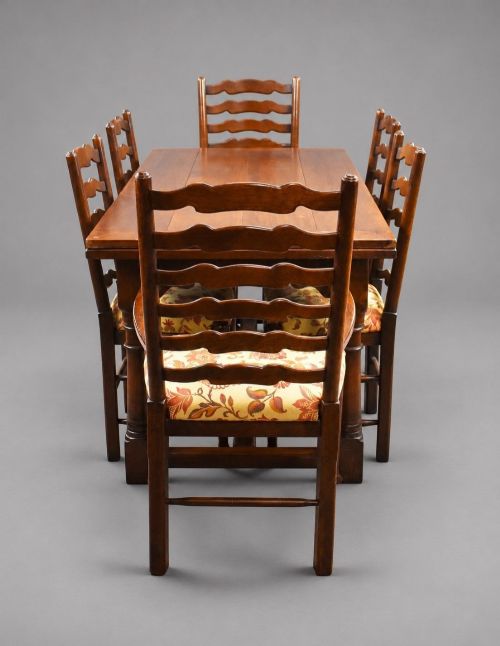
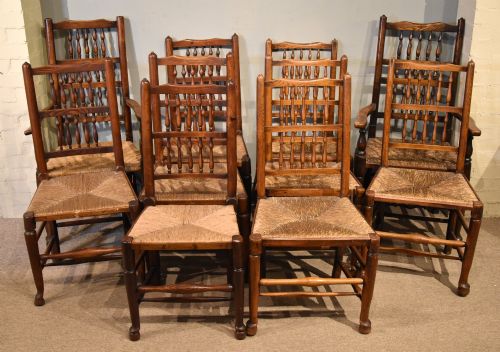
The selections span periods from the eighteenth century through the Edwardian era, featuring regional forms such as Lancashire chairs alongside vernacular country designs. Dining chairs often appear in sets, while armchairs and carvers survive as individual seating.
How they were made
Maker workshops utilised native timbers including elm, ash, beech, oak, and mahogany for the frames, turning structural components on lathes and shaping parts by hand. These strong native woods provided the necessary tensile strength for slender uprights and curved slats.
Seats were typically woven from natural rush or constructed from solid timber panels like elm. Frame construction relied on traditional pegged mortise and tenon joints to withstand decades of daily use.
English Ladderback Chairs Retail Price Guide 2026
Typical asking prices for english ladderback chairs among the pieces listed under this phrase on Sellingantiques today, from the lower quarter to the upper quarter. They describe what is for sale here now, not the wider market.
Some nineteenth century vernacular makers built rocking versions so farmers could doze off after a heavy harvest supper.
What varies in quality
Quality rests in the proportional balance of the turned posts and the careful graduation of the horizontal rungs. Finer examples display refined turning profiles on the finials and front stretchers, showing the maker's hand.
The integrity of the original timber frame and the tightness of the joinery separate superior survivals from altered pieces. Original rush seating or well-matched timber panels also elevate the stature of a chair.
Philip Clissett
The English Ladderback Chairs Glossary
- Ladderback
- A chair design featuring multiple horizontal slats or rungs between the rear upright posts. These slats are often subtly curved to fit the sitter's back.
- Rush
- A traditional seating material woven from marsh plants to form a durable, textured pad. This material appears frequently on country dining chairs and armchairs.
- Carver
- An armchair designed to sit at the head of a dining table or serve as an occasional seat. These chairs usually match the simpler side chairs in a larger set.
- Vernacular
- Objects made by local craftsmen following regional traditions rather than high-style urban fashions. English country furniture relies heavily on these local methods.
English Ladderback Chairs: Frequently Asked Questions
Are these chairs comfortable for daily dining?
Most examples provide an upright posture suited for meals or desk work. The shaped slats support the back effectively while the woven rush or timber seats offer firm support.
Adding a loose squab cushion can soften the seat if you plan to sit for longer periods. The lightweight construction also makes them easy to move around the room.
How do I spot an eighteenth century chair?
Earlier examples display hand-turned components with subtle irregularities and deeper patination on the timber. The joining methods and wood species, such as native ash or elm, point directly to provincial craftsmanship.
Later Victorian and Edwardian revivals often feature cleaner machine-turned details and standardised dimensions. Comparing the wear patterns around the foot rails also helps confirm age.
Can I mix these with modern tables?
The clean lines and warm timber tones of these chairs pair naturally with contemporary plain wood or glass tables. Their understated frames prevent them from overwhelming a modern dining space.
Using a pair of armchairs at the heads of the table with simpler side chairs along the flanks creates a balanced arrangement.
How do I care for rush seats?
Keep rush seating dry and clean by brushing it gently with a soft attachment on your vacuum cleaner. Avoid placing these chairs in damp environments or direct sunlight which can dry out the natural fibres.
Treating wooden frames occasionally with appropriate furniture wax maintains the finish without building up heavy residues.