



English Ladder Back
An English ladder back chair brings vernacular grace and honest construction to a room, offering practical seating shaped by centuries of rural craft.
English Ladder Back
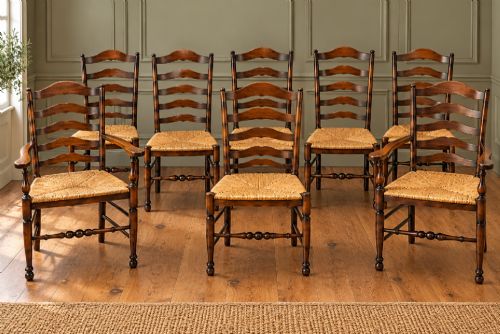
The English ladder back covers practical rush-seated and wooden chairs designed for everyday domestic use across several centuries. These pieces encompass armchairs, dining chairs, rocking chairs, and carvers shaped by regional traditions.
Buyers encountering this search phrase will most frequently meet nineteenth-century examples alongside earlier Georgian and Regency variants. These forms typically appear in domestic timbers like elm, ash, and oak.
Makers working within the English country vernacular produced these chairs using straightforward joinery and turned uprights. The resulting seating ranges from single dining chairs to matched pairs and larger sets.
Materials and construction
Makers built these frames using native hardwoods such as ash, elm, and oak, selecting each timber for its specific structural strength. Turned uprights and horizontal slats form the characteristic back, secured with traditional joinery.
Seats utilise natural rush woven tightly between the side rails to create a durable and resilient platform. Some formal variants incorporate mahogany or brass details reflecting prevailing aesthetic tastes of their period.
English Ladder Back Retail Price Guide 2026
Typical asking prices for english ladder back among the pieces listed under this phrase on Sellingantiques today, from the lower quarter to the upper quarter. They describe what is for sale here now, not the wider market.
Form variations include armchairs, rocking chairs, carvers, and complete dining sets.
Assessing quality in ladder back chairs
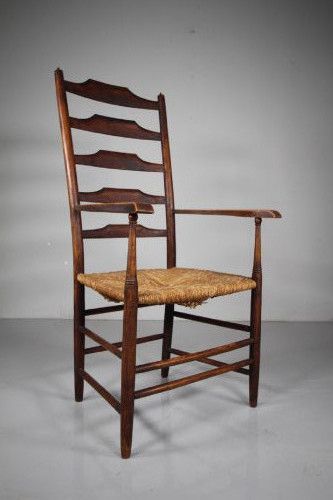
Quality rests in the proportional balance of the turned spindles and the crisp execution of the horizontal slats. Finer examples display thoughtful selection of timber figure and carefully shaped armrests.
The integrity of the rush seating and the tightness of the frame joints distinguish superior pieces from utilitarian work. Original surfaces and honest wear elevate the standing of a chair within this tradition.
Philip Clissett
The English Ladder Back Glossary
- Carver armchair
- A sturdy wooden chair with arms, historically placed at the head of a dining table or used by the hearth. These seats share the ladder back profile of their matching dining variants.
- Rush seating
- A woven seat constructed from dried marsh grass twisted into cord and worked across the frame. This material provides a flexible and traditional foundation for country chairs.
- Vernacular furniture
- Domestic objects made by local tradesmen using regional materials and traditional methods rather than following metropolitan fashion. These pieces prioritize utility and local style.
- Spindle
- A turned cylindrical wooden element used to form the structural uprights or back supports of a chair. Turning adds both decorative profile and structural rigidity.
- Chippendale period
- The stylistic era spanning the middle of the eighteenth century, associated with Thomas Chippendale and characterised by refined proportions and carved mahogany.
English Ladder Back: Frequently Asked Questions
How do I date a ladder back chair?
Dating these chairs involves examining the turning style of the spindles, the wood species, and the method of construction. Earlier eighteenth-century examples display different proportions compared to nineteenth-century vernacular pieces.
Secondary clues include the wear patterns on the feet and the tightness of the joinery used in the frame.
Where were these chairs used?
These chairs served primarily in domestic kitchens, farmhouses, and dining rooms throughout the country. Their robust construction suited them to daily family life.
Armchairs and carvers often stood by the hearth or at the ends of dining tables, while dining sets served communal meals.
How do I care for a rush seat?
Rush seats require a stable indoor environment away from excessive moisture and direct heat sources to prevent the natural fibres from becoming brittle. Regular dusting with a soft brush keeps the weave clean.
Placing felt pads beneath the legs helps protect the frame during movement and prevents undue stress on the lower rungs.