


English Ironstone Centrepiece
An English ironstone centrepiece is a heavy, robust serving vessel from the Georgian and nineteenth-century periods designed to anchor a formal table setting.
English Ironstone Centrepiece
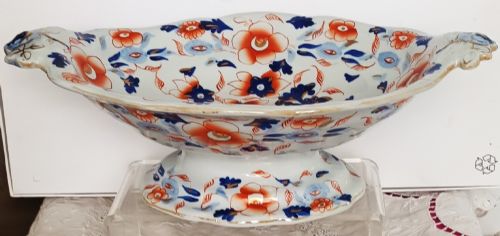
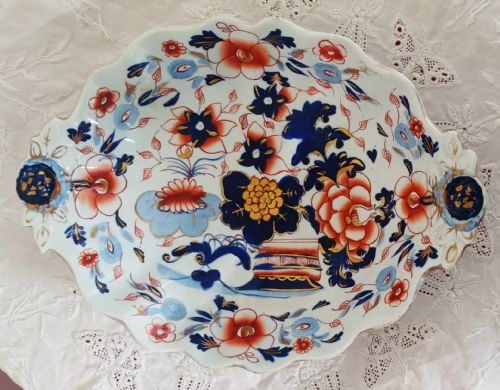
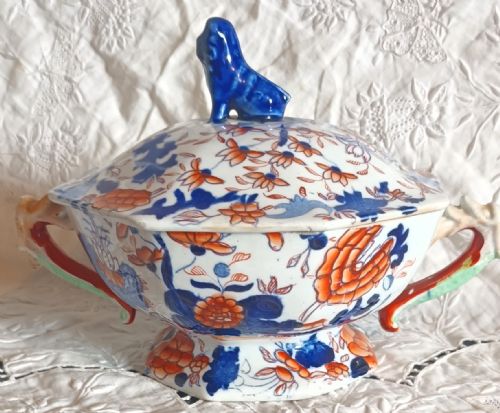
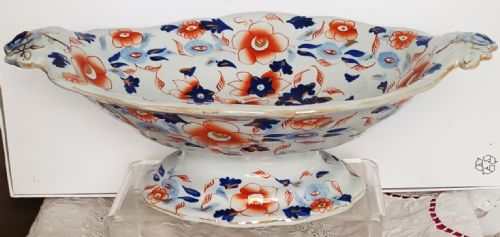
When you search for an English ironstone centrepiece, you are looking at substantial ceramic tableware designed to command attention in the middle of a dining table. These pieces come in various forms, most commonly appearing on this page as footed comports, low comports, decorative bowls, and covered tureens.
The objects date primarily from the nineteenth century and the Georgian period, reflecting an era of elaborate dining rituals. Buyers encounter specific traditional patterns such as the 'Japan' style, Chinoiserie designs, and Green Mandarin motifs that decorated wealthy tables of the time.
The inventory showcases a strong representation of output from the Georgian era through to the Victorian period, including pieces styled in the manner of Victorian Imari. Each item serves as a tangible link to historical dining practices, combining utility with decorative presence.
Materials and manufacture
Potters created these robust vessels using ironstone ceramic, a dense and durable body patented to withstand heavy daily use while imitating fine porcelain. This sturdy clay body allowed makers to form large pedestal bowls, tureens, and comports without excessive risk of warping during firing.
Makers finished the ceramic bodies with thick glaze and hand-applied enamel colours, frequently enriched with gold leaf and gilt highlights. Artisans painted intricate patterns directly onto the surface before a final high-temperature kiln firing to fuse the decoration permanently.
Materials recorded across the inventory include ironstone ceramic, enamel, glaze, and gold leaf applied in traditional Chinoiserie and Japan patterns.
Distinguishing quality
Quality in these ceramics rests primarily on the crispness of the moulding and the ambition of the hand-painted decoration. Finer examples display precise application of enamel and generous use of gold leaf, whereas simpler production pieces rely on more basic transfer-printed outlines.
The complexity of the form also dictates the tier of the piece, with heavily potted pedestal comports and covered tureens requiring greater skill from the potter than straightforward low bowls. Preservation of the original gilt and enamel surfaces remains a key determinant of a piece's visual impact.
Mason's
The English Ironstone Centrepiece Glossary
- Ironstone
- A heavy, durable ceramic body patented in the nineteenth century to provide a strong alternative to porcelain. It takes glazes and enamels exceptionally well.
- Comport
- A decorative pedestal dish or bowl used for serving fruit or sweets at the centre of a dining table. They sit on a raised foot to create height in a table setting.
- Tureen
- A deep covered serving bowl used historically for soups, sauces, or vegetables. They feature fitted lids and often include matching stands.
- Chinoiserie
- A European decorative style reflecting Chinese artistic influences. It appears frequently in the hand-painted patterns on nineteenth-century ceramics.
- Gilt
- A thin layer of gold applied to the surface of the ceramic for decoration. It is often used to highlight rims, handles, and pattern details.
English Ironstone Centrepiece: Frequently Asked Questions
What is an English ironstone centrepiece used for?
These large ceramic vessels were originally utilised on formal dining tables to serve fruit, sweetmeats, or dishes from soups to vegetables during multi-course meals. Their elevated pedestals and decorative covers helped them function as visual centrepieces as well as serving ware.
Today, collectors use them primarily as standalone decorative objects or centrepieces for sideboards and dining tables. Their robust construction allows them to hold fruit or floral arrangements safely in a modern interior.
How do I identify a Georgian ironstone piece?
Georgian and early nineteenth-century pieces often feature dense ironstone ceramic bodies decorated with hand-applied enamel patterns, such as Chinoiserie designs or 'Japan' motifs. They tend to have heavy potting and rich, saturated colours that reflect the palette of the period.
Many examples from this era carry specific historical patterns or maker associations tied to the early development of ironstone. Examining the weight, the depth of the glaze, and the hand-painted brushwork helps distinguish them from later Victorian reproductions.
Can I use an antique comport for serving food?
While these pieces were originally created for dining, antique ironstone can be sensitive to modern dishwashers and sudden temperature changes. Many owners prefer to use them for dry items like fruit rather than wet foods to protect the historic glaze and gilding.
Hand washing in warm soapy water is recommended for any piece showing delicate enamel or gold leaf work. Careful handling ensures the nineteenth-century surface decoration remains stable over time.
What does Japan pattern mean on ironstone?
The term refers to nineteenth-century European ceramics decorated in imitation of Imari porcelains imported from Japan. These designs typically combine deep underglaze blues with iron-red enamels and generous applications of gold leaf.
Potters during the Georgian and Victorian eras favoured this vibrant aesthetic for centrepieces and comports because it provided rich colour to dining tables. It remains one of the most recognisable decorative styles found on ironstone wares.