

English Georgian Mahogany Drawers
English georgian mahogany drawers represent a legacy of domestic cabinetmaking spanning chests, side tables, and desks valued for utility and proportion.
English Georgian Mahogany Drawers
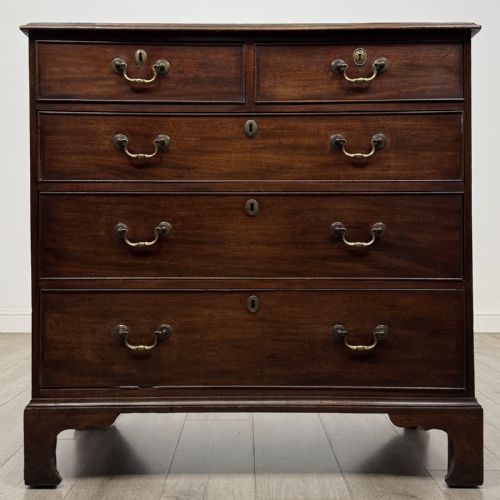
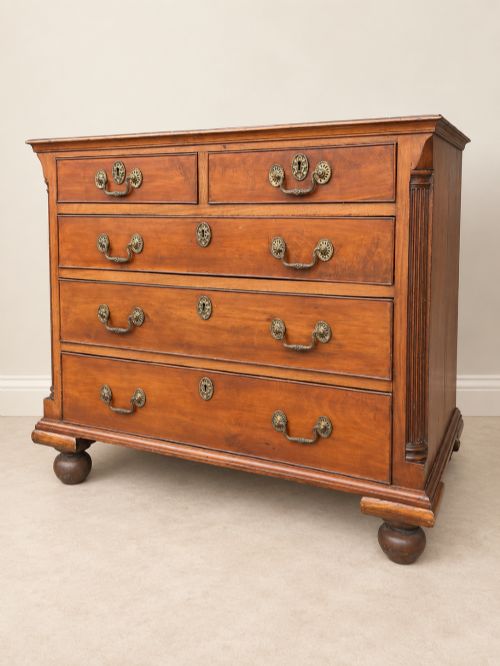
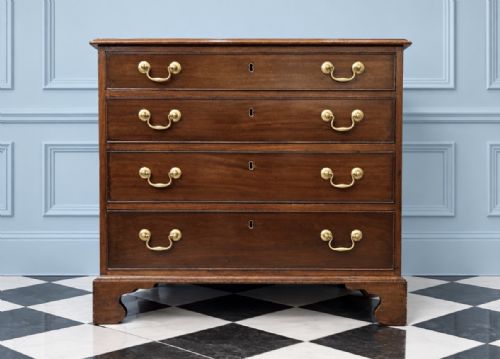
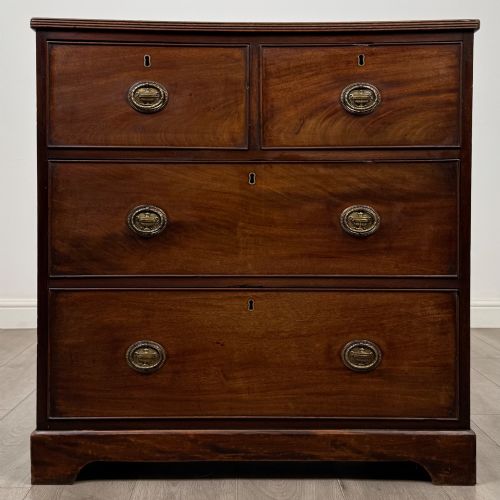
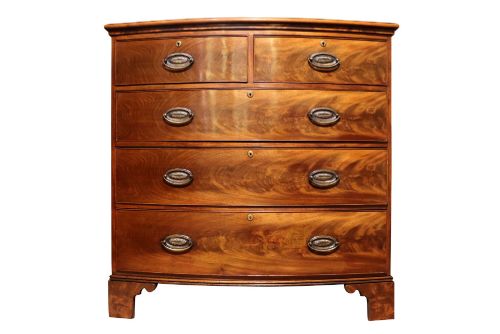
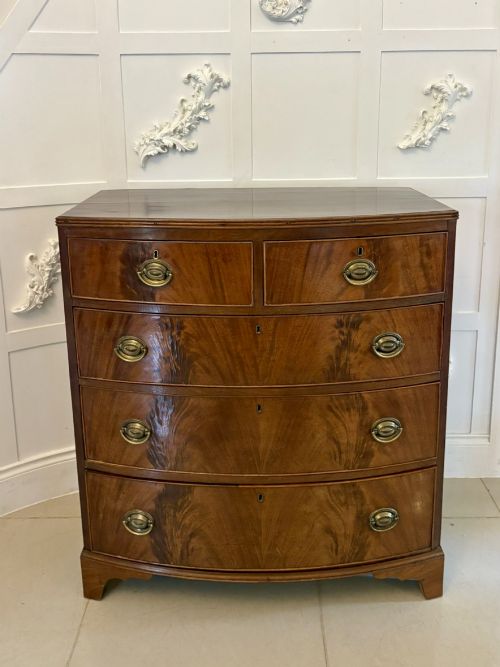
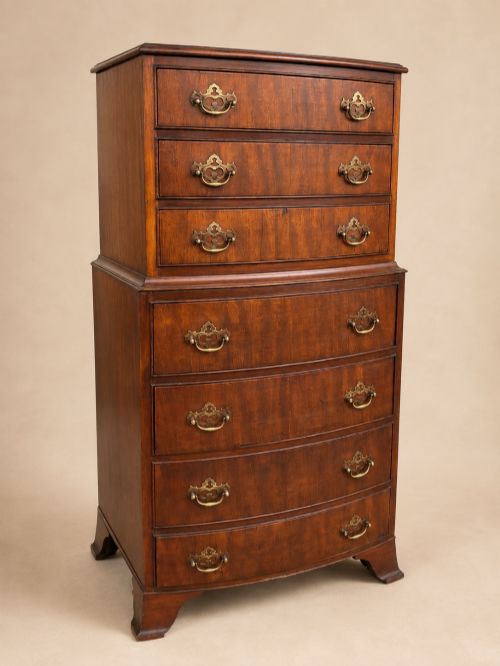
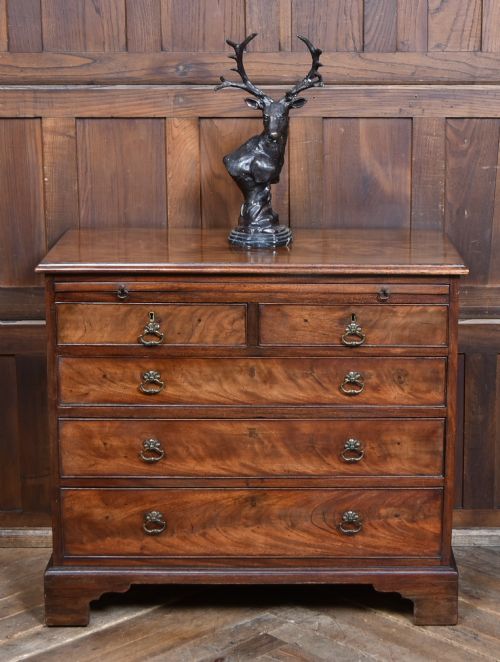
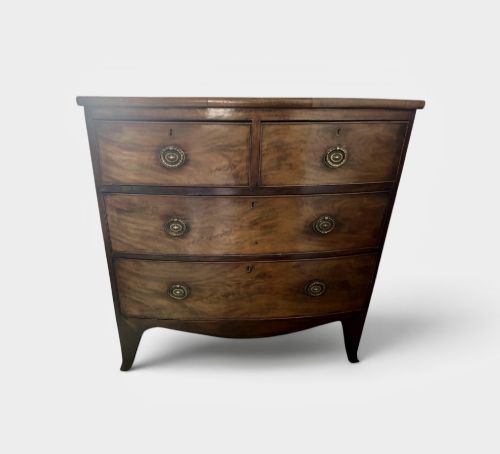
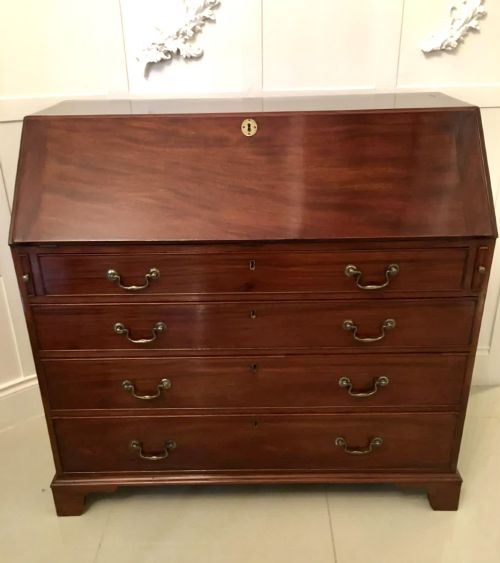
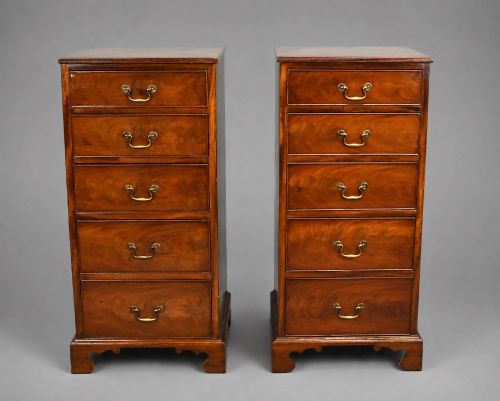
English georgian mahogany drawers encompass chests of drawers, tallboys, lowboys, writing tables, and side tables produced during the eighteenth and early nineteenth centuries. The majority of pieces met on this page take the form of bow-front chests, straight-front chests, and compact bedside tables incorporating brass handles.
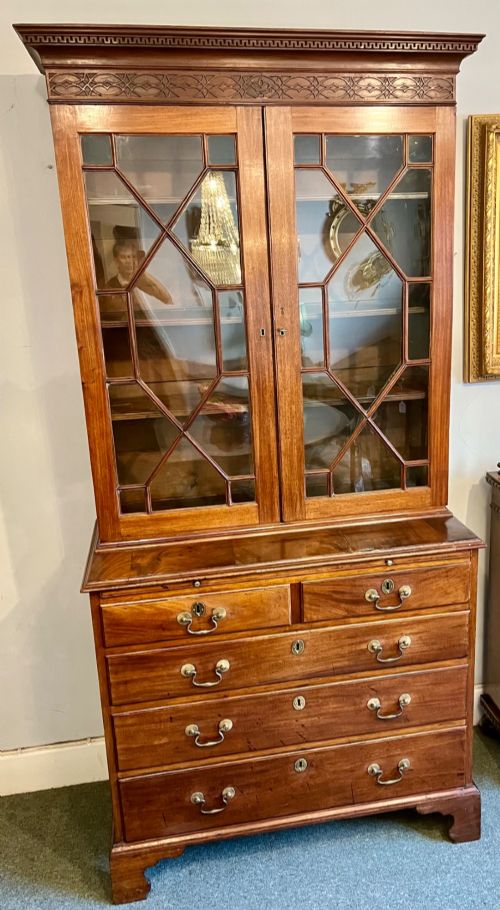
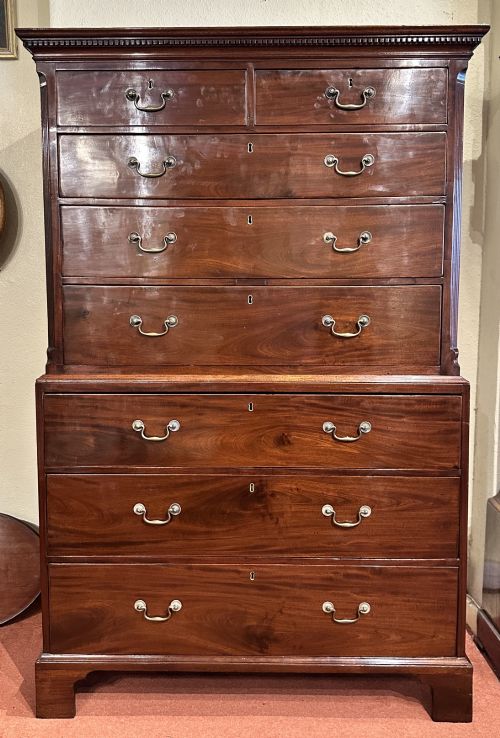
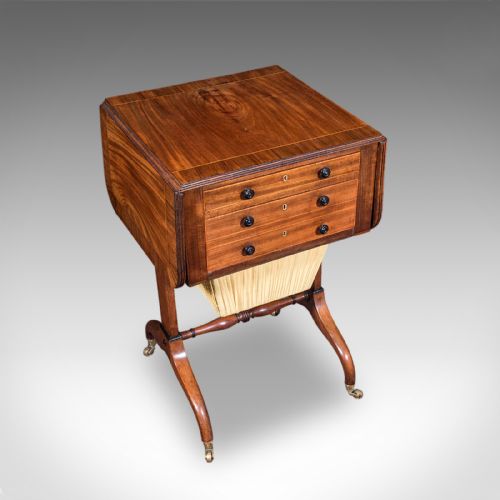
Makers utilised dense timbers for daily domestic use in bedrooms, libraries, and parlours, ranging from standard proportions to diminutive bachelor chests fitted with brushing slides. Forms extend to specialised items including secretaires, bookcases, and Pembroke tables.
Origins trace across the Georgian, Regency, and William IV periods, with subsequent reproductions appearing from later eras. Surviving examples demonstrate the sustained evolution of storage furniture across English workshops.
How they were made
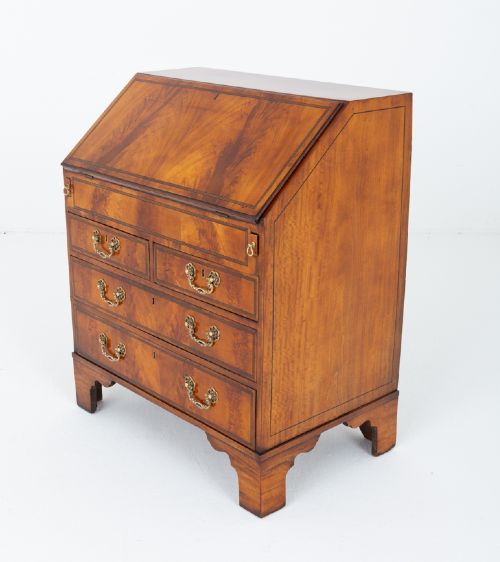
Cabinetmakers constructed carcases primarily using solid mahogany, oak for internal drawer linings, and pine for secondary framing. Flame mahogany veneer and satinwood inlay provided decorative surface contrast on drawer fronts and top panels.
Joinery relied upon dovetailed drawer construction and pegged tenon frames to ensure structural rigidity. Drawer pulls and escutcheons were cast in brass, often fixed with original loop handles or drop rings.
English Georgian Mahogany Drawers Retail Price Guide 2026
Typical asking prices for english georgian mahogany drawers among the pieces listed under this phrase on Sellingantiques today, from the lower quarter to the upper quarter. They describe what is for sale here now, not the wider market.
Secret drawers hidden behind faux book spines kept clandestine love letters safe from prying housemaids.
What varies in quality
The choice of timber grain defines the visual grade of a piece, with figured mahogany and symmetrical flame veneers commanding higher regard than plain stock. Selection of secondary woods like oak for interiors indicates superior workshop standards.
Execution of detail distinguishes individual pieces, seen in crisp string inlay, finely fitted brushing slides, and proportioned bracket feet or turned legs. Original brass hardware and undisturbed structural surfaces contribute to the integrity of a piece.
C Hindley
The English Georgian Mahogany Drawers Glossary
- Bow front
- A convex curved cabinet front popularised during the Georgian and Regency periods. This shape softens the profile of standard storage chests.
- Tallboy
- A tall chest of drawers configured as one chest stacked upon another, often called a chest on chest. These maximise vertical storage capacity.
- Brushing slide
- A pull-out shelf integrated above the top drawer used for writing or grooming before drawers were opened. They slide flush into the carcase frame.
- Lowboy
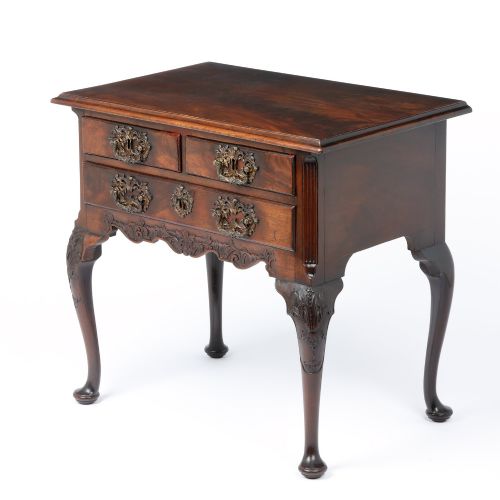
- A small dressing or side table featuring one or more rows of drawers beneath a flat top. They rest on slender cabriole or straight legs.
- Secretaire
- A desk disguised as a standard drawer chest featuring a drop-front writing flap concealing pigeonholes and small compartments. This combines workspace and storage.
English Georgian Mahogany Drawers: Frequently Asked Questions
What is a bachelor chest?
A bachelor chest is a compact mahogany drawer unit traditionally built for single-room urban living. They frequently incorporate a pull-out slide above the primary drawers.
These pieces served dual purposes as dressing surfaces and storage compartments in smaller Georgian bedchambers. Their restrained scale makes them adaptable for modern hallways and bedrooms.
How do I date a mahogany chest?
Dating relies upon examining construction methods, timber choice, and brass hardware styles. Hand-cut dovetails and oak secondary linings typically point to eighteenth-century workshop origins.
Changes in foot styles, from bracket feet to turned Regency legs, provide further chronological markers. Secondary elements like locks and escutcheons corroborate the period of manufacture.
Were these pieces used in bedrooms?
Georgian drawers functioned primarily as bedroom storage for garments, linens, and personal accessories. Larger chests of drawers and tallboys stood against chamber walls.
Smaller variants like bedside tables and lowboys served private quarters for holding candles, books, and washing equipment. Their robust build ensured daily utility over centuries.
What is flame mahogany?
Flame mahogany is a decorative veneer cut from wood taken from the branch forks of the tree. This process yields a distinctive ripple pattern resembling flickering fire.
Cabinetmakers applied these veneers symmetrically across drawer fronts to create striking visual movement. This technique elevated standard furniture into high-status display pieces.