
English Georgian Mahogany Chairs
English georgian mahogany chairs span dining sets, armchairs and library seating shaped by the cabinet-making traditions of the eighteenth and nineteenth centuries.
English Georgian Mahogany Chairs
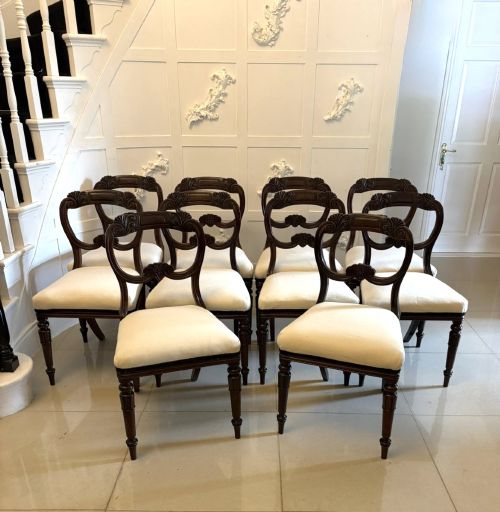
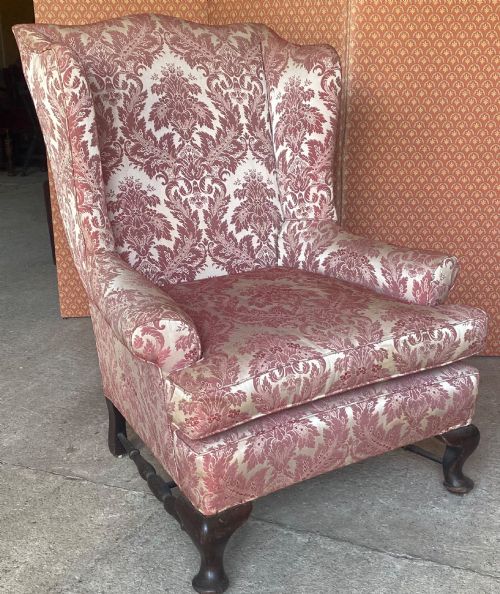
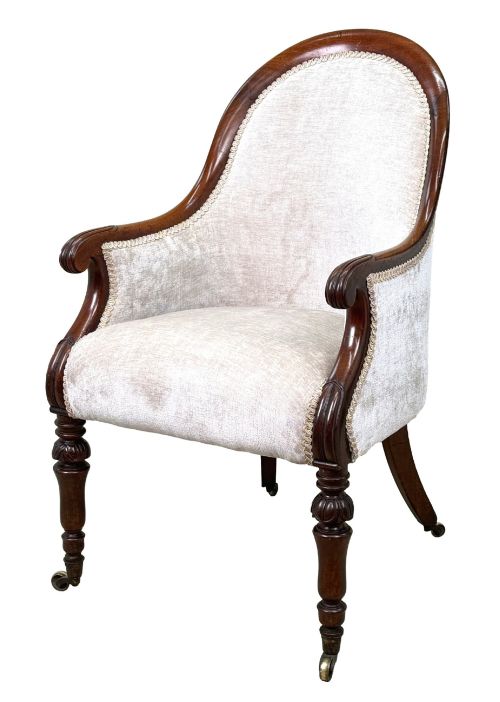
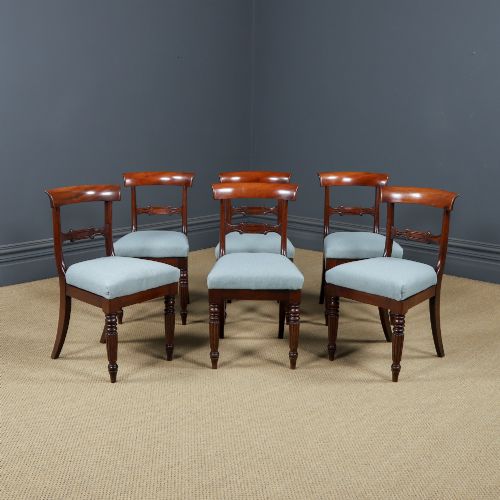
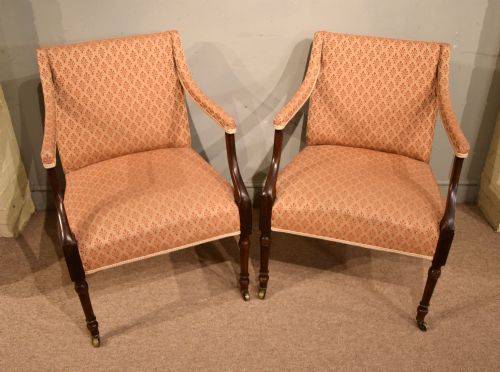
English georgian mahogany chairs encompass dining chairs, side chairs, armchairs, and library seating produced during the eighteenth and nineteenth centuries. Dining chairs frequently appear in sets, while single armchairs and elbow chairs emerge as library or desk seats.
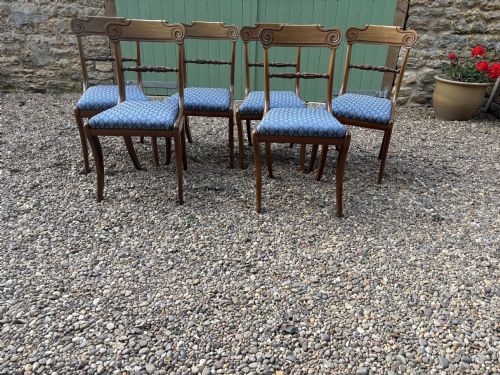
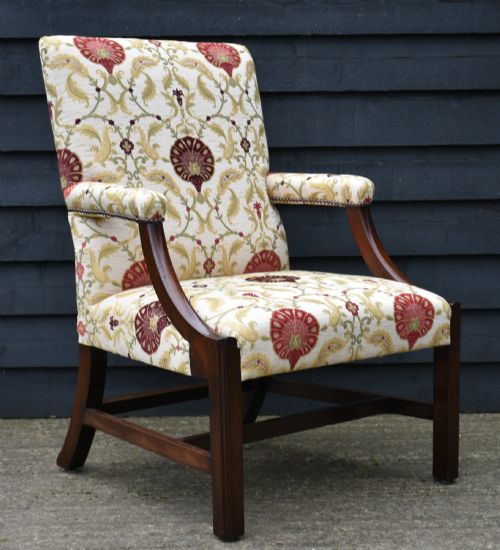
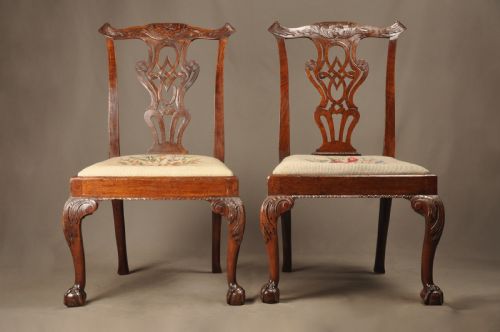
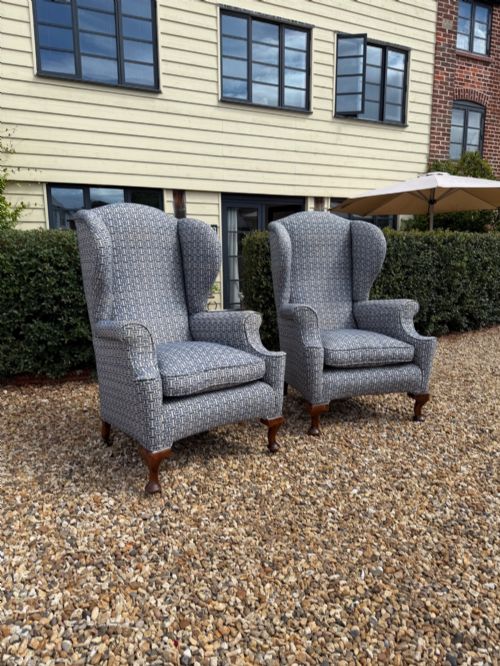
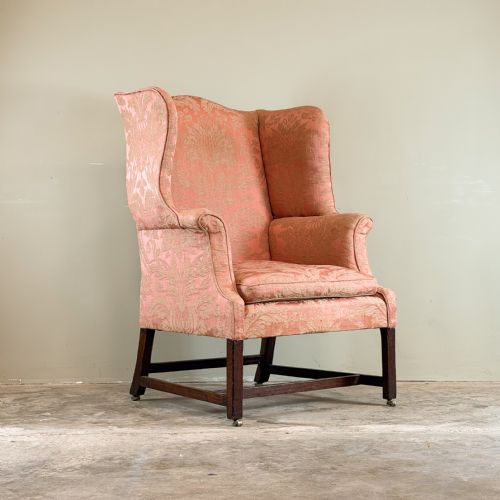
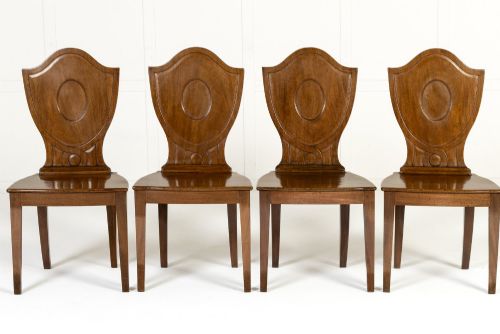
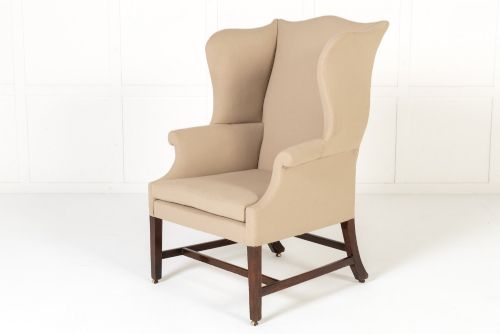
The inventory demonstrates cabinet work ranging from strict eighteenth-century production to later revivals. Forms include Chippendale, Hepplewhite, and Regency styles, alongside specialised types such as wing chairs, hall chairs, and Gainsborough armchairs.
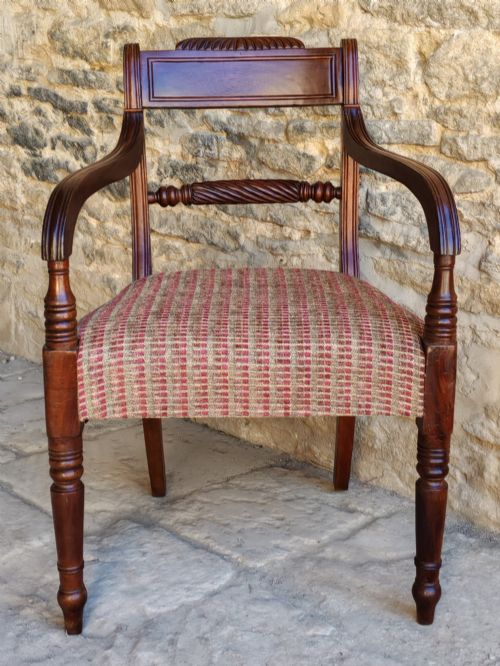
Makers and workshops utilised dense timber to build seating for domestic interiors. Surviving pieces present various iterations of carved splats, rail backs, and upholstered seats covered in leather, fabric, or damask.
Materials and Construction
Cabinet makers relied primarily on mahogany, selected for its strength and ability to take fine carved detail. Secondary woods often reinforced internal frames, while visible surfaces displayed polished grain.
Upholstery techniques involved webbing, stuffing, and covering with materials such as leather, velvet, damask, or fabric. Brass tacks frequently secured the edges of the upholstery to the timber frame.
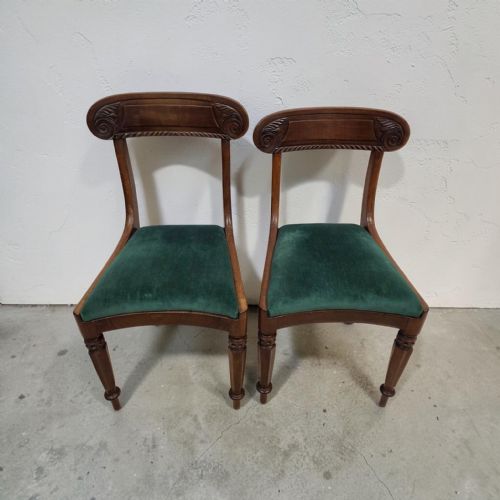
Joinery depended on mortise and tenon joints, complemented by carved ornamentation including blind fretwork, claw and ball feet, and fluted rails.
Listings feature diverse forms spanning the eighteenth and nineteenth centuries, including armchairs, dining chairs, hall chairs, and chaise longues.
Assessing Quality
Quality rests upon the crispness of the carving and the proportion of the frame. Superior examples display deeply undercut timber work and balanced lines, whereas lesser pieces show mechanical or shallow execution.
The integrity of the timber and the retention of original structural joinery dictate the standing of a chair. Pieces that maintain their original surface finish and uncompromised frames command greater consideration than those with heavily replaced components.
Gillows·Thomas Chippendale
The English Georgian Mahogany Chairs Glossary
- Carver
- An armchair, typically designed for the head of a dining table. These seats feature arms that match the companion single dining chairs.
- Splat
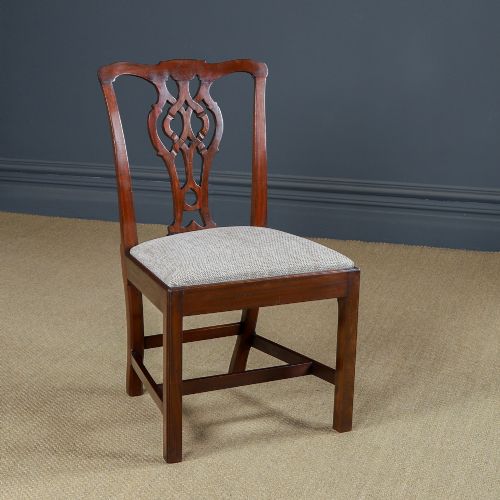
- The vertical central strip of wood in the back of a chair. Makers shaped and pierced this element to define styles such as Chippendale and Hepplewhite.
- Gainsborough chair
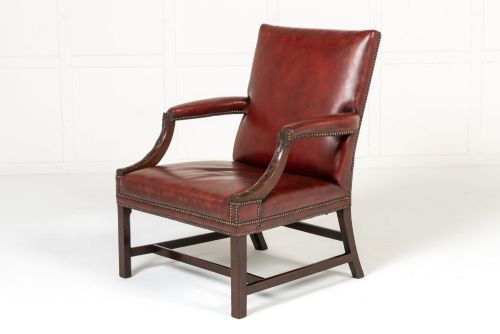
- A wide, upholstered armchair with open padded arms, low sides, and short legs. This form originated in the mid-eighteenth century for study and drawing room use.
- Bar back
- A horizontal top rail and crossbar arrangement found on nineteenth-century dining and desk chairs. This design references earlier classical motifs adapted by Regency cabinet makers.
- Claw and ball
- A carved foot depicting a bird's talon clutching a spherical ball. This motif appears frequently on eighteenth-century Chippendale chairs.
English Georgian Mahogany Chairs: Frequently Asked Questions
How do I identify a Chippendale chair?
Chippendale chairs feature characteristic interlaced pierced splats, carved top rails, and sturdy legs terminating in claw and ball or Marlborough feet. The proportion is robust, reflecting mid-eighteenth-century English design.
Later revival pieces emulate these hallmarks but often exhibit nineteenth-century construction methods and machine-cut timber rather than eighteenth-century hand work.
Were these chairs used only for dining?
While many form part of large dining sets, the classification covers numerous specialised forms. Elbow chairs, library armchairs, and desk seats served studies, morning rooms, and libraries.
Hall chairs functioned as formal seating in entrance spaces, often bearing carved armorial crests and solid wooden seats rather than upholstery.
What is a Gainsborough chair?
A Gainsborough chair is a wide armchair with an upholstered back, seat, and padded open arms supported by short uprights. They were designed in the eighteenth century for domestic comfort in parlours and studies.
Examples often feature mahogany frames with blind fret carving and leather or damask upholstery.
How do Regency chairs differ from Georgian pieces?
Regency chairs generally display lighter proportions, drawing inspiration from classical Greek and Roman forms. They frequently incorporate rope-twist rails, brass inlay, saber legs, and Trafalgar backs.
Earlier Georgian pieces lean towards heavier carved ornamentation, ribbon backs, and darker, dense mahogany timber without the brass accents common in the nineteenth century.
How should I care for mahogany chair upholstery?
Maintenance depends on the covering material, which ranges from leather and horsehair to modern damask and velvet. Regular dusting with a soft cloth preserves fabric surfaces, while leather requires occasional conditioning to prevent drying.
Timber frames benefit from gentle cleaning with a dry or lightly dampened cloth, avoiding harsh chemical polishes that degrade antique finishes.