




English Genre Painting Canvas
When you search for english genre painting canvas, you find nineteenth-century domestic and rural life captured in oils.
English Genre Painting Canvas
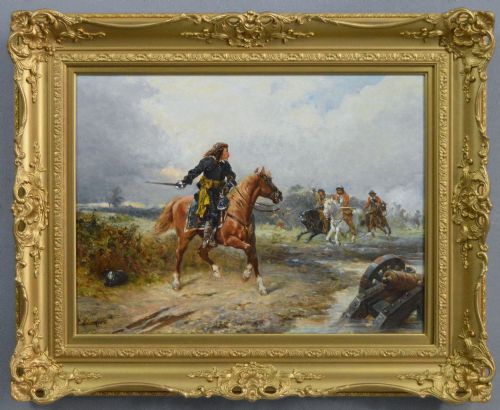
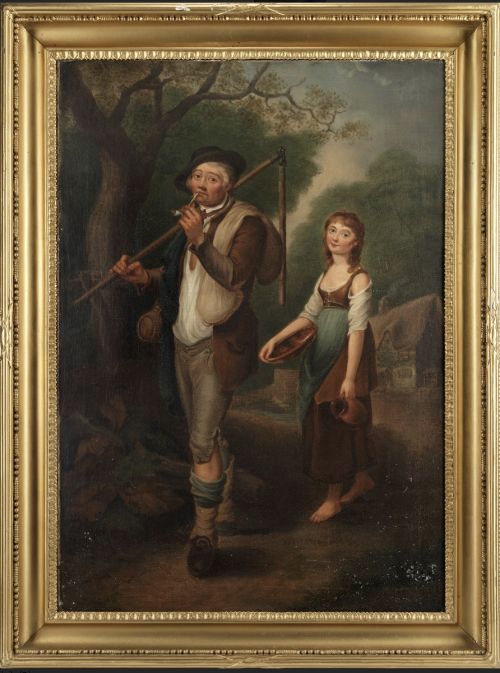
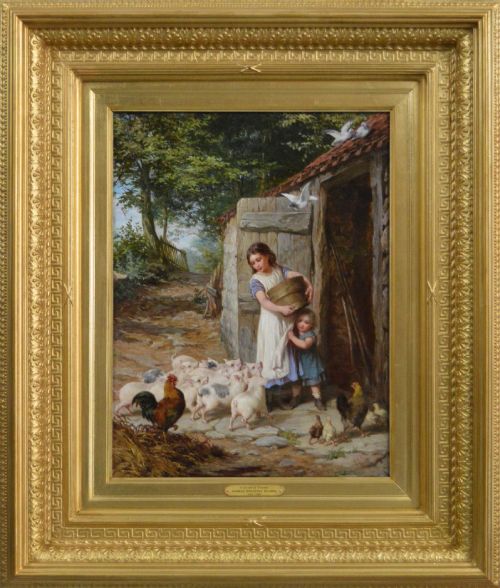
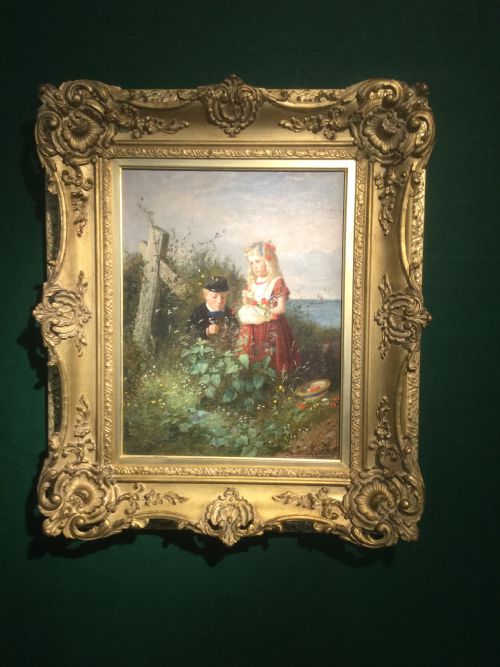
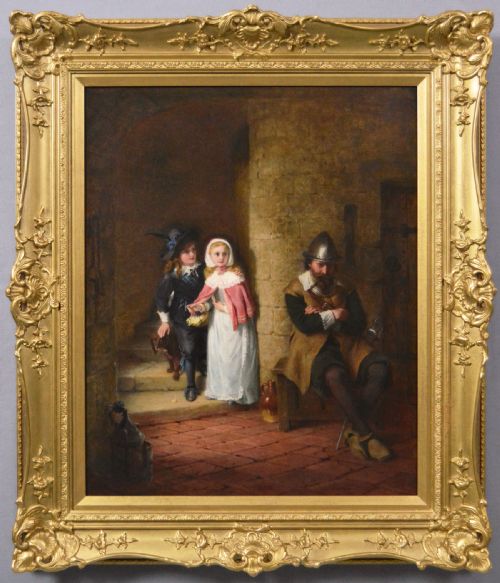
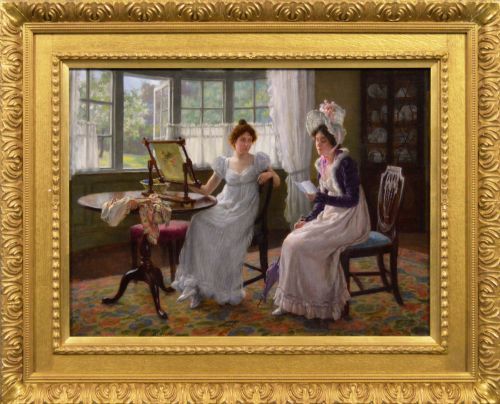
An english genre painting canvas depicts everyday domestic or rural scenes, such as children feeding animals, courting couples, and farmyard workers. These works record the social habits, interiors, and landscapes of nineteenth-century Britain through narrative and figurative subjects.
The pieces on this page span the Victorian and Edwardian eras, predominantly featuring oil on canvas framed in wood, giltwood, or gesso. You will encounter works by named Victorian artists alongside unsigned pieces from the British school.
Subjects range from quiet cottage interiors and tavern scenes to village landscapes and historical genre moments. Each canvas preserves a specific narrative frozen in pigment, reflecting the artistic tastes of the nineteenth century.
Materials and methods
The primary substrate is canvas, stretched across wooden frames and painted in oil. Artists utilised oil pigments for their depth of colour, blending capabilities, and longevity.
Many of these works retain their original frames constructed from wood with applications of gesso and gold leaf or giltwood. These frames provide structural support and historical context to the paintings.
Several canvases feature domestic animals interrupting human affairs, including pigs, poultry, guinea pigs, and rabbits sharing the Victorian interior.
Evaluating quality
Quality rests upon the artist's handling of human expression, narrative detail, and composition. Works by established painters exhibit more refined brushwork in figures and interiors compared to anonymous school pieces.
The preservation of the original canvas and the integrity of the giltwood or gesso frame influence the desirability of the piece. Clean surfaces with minimal craquelure or historical intervention command greater attention.
George Augustus Holmes·Charles Hunt·William Arthur Breakspeare·John Arthur Lomax·George Bernard O'Neill·Charles Haigh Wood·John Sanderson Wells·Henry John Yeend King·Arthur Longley Vernon·Frank Moss Bennett·Gilbert Scott Wright·John Henry Dell·Jane Maria Bowkett·Vernon Stokes·Rolinda Sharples·John Ritchie·George Cole·Henry Charles Bryant·Walter Dendy Sadler·Henry Singleton·George Morland·Henry Collins·William Shayer·Ralph Hedley·Frederick Underhill
The English Genre Painting Canvas Glossary
- Genre painting
- A style of art depicting scenes from everyday life, ordinary people, and domestic interiors. These works tell a story rather than portraying formal portraits or pure landscapes.
- Oil on canvas
- A painting technique where pigments suspended in oil are applied to a woven fabric support stretched over a wooden frame. This combination allows for rich colour blending and durability.
- Gesso
- A plaster-like mixture applied to wooden frames as a base for moulding and gilding. It provides a smooth surface for gold leaf application.
- Giltwood
- Wood that has been coated with gold leaf or gold paint. It frequently forms the decorative frames surrounding nineteenth-century paintings.
- Craquelure
- A fine network of tiny cracks in the paint surface caused by the ageing of oil layers. It serves as an indicator of age in older canvases.
English Genre Painting Canvas: Frequently Asked Questions
What is an english genre painting canvas?
An english genre painting canvas is an oil painting on fabric depicting everyday life, domestic scenes, and rural narratives from the nineteenth century.
These works focus on human stories, from children and farmworkers to tavern scenes and courting couples.
How do I date an antique oil painting?
Dating relies on the artist's recorded lifespan, stylistic markers of the Victorian or Edwardian periods, and framing materials. Inscriptions on the reverse also provide clues.
Physical evidence such as canvas weave and stretcher construction further helps establish the period.
How should I display these paintings?
These canvases require stable room temperatures away from direct sunlight and excessive moisture to protect the oil pigments and gesso frames. Proper wall hanging prevents warping of the wooden stretcher.
Matching the period frame to a suitable wall space enhances the historical character of the artwork.
Are these paintings signed by the artist?
Many works bear the signature or initials of the artist, while others originate from the broader British school without attribution. Documentation or labels on the reverse sometimes identify the creator.
Both signed and unsigned pieces reflect the prevailing aesthetic of nineteenth-century genre art.