


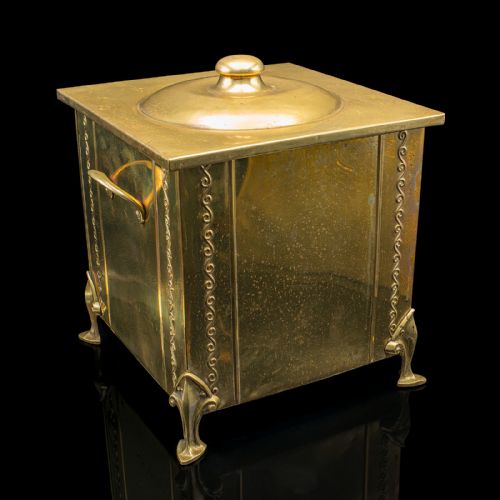


English Fireside Accessories
These English fireside accessories bring functional elegance to the hearth, offering sturdy fuel storage and reliable companions for daily coal or wood management.
English Fireside Accessories
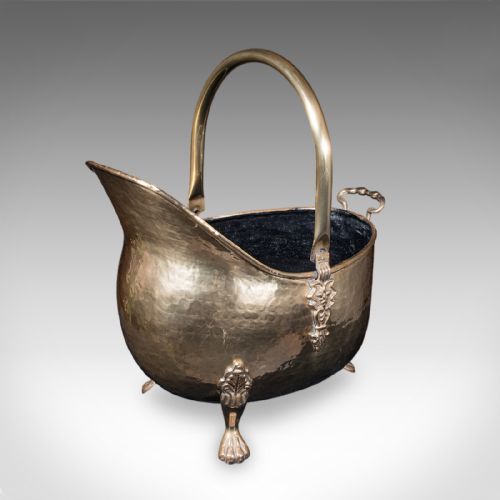
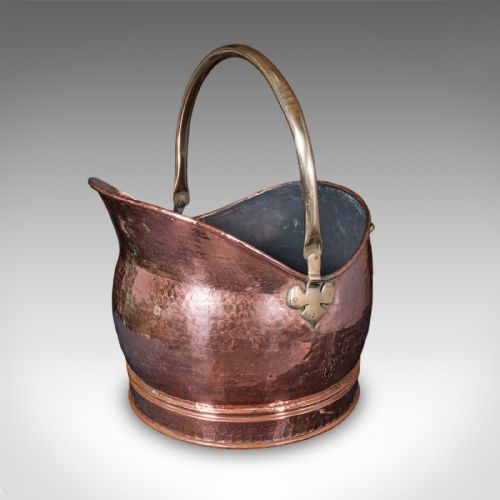
English fireside accessories encompass a practical array of coal scuttles, companion sets, log holders, and tool rests designed to manage hearth fires efficiently. These items range from Georgian peat buckets in mahogany to Victorian copper coal scuttles and cast iron tool rests.
The pieces appearing on this page span several distinct periods, including Georgian, Regency, Victorian, Edwardian, and the 1920s. Victorian examples dominate the selection, frequently utilising brass, copper, and cast iron alongside wood.
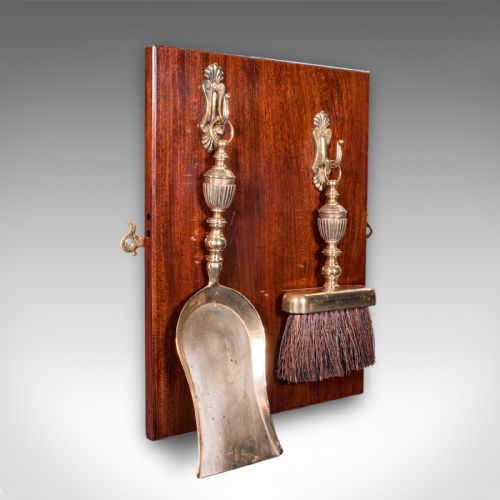
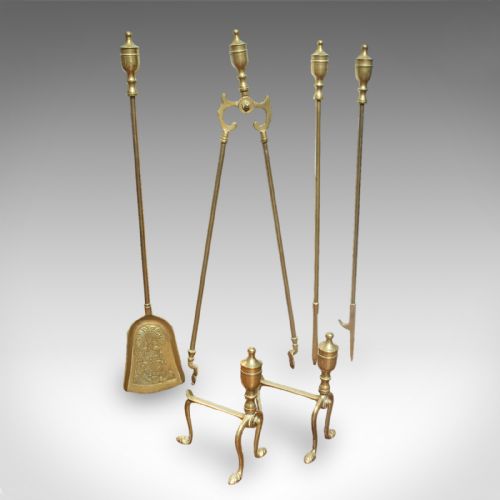
Forms vary from lidded coal bins and purdoniums to wrought iron log layers and figural companion sets like the crinoline lady. Each object served a domestic purpose in controlling fuel and tending the grate.
Materials and Construction
Makers predominantly worked with metals such as brass, copper, cast iron, wrought iron, and steel to withstand the heat and heavy use near the fireplace. Hand-finished copper and brass components often feature decorative detailing, particularly on Victorian and Art Nouveau scuttles.
Timbers including mahogany, walnut, oak, and other woods were utilised for coal bins, purdoniums, and coopered fire buckets. Coopered construction involved tightly fitting wooden staves bound together, sometimes reinforced with brass bands.
Tools and rests required forging, casting, or turning techniques to produce durable shovels, brushes, and stands that endured regular hearth maintenance.
Listings feature items in brass, copper, wrought iron, mahogany, cast iron, steel, walnut, and oak.
Evaluating Quality
Quality in these accessories rests upon the substance of the materials and the integrity of the construction. Solid brass, heavy gauge copper, and robust cast iron demonstrate superior durability compared to thinner, lighter alternatives.
The execution of detail distinguishes finer items, such as clean hand-finishing on metalwork, well-fitted wooden joints in purdoniums, and secure coopered staves in log stores. Articulated handles, sturdy hinges, and balanced tool rests indicate careful workshop production.
The English Fireside Accessories Glossary
- Companion Set
- A collection of fireside tools, typically including a shovel and brush, housed together on a stand or rest. Sets often incorporate steel and brass elements.
- Purdonium
- A specialised coal box, frequently constructed from walnut or other timbers with a metal liner, designed to sit neatly in a Victorian reception room.
- Coopered
- A method of construction using narrow staves of wood fitted together side by side to form a rounded vessel, common in buckets and bins.
- Tool Rest
- A metal stand or support used to hold fireside implements off the hearth floor when not in use.
English Fireside Accessories: Frequently Asked Questions
What are these fireside accessories?
These items are functional objects designed for tending fireplaces and storing fuel in British homes.
They include coal scuttles, tool rests, companion sets, and log bins made from metals and wood.
How were coal scuttles used?
Coal scuttles held the daily supply of coal near the hearth for convenient refueling of the fire.
Their lidded designs contained dust and debris while allowing easy access via handles for carrying.
How do I identify a Victorian piece?
Victorian accessories often feature heavy brass or hand-finished copper, alongside cast iron and walnut.
Stylistic influences from the Aesthetic Movement or Art Nouveau frequently appear on these 19th-century items.
What is a purdonium?
A purdonium is a decorative enclosed coal box, popular during the Victorian period.
They are typically made from woods like walnut with a metal interior bin to store fuel cleanly.
How do I clean brass and copper accessories?
Metal items benefit from gentle cleaning appropriate for brass and copper surfaces to maintain their finish.
Harsh abrasives should be avoided to preserve any historic patina and hand-finished details.