
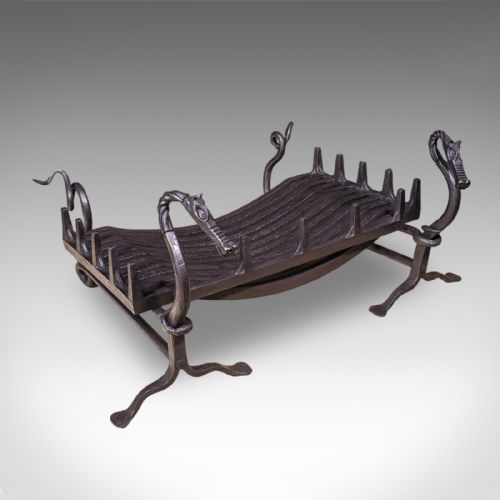


English Fireplace Grate
An English fireplace grate anchors a room with structural ironwork and classic metal craft, offering traditional warmth and period presence.
English Fireplace Grate
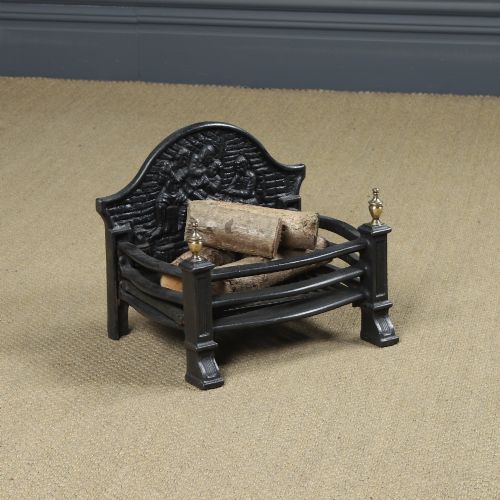
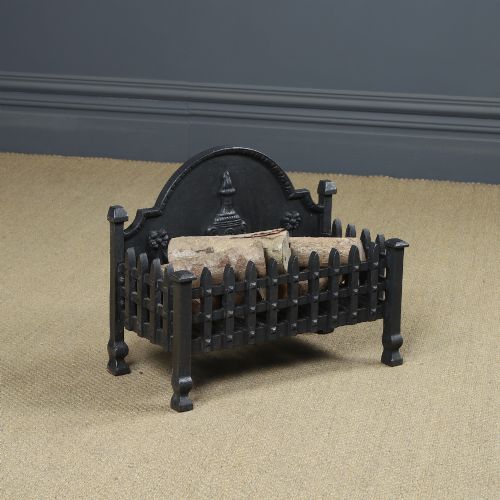
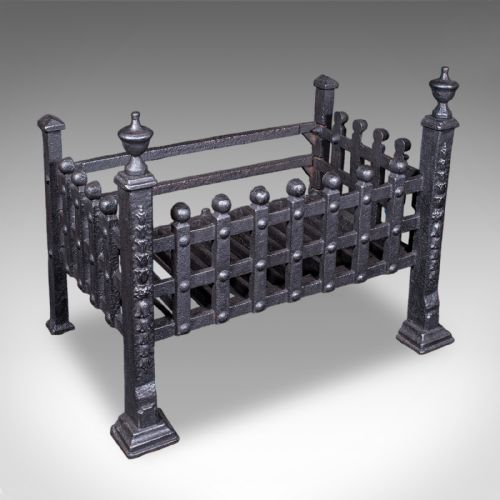
An English fireplace grate provides a functional hearth centrepiece designed to hold burning fuel safely within an open hearth. When exploring this phrase, buyers encounter open fire baskets, hearth sets complete with andirons, and log baskets intended for coal or wood. Victorian examples predominate alongside Edwardian and Georgian specimens.
The forms range from compact grates suited for smaller chambers to large inglenook fire baskets built for substantial spaces. Many pieces incorporate firebacks or matching andirons to support the basket and project heat into the room. Styles draw heavily upon Gothic Revival, Neoclassical, and Regency design vocabulary.
Materials and construction methods
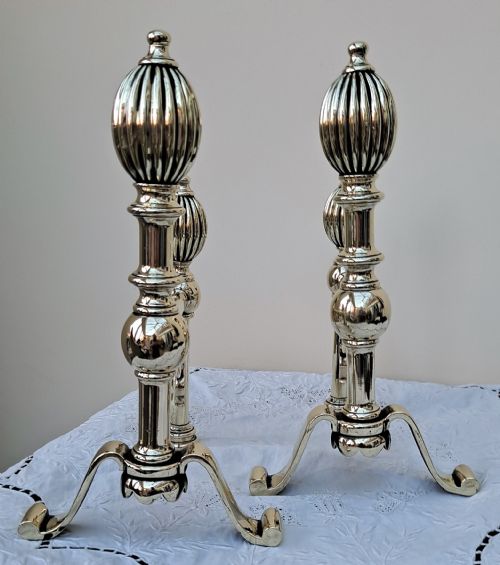
Foundries utilised cast iron and wrought iron as the primary structural mediums, shaping heavy metal into robust baskets and detailed decorative motifs. Brass components appear frequently on andirons and decorative trims, providing a bright contrast to blackened iron surfaces.
Makers integrated firebrick linings within the baskets to withstand intense heat and protect the surrounding metal frame. Construction combined heavy casting with forged iron bars, secured to endure decades of solid fuel burning.
Common design motifs include Gothic Revival, Neoclassical, Regency, and Edwardian styles.
Distinctions in quality
Quality rests upon the crispness of the iron casting and the weight of the metal utilised in the basket and legs. Finer examples display sharp, well-defined decorative motifs such as dragon patterns, Celtic crosses, or classical urns rather than soft, worn contours.
The integrity of the construction, from the thickness of the fire bars to the matching proportion of the associated andirons, determines the enduring calibre of the piece. Complete hearth sets showing uniform metalwork and intact firebricks represent the upper tier of the inventory.
The English Fireplace Grate Glossary
- Fire Grate
- A metal basket or rack designed to hold fuel inside a fireplace. These units sit within the hearth to allow airflow beneath the fire.
- Andiron
- A horizontal iron support raised on legs, used in pairs to hold logs in an open fireplace. They often feature decorative brass or iron terminals facing the room.
- Fire Back
- A heavy iron plate placed at the back of an open fireplace. This plate protects the masonry wall and reflects heat forward into the room.
- Firebrick
- A block of refractory ceramic material used to line fireboxes. It withstands high temperatures and helps retain heat.
- Inglenook
- A large recessed space for a hearth, often flanked by seats. Grates designed for these areas tend to be of substantial proportions.
English Fireplace Grate: Frequently Asked Questions
How do I choose the right size grate?
Measure the width, depth, and height of your fireplace opening carefully before selecting a basket. Ensure adequate clearance around the metal frame for proper ventilation and safety.
Consider whether your setup requires a standalone basket or a complete set including andirons and a fireback to fit the proportions of your hearth.
Can these grates burn real wood?
Most of these cast iron and wrought iron baskets were built specifically for burning solid fuels like wood or coal. Check the interior condition and firebrick linings to ensure they remain ready for active use.
Consult a qualified specialist to inspect your chimney and hearth compatibility before lighting any open fire in a period grate.
How do I clean cast iron grates?
Remove ash and debris regularly with a soft brush to prevent moisture accumulation and subsequent rusting. Wipe down exterior surfaces with a dry cloth and apply suitable grate polish if desired.
Avoid using harsh chemical cleaners that can strip the traditional dark finish from the ironwork.
What is the difference between a fire basket and an andiron set?
A fire basket is a self-contained metal grate holding the fuel, whereas an andiron set uses twin firedogs to support logs or hold a smaller basket between them. Many Victorian and Edwardian hearth sets combine both elements for stability and decoration.
Sets with andirons offer greater flexibility in arrangement but require sufficient hearth width to accommodate the matching firedogs.
How can I tell a Victorian grate from a Georgian one?
Georgian pieces often display restrained Neoclassical or Adams style symmetry with clean classical lines. Victorian examples frequently embrace heavier ornamentation, including Gothic Revival arches and elaborate cast motifs.
Examine the casting style and overall weight, as Victorian foundry work typically yielded robust, highly detailed ironwork.