

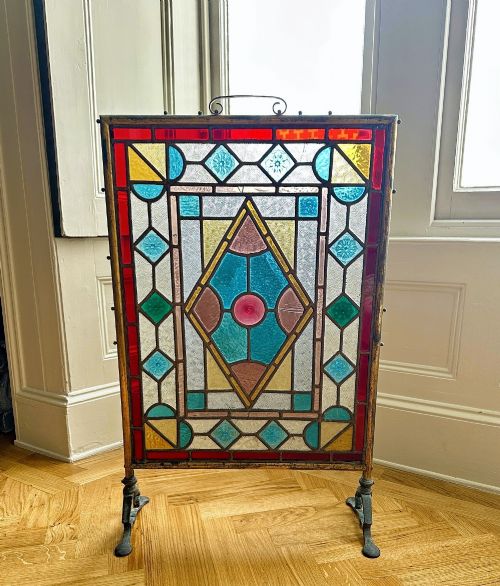


English Fire Guard
An English fire guard keeps the hearth tidy and safe, combining practical metalwork or textile panels with period craftsmanship that anchors a room.
English Fire Guard
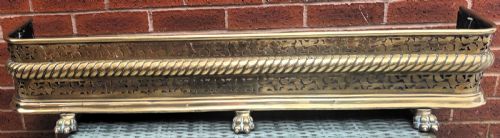
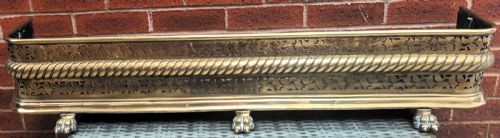
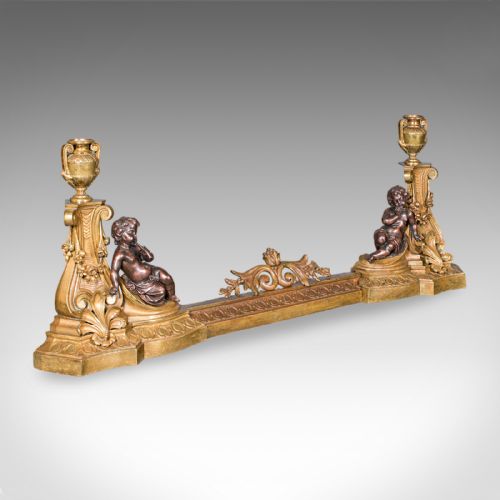
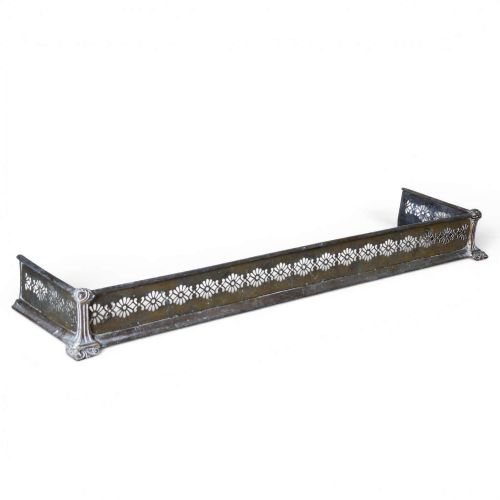
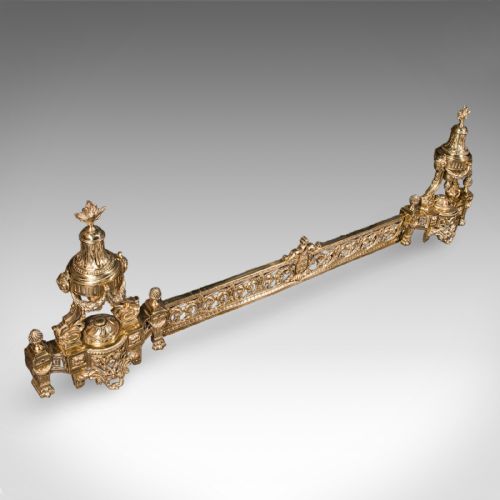
An English fire guard encompasses various hearth furnishings designed to protect rooms from sparks or to deflect heat, spanning forms such as firescreens, nursery guards, and fireplace fenders. These items appear across several key eras, predominantly featuring Victorian and Georgian designs alongside later 1930 and 1940 examples.
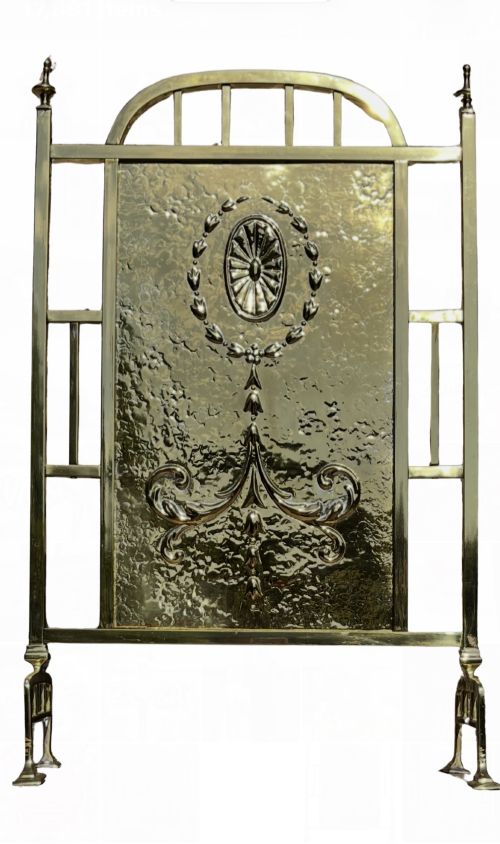
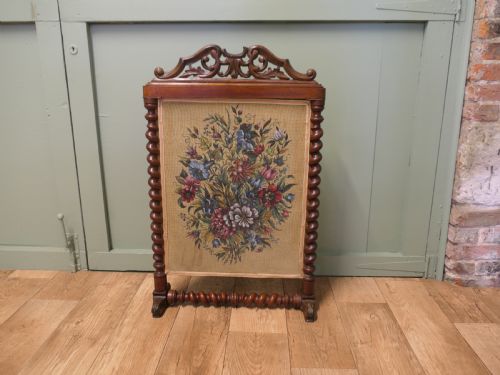
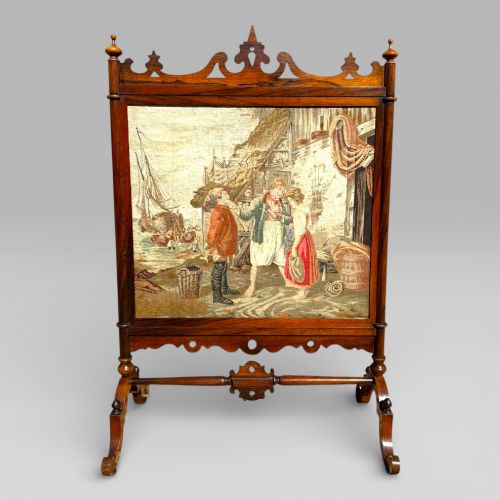
The selection on this page shows a strong representation of Victorian pieces alongside Georgian and Edwardian items. Common configurations include adjustable brass or bronze fenders, textile needlework screens mounted in rosewood or walnut, and decorative Art Nouveau copper or brass surrounds.
How they were made
Makers utilised durable metals like brass, steel, bronze, and copper to construct structural fenders and frames, often employing pierced or cast techniques for decorative effect. These metallic elements frequently paired with iron stands or substantial hearth curbs designed to withstand daily use.
Textile elements form a significant portion of these items, utilising wool, needlework, and embroidered panels set within timber frames made of rosewood, walnut, or giltwood. Stained glass and glass panels also appear, supported by metal or wooden frameworks to create decorative barriers.
English Fire Guard Retail Price Guide 2026
Typical asking prices for english fire guard among the pieces listed under this phrase on Sellingantiques today, from the lower quarter to the upper quarter. They describe what is for sale here now, not the wider market.
Some Victorian firescreens double as occasional tables through clever metamorphic hinges, letting you serve tea once the fire dies down.
What varies in quality
The refinement of the metalwork and the complexity of the casting or piercing distinguish finer pieces from simpler utilitarian items. Solid brass and bronze components with considered patination show superior craftsmanship compared to basic plated alternatives.
The intricacy and execution of the textile panels, such as detailed needlepoint and fine wool embroidery, dictate the standard of the decorative screens. Superior timber frames in rosewood or walnut with secure joinery complete the higher tier of these hearth furnishings.
The English Fire Guard Glossary
- Fender
- A low metal guard placed around the hearth to contain sparks and rolling logs. These frequently incorporate adjustable widths or upholstered seats.
- Firescreen
- A decorative panel placed before an unused fireplace to block the view of the grate and ash. They often feature embroidered textile inserts or glass panels.
- Nursery Guard
- A tall protective metal barrier designed to enclose the entire hearth area. This keeps children and pets safely away from open flames.
- Pole Screen
- A vertical screen mounted on a slender pole that allows the textile panel to slide up and down. It deflects heat from a fireplace away from a person's face.
- Needlepoint
- Stitched textile work executed on canvas mesh, commonly utilised for fire screen panels. It provides a durable and decorative surface.
English Fire Guard: Frequently Asked Questions
How do I choose the right fire guard size?
Measure the width and depth of your hearth opening before selecting a fender or screen. Ensure clearance allows for any adjustable mechanisms or surrounding furnishings.
Consider whether you need a low decorative fender or a tall nursery guard based on your room usage.
What is the difference between a fender and a firescreen?
A fender sits directly on the floor around the hearth boundary to contain sparks and frame the fireplace. It is typically constructed from metal such as brass or steel.
A firescreen stands upright to block the fireplace opening when not in use, often featuring a decorative textile or glass panel.
Can I use an antique fire guard with an active fire?
Many metal fenders and nursery guards are sturdy enough for active hearth use, provided they are stable and correctly positioned. However, delicate textile screens or antique glass panels are better suited for decorative purposes when fires are unlit.
Assess the material resilience before exposing antique pieces to direct heat and soot.
How do I care for brass and needlework components?
Clean brass and bronze gently with a soft cloth to preserve the historic patination without stripping the surface. Avoid harsh chemical polishes that can damage aged metal finishes.
Protect textile and needlework panels from direct sunlight and moisture to prevent fading and degradation of the wool or canvas.