



English Farmhouse Chair
An english farmhouse chair is a sturdy vernacular seat built for everyday utility, offering robust timber construction and honest regional character that anchors a rustic interior.
English Farmhouse Chair
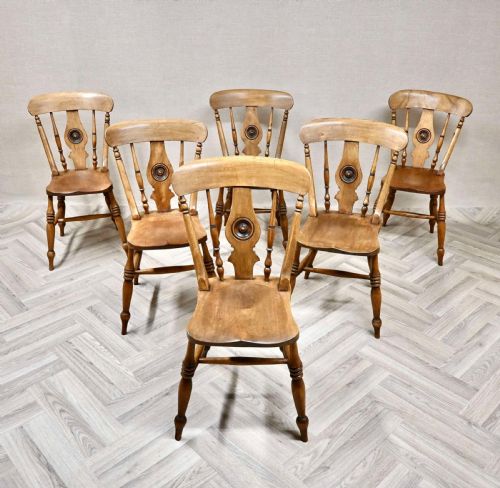
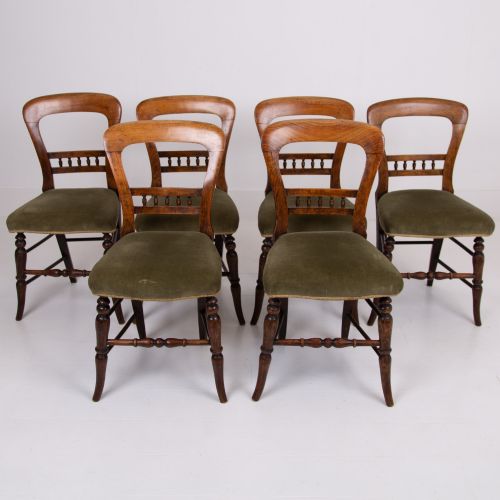
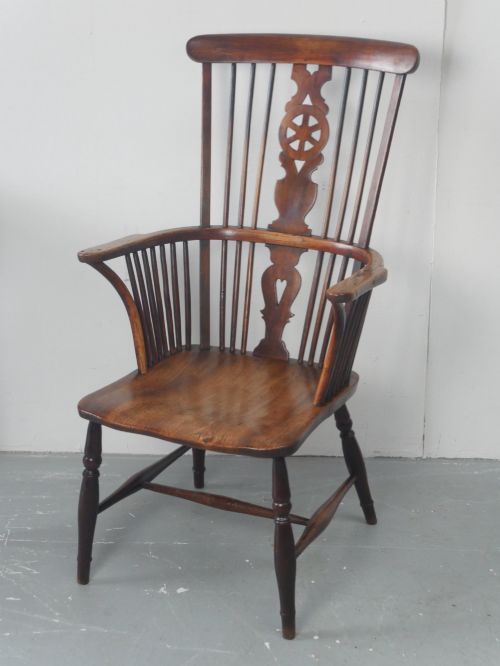
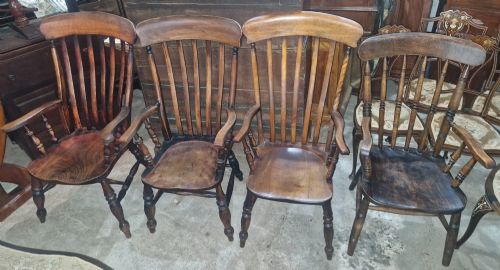
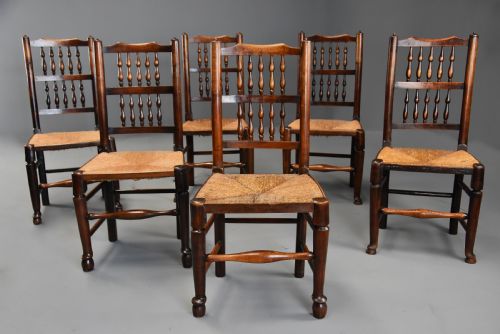
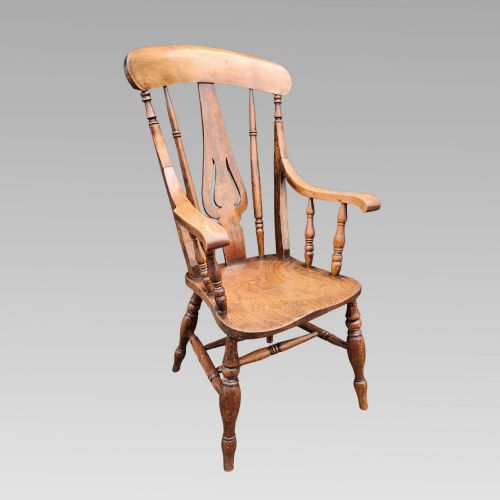
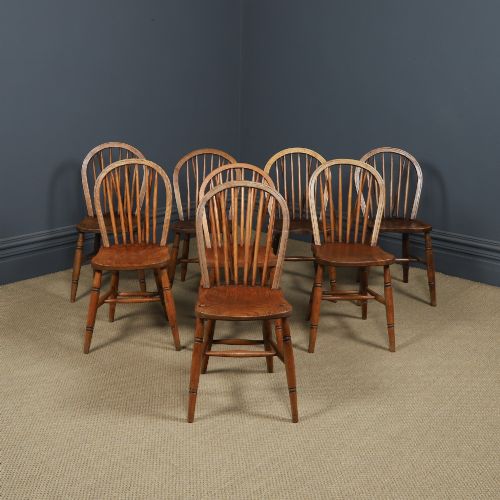
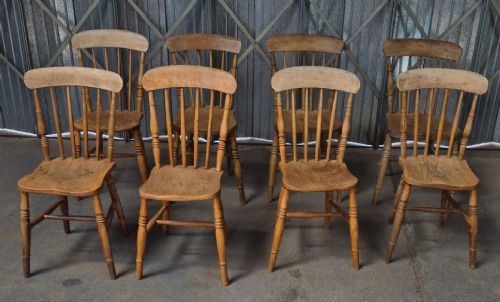
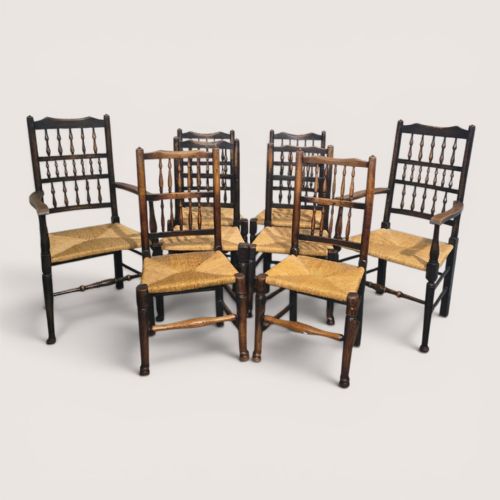
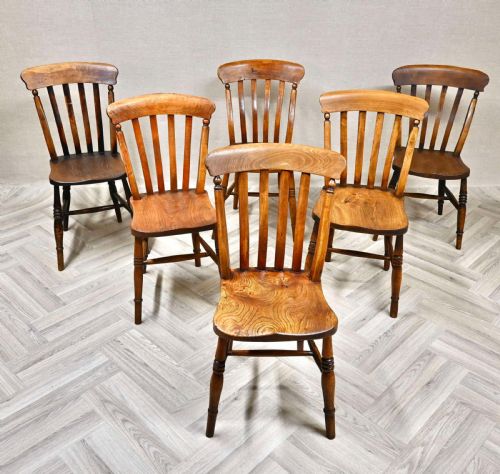
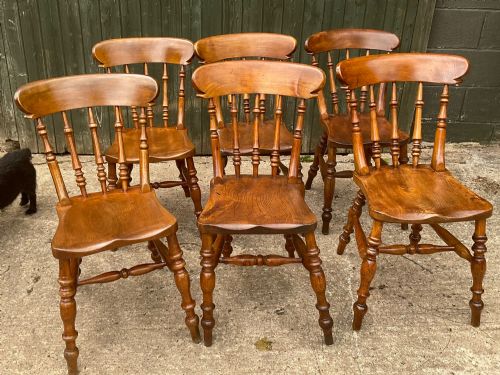
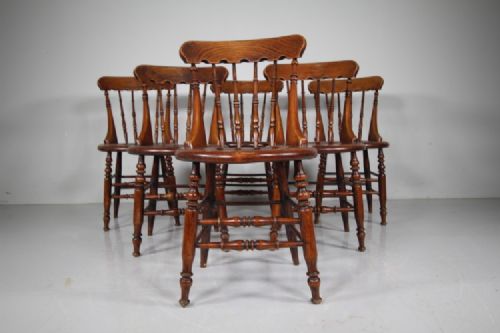
An english farmhouse chair brings solid vernacular seating into domestic spaces, appearing primarily as spindle backs, hoop backs, and Windsor armchairs or dining sets. These pieces date from the nineteenth century, including Victorian periods, and reflect regional English country traditions.
Buyers encounter sets of dining chairs alongside individual armchairs, often configured as matched sets or harlequin groups. Elm, ash, and beech form the backbone of these domestic and kitchen seating options.
What varies in quality
The distinction between ordinary utility seating and finer workshop production lies in the depth of timber selection and the sculptural confidence of the turning. Heavy elm seats with well-figured grain paired with balanced spindle arrangements represent higher standard production.
Proportion and structural integrity dictate the standing of a piece, where thick arm bow sweepings and intact original wedging demonstrate superior craftsmanship. Greater care in matching timber tones across larger dining sets elevates the group.
English Farmhouse Chair Retail Price Guide 2026
Typical asking prices for english farmhouse chair among the pieces listed under this phrase on Sellingantiques today, from the lower quarter to the upper quarter. They describe what is for sale here now, not the wider market.
Current listings demonstrate a strong presence of nineteenth-century elm, ash, and beech Windsor and spindle back chairs originating from regional English traditions.
Worksop Allsop
The English Farmhouse Chair Glossary
- Windsor chair
- A chair built with a solid wooden seat into which the legs and back sticks are independently tenoned. These chairs rely on a heavy saddle-shaped seat for stability.
- Spindle back
- A chair back constructed from multiple thin turned uprights fitted between a top rail and the seat. This form provides light yet rigid support.
- Rush seat
- A seating surface woven from dried marsh rushes twisted into cords and laced tightly over the seat frame. This technique creates a resilient and pliable pad.
- Harlequin set
- A collection of chairs that share a general style and period but vary slightly in detail, often gathered together over time rather than produced as a single batch.
- Vernacular
- Objects designed by local tradesmen for practical use rather than following high-style academic architectural or furniture dogmas. These pieces utilise regional materials and methods.
English Farmhouse Chair: Frequently Asked Questions
What defines an english farmhouse chair?
These pieces are solid wood vernacular seats built for everyday domestic utility, utilising native timbers like elm, ash, and beech in designs such as Windsors and spindle backs.
They originate largely from nineteenth-century regional workshops, prioritising structural resilience and honest construction over ornamental display.
How do I care for rush seats?
Rush seating requires dry indoor environments to prevent the natural marsh fibres from absorbing moisture and weakening over time. Regular gentle dusting keeps the woven strands intact without the need for liquid polishes.
Avoid placing these chairs in direct sunlight or near heat sources, which can make the dried plant material brittle.
Can I mix these chairs around a dining table?
Harlequin sets and matched groups of vernacular seating historically evolved through practical accumulation rather than uniform factory production. Mixing different regional variations of stick backs or Windsor chairs reflects this authentic domestic tradition.
Matching the approximate seat height and overall scale helps maintain visual balance around a dining table.
How do I tell different regional styles apart?
Regional variations emerge through local wood choices and turning profiles, such as the heavier arm bows found on Thames Valley models or the characteristic uprights of Lancashire ladder backs. Makers utilised whatever native timber grew abundantly in their immediate locale.
Examining the undercarriage construction and seat shaping often reveals the specific vernacular workshop tradition behind the piece.