

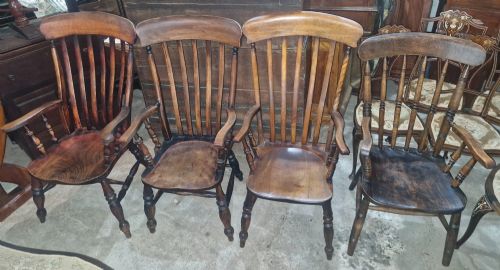
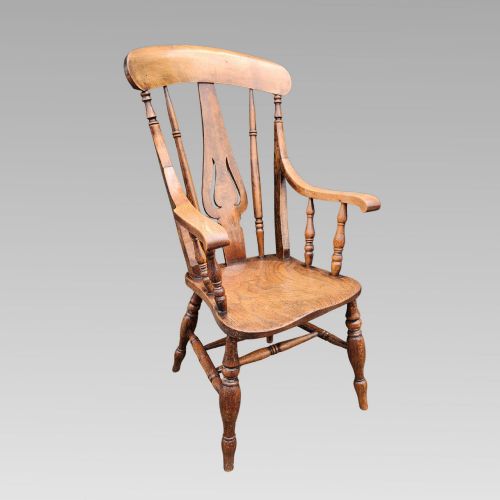


English Farmhouse Armchair
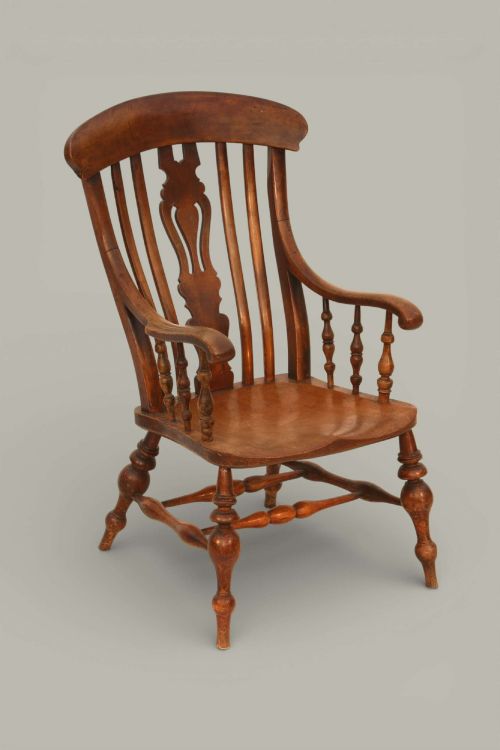
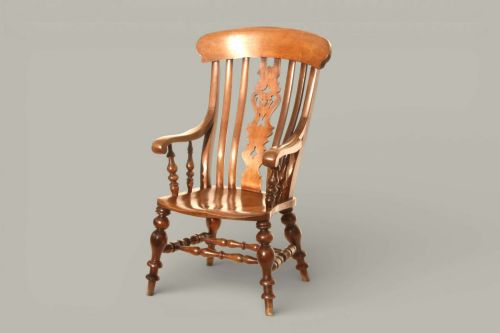
These english farmhouse armchair examples bring robust vernacular timberwork straight from the kitchen into daily use.
English Farmhouse Armchair
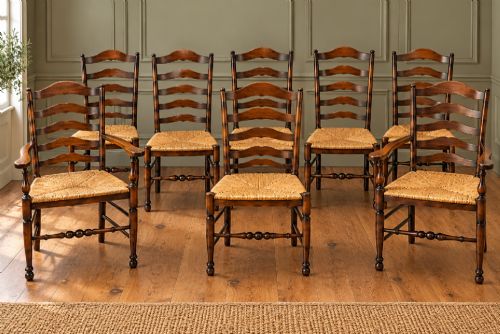
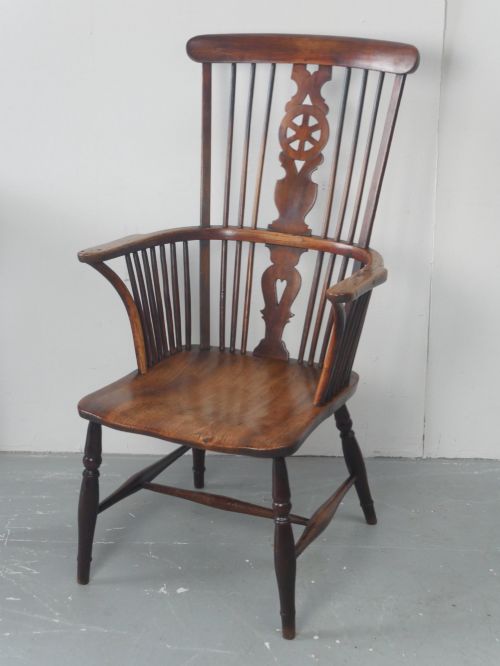
An english farmhouse armchair is a robust country seat designed for heavy daily use in nineteenth century kitchens and dining rooms. You will most commonly encounter vernacular Windsor and ladderback forms originating from the Victorian period.
Makers shaped these utilitarian chairs with generous proportions, deep seats, and tall backs to provide practical comfort without formal upholstery. The listings feature regional variations including Lancashire ladderback and spindleback designs alongside classic Windsor armchairs.
Most pieces combine several indigenous timbers within a single frame, reflecting the resourceful traditions of rural joiners. These sturdy chairs bridge the gap between simple rustic utility and enduring domestic furniture design.
Materials and construction
Regional makers built an english farmhouse armchair using a combination of elm for scooped solid seats, ash or beech for turned spindles and legs, and occasional fruitwood or yew highlights. This mixed timber construction ensured that each component served its specific structural purpose.
Turned components rely on traditional bodging techniques where green wood was shaped on pole lathes in woodland workshops before final assembly. Seats were deeply adzed or scooped out by hand to create a comfortable ergonomic dish.
English Farmhouse Armchair Retail Price Guide 2026
Typical asking prices for english farmhouse armchair among the pieces listed under this phrase on Sellingantiques today, from the lower quarter to the upper quarter. They describe what is for sale here now, not the wider market.
Assessing quality in country seating
The distinction between standard utility seating and superior examples lies in the balance of timber selection and turning crispness. Better pieces display carefully figured elm seats and well-balanced spindle configurations.
Proportion and stance dictate the visual weight of an english farmhouse armchair, with finer examples maintaining elegant rake in the legs and refined arm bow shaping. Heavy-handed repairs or clumsy replacement spindles diminish the original character.
The English Farmhouse Armchair Glossary
- Windsor
- A traditional wooden chair featuring a solid carved seat into which the legs and back bow are independently tenoned. This construction method provides exceptional structural stability.
- Ladderback
- A tall chair back constructed from horizontal wooden slats or rails set between two upright posts. This style has deep roots in vernacular Lancashire chairmaking.
- Spindleback
- A chair back featuring numerous vertical turned wooden rods supporting the top rail. These slender members distribute weight evenly across the backrest.
- Rush seat
- A traditional bottom woven from dried marsh rushes twisted into cords and wrapped around the seat rails. It offers a resilient and pliable surface for sitting.
- Bodger
- A travelling pole-lathe turner who produced chair legs and spindles in woodland encampments near the source of timber. Their output supplied local chairmakers with essential components.
English Farmhouse Armchair: Frequently Asked Questions
What is an english farmhouse armchair?
An english farmhouse armchair is a traditional wooden seat produced during the nineteenth century for rural domestic settings. These chairs prioritise functional strength and ergonomic comfort over decorative excess.
They typically feature sturdy timber frames, solid elm seats, and vernacular turning styles such as Windsor or ladderback profiles.
How were these armchairs used originally?
These chairs served as principal seats around farmhouse kitchen tables and hearths where durability mattered most. Families used them daily for dining, resting, and domestic tasks.
Their robust construction allowed them to withstand heavy treatment in busy working households over generations.
How do I care for a wooden country armchair?
Living with these chairs requires basic maintenance to keep the dry timber stable and nourished. Keep them away from direct heat sources and sudden temperature shifts to prevent wood splitting.
Apply a traditional beeswax polish occasionally to feed the grain and maintain a soft natural sheen on the surface.
How can I tell the Victorian period pieces apart?
Nineteenth century country chairs show their age through timber shrinkage, hand tool marks, and authentic wear patterns on the seat and arms. Variations in turning style and wood combinations often point to regional workshops.
Examining the wedged joints beneath the seat reveals traditional construction methods unique to this era.