

English Crystal Glassware
English crystal glassware ranges from eighteenth-century air twist wine glasses to nineteenth-century decanters, prized for their clarity and tactile weight.
English Crystal Glassware
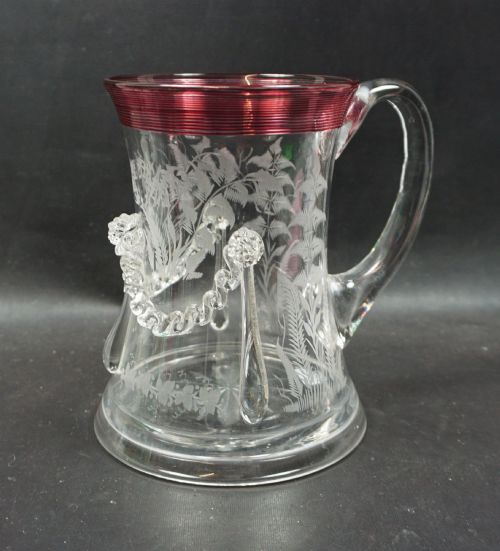
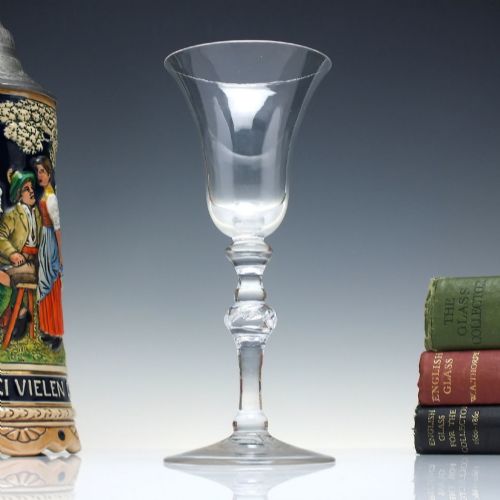
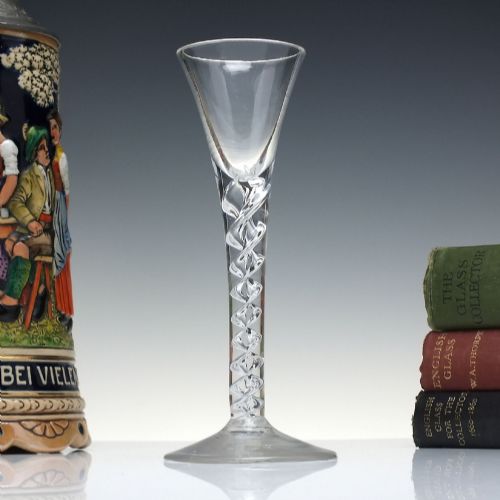
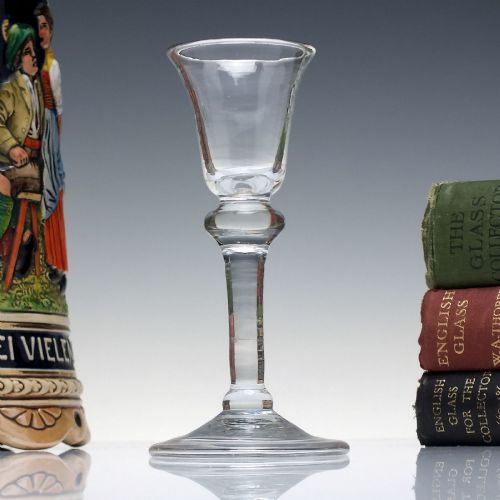
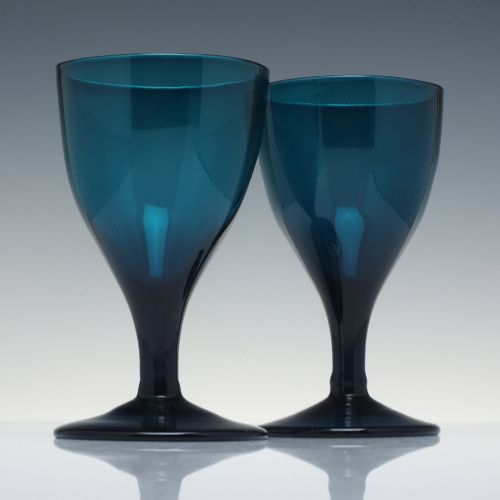
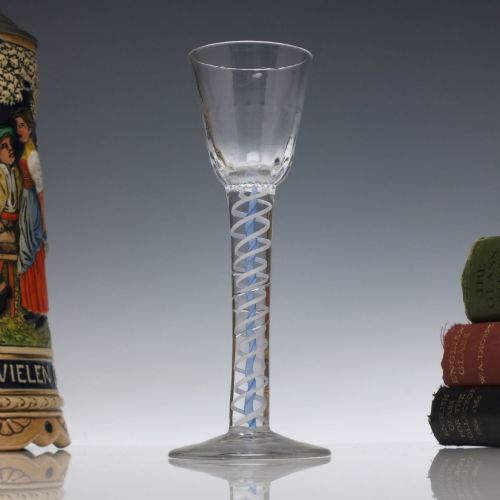
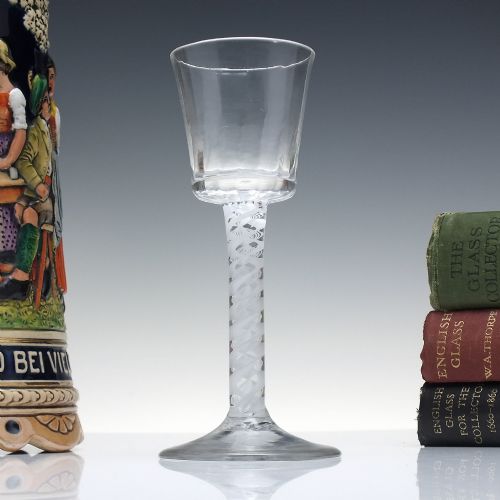
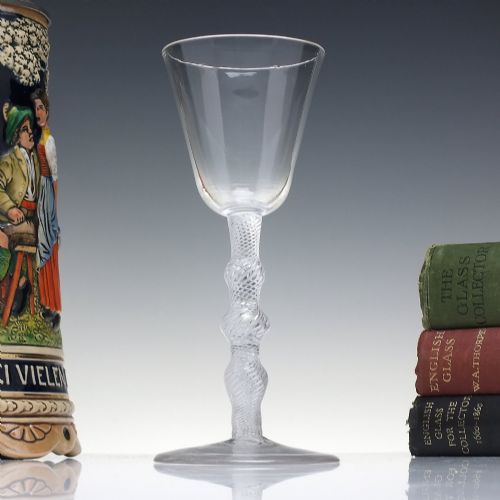
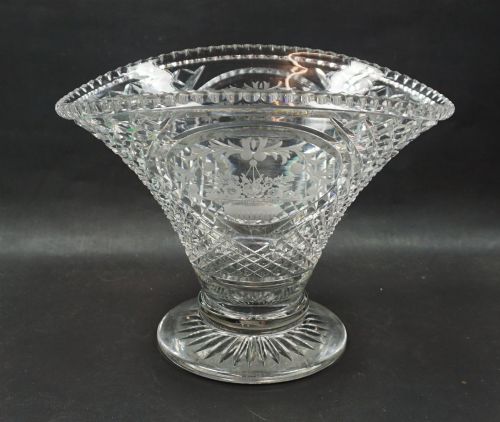
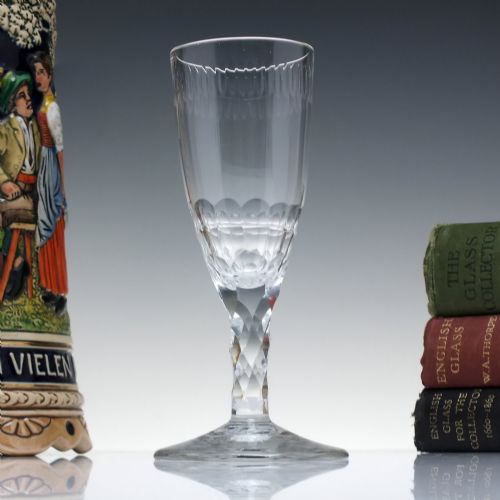
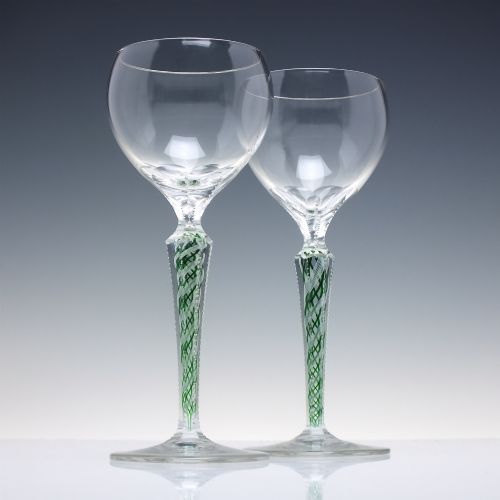
When you search for english crystal glassware, you encounter drinking vessels, decanters, and serving pieces spanning the eighteenth century to the early twentieth century. Georgian wine glasses and ale glasses with air twist or opaque twist stems appear alongside Victorian rummers and Edwardian tumblers.
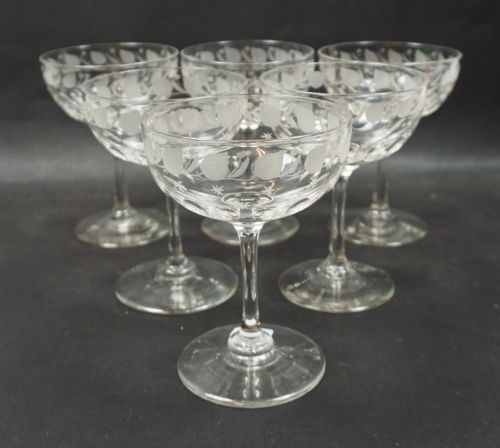
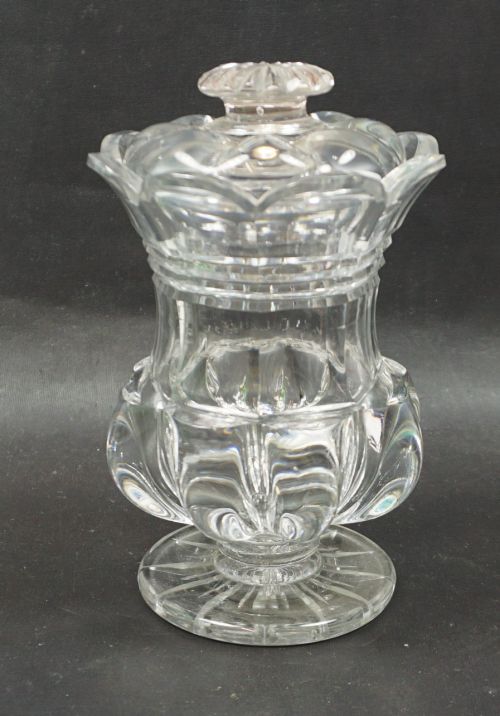
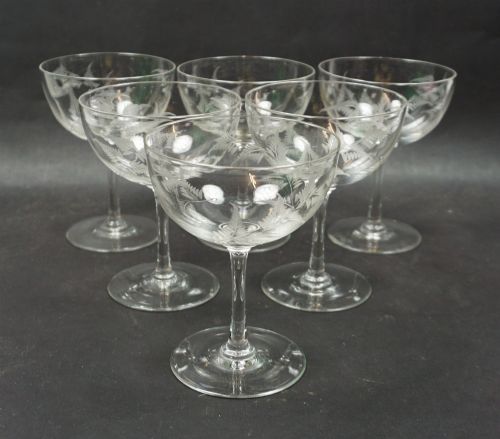
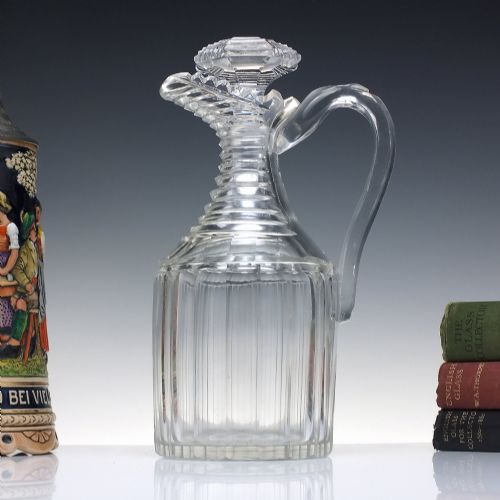
The domestic forms include celery vases, carafes, champagne coupes, and jelly glasses. Heavy cut crystal whiskey tumblers and pillar cut decanters represent the later nineteenth and early twentieth centuries on this page.
Distinctions in standard
Quality rests upon the optical purity of the metal and the precision of the hand-cutting or engraving. Superior pieces exhibit exceptional clarity without cloudiness or heavy inclusions, alongside crisp, deep facets that catch the light cleanly.
Proportion and balance dictate the desirability of stemmed drinking vessels, where the relationship between bowl, stem, and foot reveals the maker's skill. Finer examples display meticulous control in delicate air twists and deeply etched floral motifs like hops and barley.
English Crystal Glassware Retail Price Guide 2026
Typical asking prices for english crystal glassware among the pieces listed under this phrase on Sellingantiques today, from the lower quarter to the upper quarter. They describe what is for sale here now, not the wider market.
Listings span Georgian, Victorian, and Edwardian periods, featuring lead crystal, cranberry glass, and flint glass across various drinking vessels.
Stevens & Williams
The English Crystal Glassware Glossary
- Air twist
- A stem containing elongated internal air spirals formed during manufacture. This technique creates a delicate shimmering thread pattern inside the transparent glass.
- Flint glass
- An early British term for high-clarity glass containing lead oxide. It provided the heavier weight and brilliance essential for detailed cutting.
- Cranberry glass
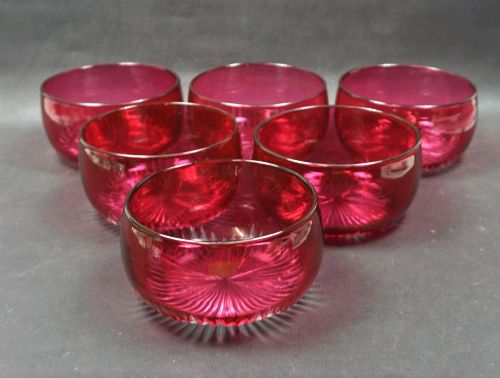
- A transparent red glass coloured with gold chloride. It appears frequently in Victorian tableware as an overlay or solid hue.
- Celery vase
- A tall vessel used on the nineteenth-century dining table to display celery upright in salted water. These pieces often exhibit heavy pillar cutting or facet work.
English Crystal Glassware: Frequently Asked Questions
How do I date an air twist wine glass?
Eighteenth-century air twist glasses typically exhibit light baluster or straight stems with intricate internal spiral threads, often paired with folded feet.
Examine the foot for pontil marks and check the bowl shape, as ogee and bell forms predominate during the mid-Georgian era.
What is the difference between flint glass and lead crystal?
Flint glass historically referred to clear, dense glass containing lead oxide, developed in England to improve refractive brilliance.
Lead crystal is a modern term encompassing similar high-lead formulations prized for weight and acoustic resonance.
How were Victorian decanters used?
Pillar cut decanters served to hold wine or spirits on the dining table, often paired with matching stoppers to preserve the contents.
The heavy lead glass protected the liquid from direct sunlight and provided stability on sideboards during formal meals.
Are cranberry glass pieces solid or cased?
Victorian cranberry items appear both as solid coloured metal and as cased pieces where a thin layer of red glass overlays clear crystal.
Cased vessels allowed artisans to cut through the outer cranberry layer to reveal the clear glass beneath, creating striking contrast.