

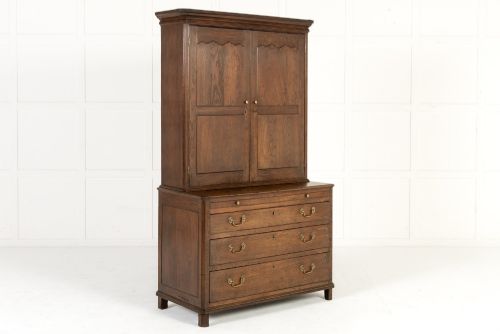
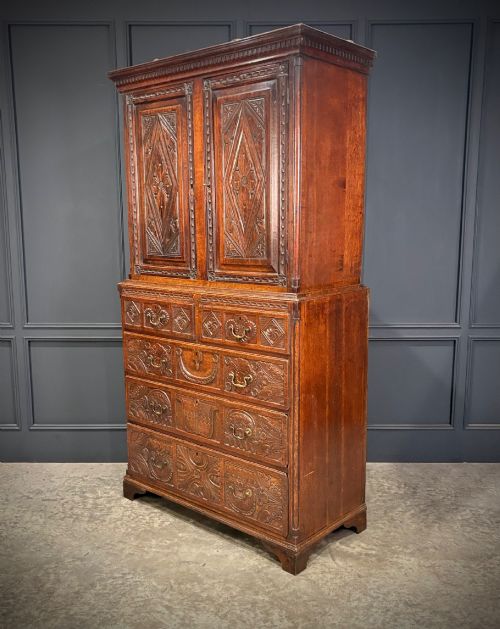


English Country Wardrobe
An English country wardrobe offers robust storage, uniting practical utility with the honest character of regional cabinet-making.
English Country Wardrobe
An English country wardrobe encompasses substantial storage furniture built to serve domestic needs in rural houses and large households. When exploring an English country wardrobe, buyers encounter forms that span several centuries, with particular emphasis on pieces originating from the eighteenth and nineteenth centuries.
Makers working within the Georgian period and the broader nineteenth century produced these cabinets using regional timbers suited to vernacular traditions. The resulting pieces range from simple planked constructions to architecturally influenced designs incorporating Gothic Revival details.
How they were made
Makers relied primarily on native timbers, selecting solid oak for durable eighteenth-century cupboards and versatile pine for many nineteenth-century examples. Construction methods prioritised sturdy joinery, panelled doors, and heavy framing designed to withstand decades of daily use in busy households.
Surface treatments varied according to period and taste, ranging from polished natural wood to later applied paint finishes such as green. Additional detailing relied on functional metal hardware including brass handles and iron hinges that secured large doors and deep compartments.
English Country Wardrobe Retail Price Guide 2026
Typical asking prices for english country wardrobe among the pieces listed under this phrase on Sellingantiques today, from the lower quarter to the upper quarter. They describe what is for sale here now, not the wider market.
Listings feature pieces spanning the eighteenth century, the nineteenth century, and nineteen hundred, constructed from oak, pine, and painted wood.
What varies in quality
The standard of a piece rests heavily on the selection of timber and the integrity of its original construction. Superior examples display well-figured oak boards and harmonious proportions that reflect thoughtful proportion by regional joiners.
Subsequent alterations alter the character of these items, distinguishing untouched surfaces from those featuring later painted finishes. Original hardware and undisturbed interior fittings elevate the standing of a cabinet among traditional storage furniture.
The English Country Wardrobe Glossary
- Housekeepers Cupboard
- A large storage cabinet traditionally used for housing household linens, dry goods, and domestic equipment. These pieces often feature upper cupboard doors combined with lower drawers or smaller compartments.
- Linen Press
- A tall piece of furniture designed specifically for storing folded garments and textiles on sliding trays or shelves. The upper section typically encloses press shelves while the base provides deeper drawer storage.
- Gothic Revival
- An architectural and decorative style drawing inspiration from medieval forms. In wardrobe design, this style manifests through pointed arches, lancet panels, and vertical emphasis.
- Georgian
- A design period spanning the eighteenth century characterised by classical proportions and regional adaptations of prevailing architectural trends. Furniture from this era balances robust construction with refined detailing.
English Country Wardrobe: Frequently Asked Questions
What is an English country wardrobe?
An English country wardrobe is a traditional storage cabinet originating from rural workshops during the eighteenth and nineteenth centuries. These pieces were built by regional makers to serve practical domestic functions.
They encompass forms such as housekeepers cupboards, linen presses, and tall panelled wardrobes. Their construction relies heavily on native timbers like oak and pine.
How were these cupboards used?
These cabinets served central functions in domestic organisation, primarily storing household textiles, folded linens, and everyday garments. Large upper sections accommodated bulky items while lower drawers held smaller possessions.
In large houses, housekeepers utilised them to maintain control over household supplies and household linen inventories. Their robust build ensured they could withstand constant daily handling.
How do I date an antique wardrobe?
Dating relies on observing construction techniques, timber selection, and stylistic details present in the woodwork. Eighteenth-century examples frequently feature heavy oak framing and hand-planed panels.
Later nineteenth-century pieces often incorporate pine secondary woods and stylistic influences such as Gothic Revival motifs. Hardware styles and surface treatments also provide valuable chronological clues.
Are painted finishes original?
Painted finishes on these pieces frequently represent later additions applied during subsequent redecoration rather than original eighteenth-century schemes. Descriptions often note finishes like later painted green to indicate this secondary layer.
Untouched timber surfaces contrast with these applied coatings. Evaluating the underlying wood helps determine the history of the surface.