



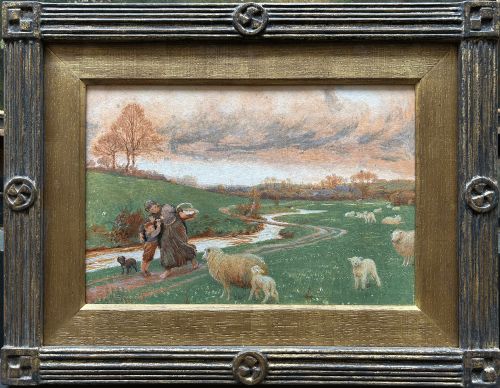
English Country Scene Oil
An english country scene oil brings the quiet fields, rivers and farmyards of Britain into a room through nineteenth and early twentieth-century brushwork.
English Country Scene Oil
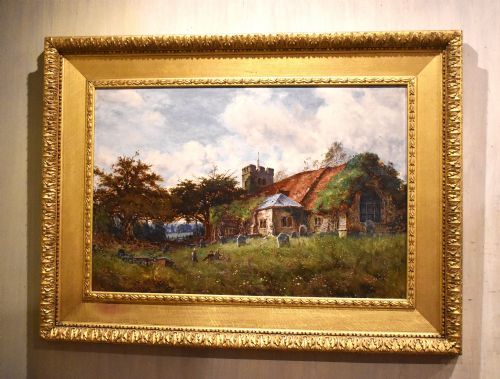
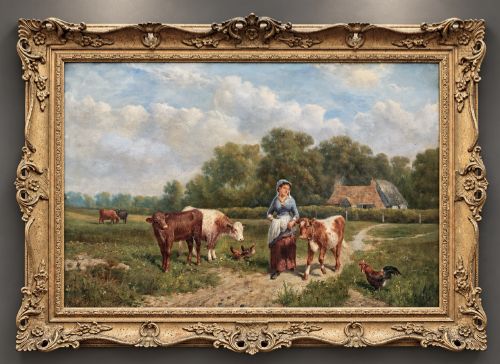
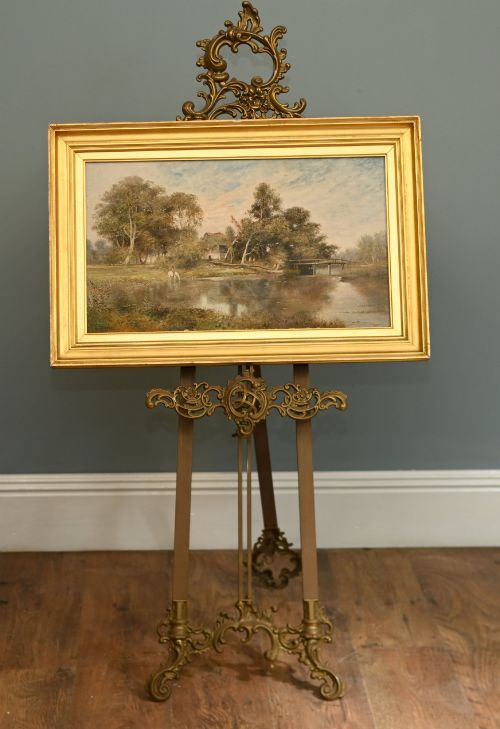
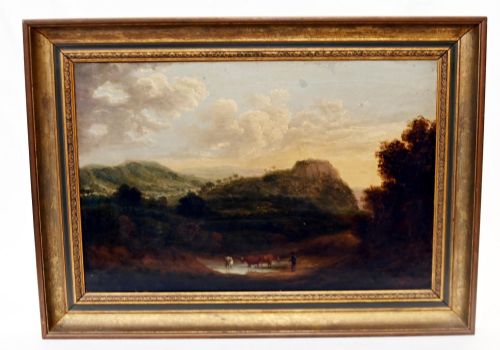
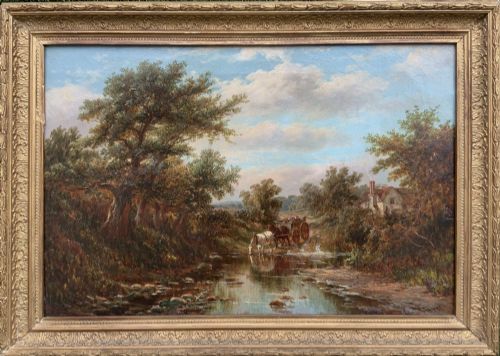
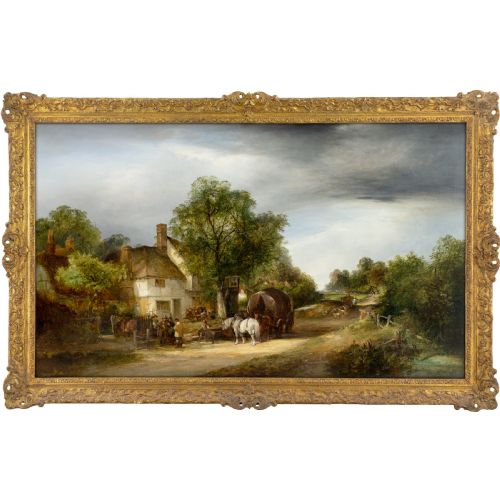
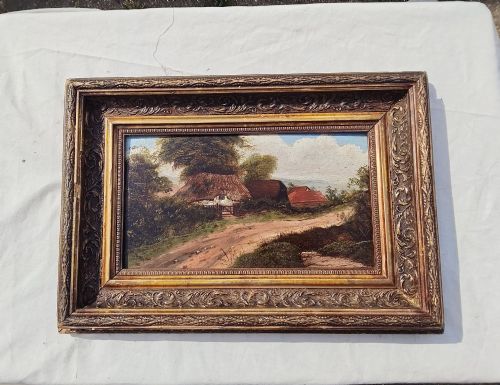
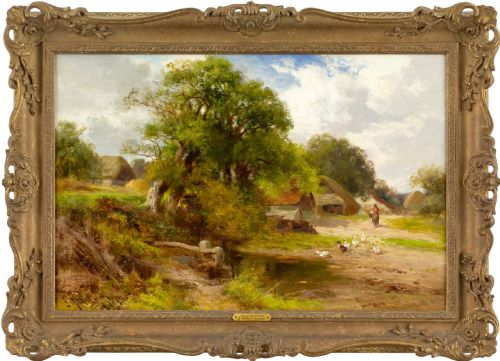
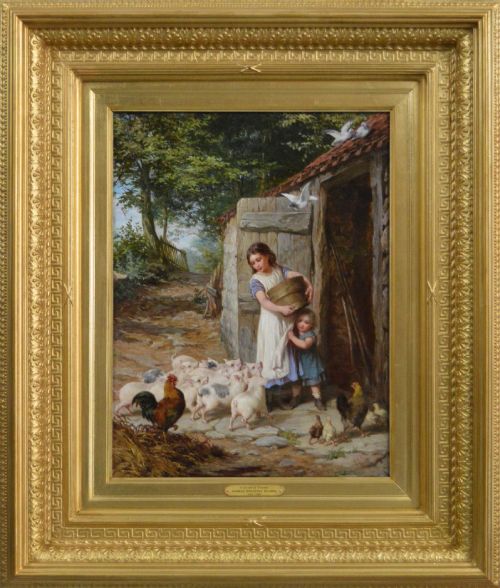
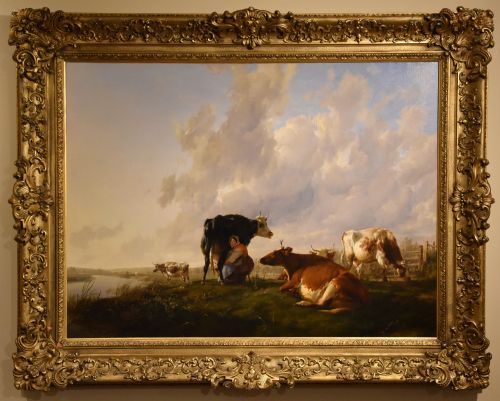
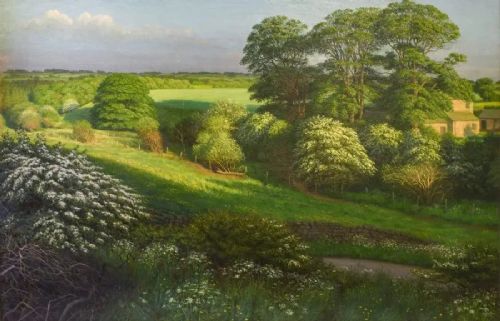
When you search for an english country scene oil, you encounter framed canvases, boards and panels depicting rural life, pastoral landscapes and agricultural settings. These works range from Victorian pastoral views to Edwardian village scenes and twentieth-century interpretations of the British countryside.
The pieces on this page lean heavily into nineteenth-century and early twentieth-century traditions, featuring cottages, livestock, rivers and figures at work or leisure. Creators span named regional artists and members of the English School working across rural counties.
Subjects frequently capture farmyards, cattle, sheep, harvest fields and woodland paths under varied seasonal light. They provide a direct visual record of rural England as it appeared to painters working from the Victorian era into the early twentieth century.
Materials and Technique
Makers built these compositions using oil paint applied to canvas, wooden panels, board or card. The pigment is often layered with gesso preparation on the support, capturing texture in foliage, thatched roofs and fields.
Many works retain their original giltwood or gold leaf frames, which complement the warm earthy tones of the oils. Support materials vary from traditional stretched canvas to small wooden boards suited for plein air sketching.
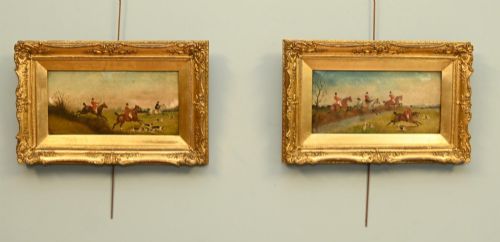
Represented styles include Victorian pastoral, British impressionism, sporting art and the English School.
Distinctions in Quality
Quality rests in the dexterity of the brushwork and the artist's command of light, atmosphere and perspective within the rural setting. Stronger pieces display confident handling of figures and animals integrated naturally into the landscape.
The integrity of the original surface, stability of the oil paint, and the preservation of the period frame contribute significantly to the standing of an individual painting.
Thomas Sidney Cooper·Henry H Parker·Thomas Walker Bretland·Sydney Yates Johnson·Ernest Higgins Rigg
The English Country Scene Oil Glossary
- Oil on Canvas
- Pigment mixed with drying oil applied to a stretched woven fabric support. This remains the most common medium for larger nineteenth-century landscapes.
- Gesso
- A plaster-like mixture applied to wood panels or frames to prepare a smooth surface for painting or gilding. It provides a stable foundation for the oil layers.
- English School
- A classification for artists working within British artistic traditions without necessarily belonging to a specific formal movement. It groups regional painters sharing common stylistic roots.
- Giltwood
- Wood carved and covered with a thin layer of gold leaf or metallic powder. These frames define the presentation of period oil paintings.
English Country Scene Oil: Frequently Asked Questions
What periods do these paintings cover?
The available works span primarily from the nineteenth century through the early twentieth century, incorporating Victorian, Edwardian and later British realism movements.
Dates extend from the early eighteen-hundreds up to mid twentieth-century interpretations of rural life.
What surfaces were used?
Artists painted on various supports including stretched canvas, wooden boards, card and wood panels. Each material affects the texture and preservation of the oil paint.
Canvases are typically found within period giltwood frames, while smaller sketches often appear on board or panel.
Who painted these scenes?
Works originate from named British artists, regional painters and members of the English School. Some pieces are attributed to specific practitioners of Victorian pastoral and sporting art.
Signatures or attribution notes often link the paintings to specific counties and rural communities.
How do I care for an oil painting?
Keep paintings away from direct sunlight, high humidity and sudden temperature fluctuations to protect the canvas and oil pigments. Dust the surface gently with a soft, dry brush.
Avoid using liquid cleaners on the paint or the gilt frame.