

English Country Couch
An English country couch brings deep comfort and traditional style to a room, offering generous proportions built for long sitting.
English Country Couch
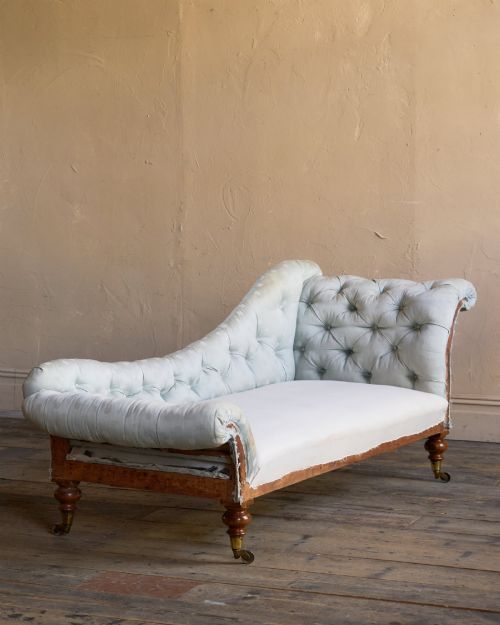
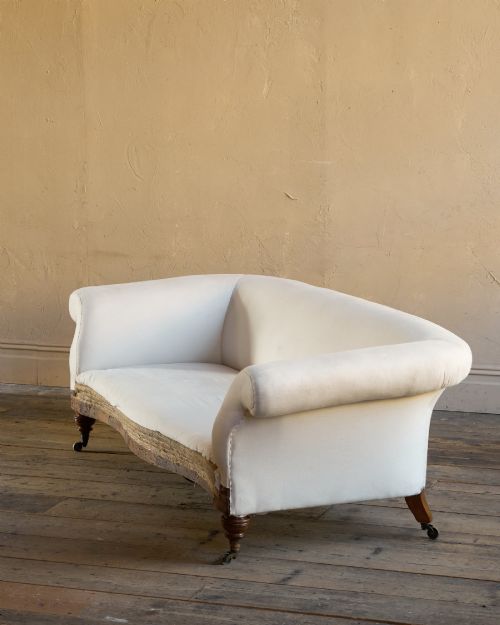
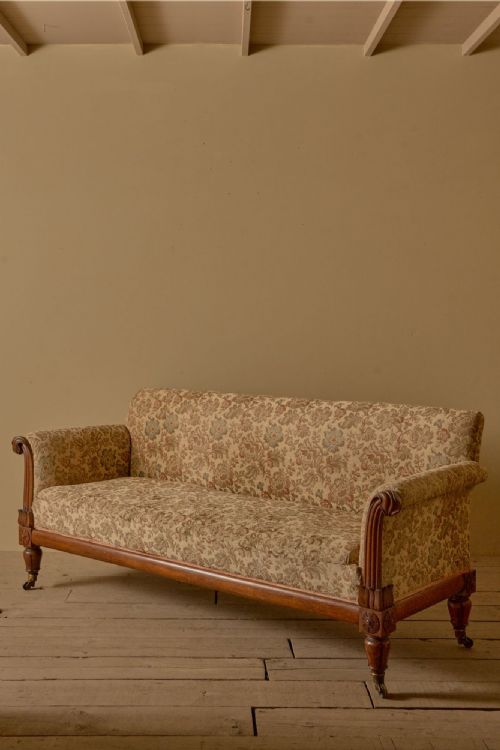
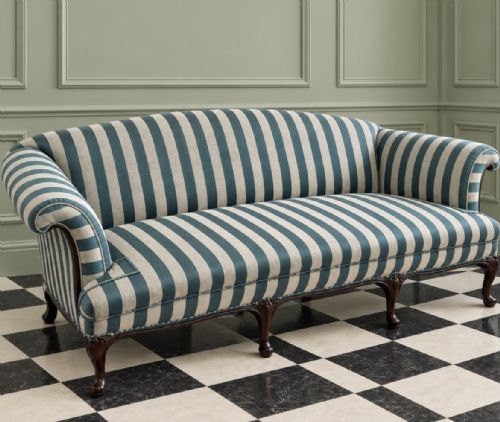
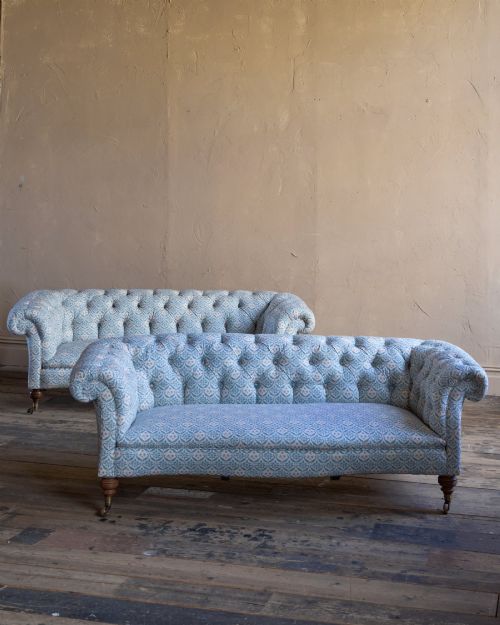
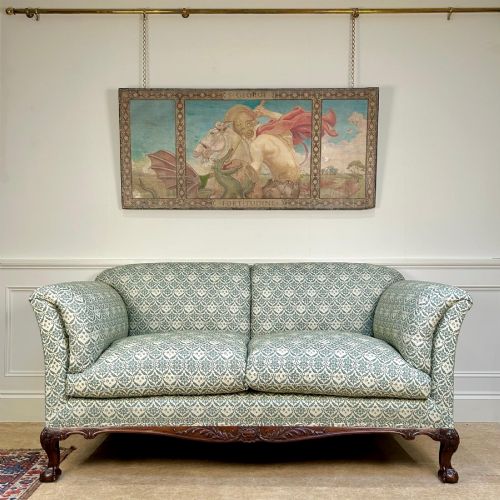
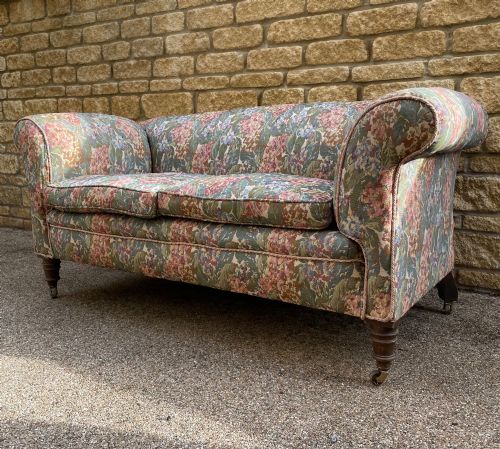
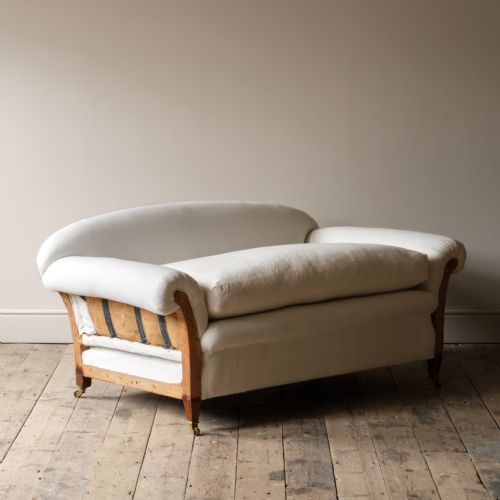
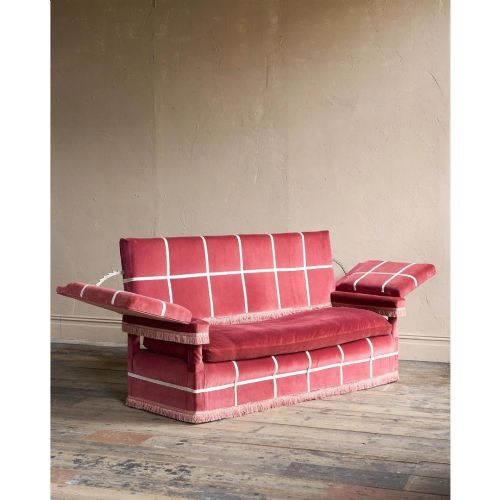
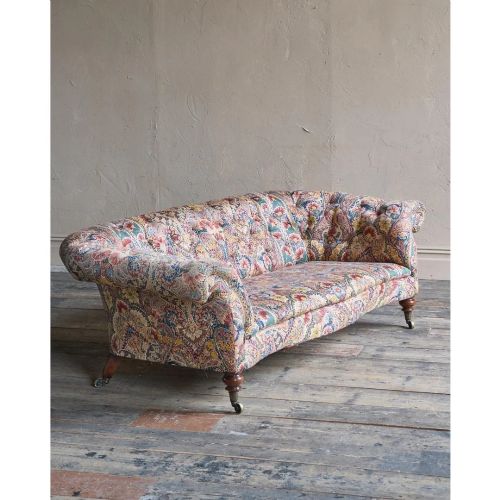
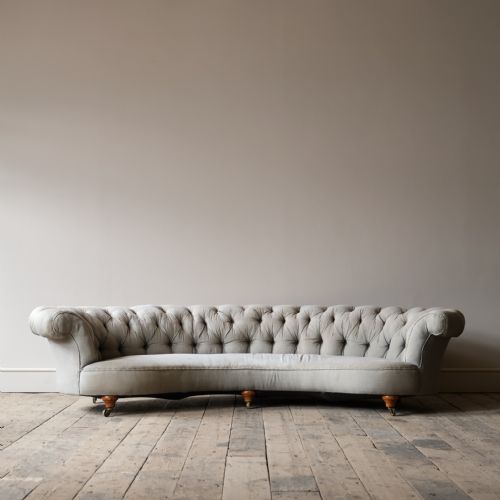
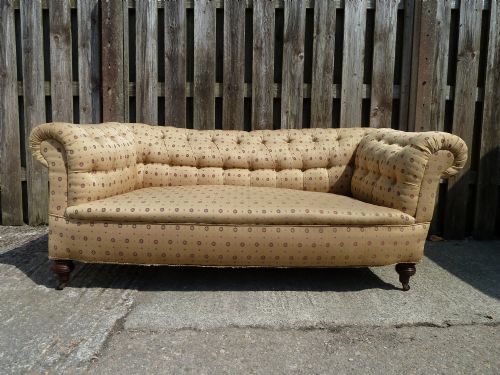
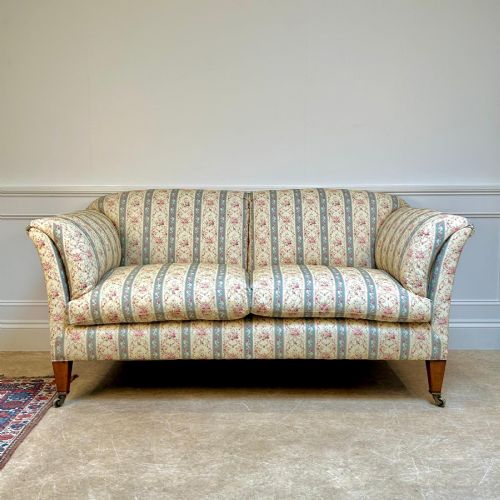
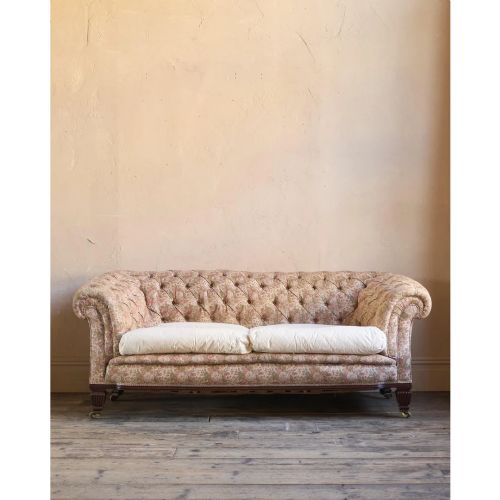
When you search for an english country couch, you are looking at substantial seating designed for relaxed sitting rather than formal posture. These pieces take various forms including deep-seated two-seaters, serpentine Chesterfields, knole sofas with adjustable arms, and occasional chaise longues.
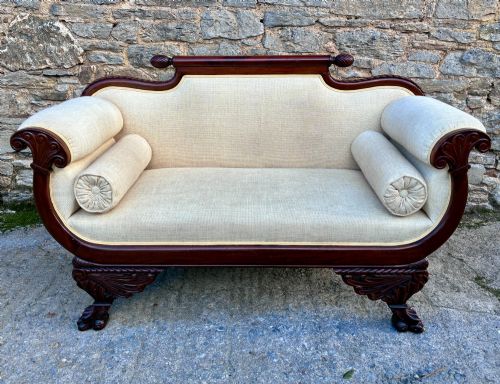
The versions you are most likely to meet on this page date from the nineteenth century through to the 1930s. They span Victorian, Edwardian, and Regency periods, carrying stylistic influences from traditional English country house interiors.
Makers and workshops of the nineteenth and early twentieth centuries constructed these couches to serve as the focal point of domestic comfort. Their forms range from camel backs and drop-arm settees to large open-arm designs upholstered in damask, velvet, calico, or leather.
Materials and Construction
Frames rely on sturdy timbers such as mahogany, walnut, and general hardwood to provide a rigid structural skeleton. Brass details often appear on castors and feet, while giltwood accents distinguish more formal nineteenth-century pieces.
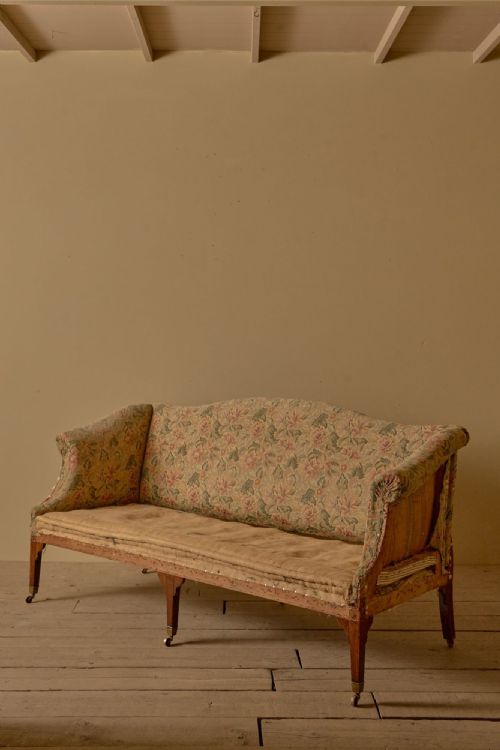
Upholstery layers utilise traditional foundations like hessian and calico beneath top covers of leather, velvet, damask, or printed fabric. Deep buttoning and hand-stitching secure the internal padding to maintain the characteristic generous silhouette over decades of use.
English Country Couch Retail Price Guide 2026
Typical asking prices for english country couch among the pieces listed under this phrase on Sellingantiques today, from the lower quarter to the upper quarter. They describe what is for sale here now, not the wider market.
Some drop-arm sofas allowed Victorian sitters to lower the side for an impromptu afternoon nap.
Assessing Quality and Build
The distinction between ordinary output and the finest examples rests on the integrity of the internal frame and the depth of the seating springs. Superior pieces retain robust hardwood or walnut skeletons that support heavy use without sagging.
Upholstery execution separates makers, with top-tier workshops employing meticulous hand-tied springing and high-grade materials like leather, velvet, or specialised printed fabrics. The precision of joinery and the original retention of maker signatures or stamps further elevate a piece.
Howard and Sons·Hampton and Sons·Holland and Sons·Gillows
The English Country Couch Glossary
- Chesterfield
- A deep-buttoned sofa traditionally featuring arms and back of the same height. This form provides a cushioned, enclosed seat.
- Knole Sofa
- A historic sofa style featuring hinged or adjustable drop-arms tied with vertical cords or braids. Originally designed to keep drafts at bay in large English country houses.
- Chaise Longue
- An upholstered long chair intended for reclining, combining the qualities of a chair and a day bed. Examples often feature a single raised end.
- Calico
- A plain-woven unbleached textile often used as the foundational inner upholstery layer beneath top covers. It provides a stable base for stuffing and springs.
- Hessian
- A coarse woven fabric made from jute fibres, utilised inside upholstery construction for webbing and padding containment.
English Country Couch: Frequently Asked Questions
What defines an English country couch?
An English country couch is defined by generous proportions and deep seating designed primarily for comfort within traditional domestic interiors.
These pieces typically date from the nineteenth or early twentieth centuries and manifest in forms such as Chesterfields, knole sofas, and drop-arm settees.
How were these couches originally used?
These couches served as principal seating in drawing rooms and libraries, built to accommodate long periods of relaxation.
Their substantial size and deep cushions made them central fixtures for family life in traditional country houses.
How do I care for antique upholstery?
Caring for antique upholstery involves gentle vacuuming and protecting delicate fabrics like velvet or damask from direct sunlight.
Leather surfaces benefit from appropriate conditioning treatments to maintain suppleness and prevent cracking over time.
How can I tell different periods apart?
Distinguishing periods relies on observing shifts in frame timber, upholstery fabrics, and silhouette proportions from the Regency era through to the 1930s.
Victorian and Edwardian pieces often display heavier buttoning and distinct wood choices like walnut or mahogany compared to later twentieth-century variants.