


English Ceiling Lantern
An english ceiling lantern brings focused downward illumination and architectural presence to a hallway or landing.
English Ceiling Lantern
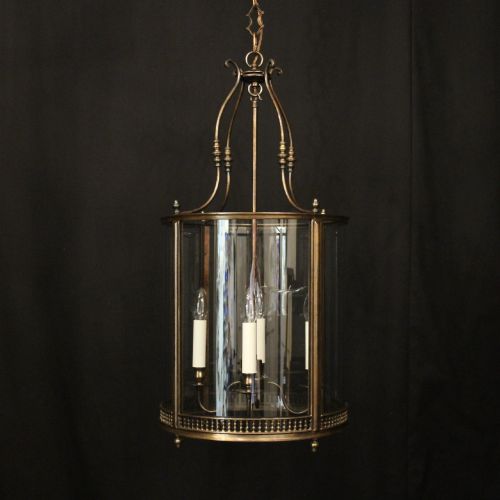
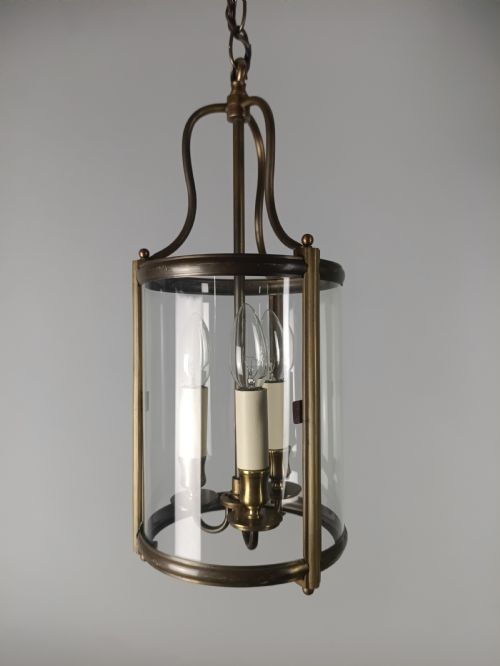
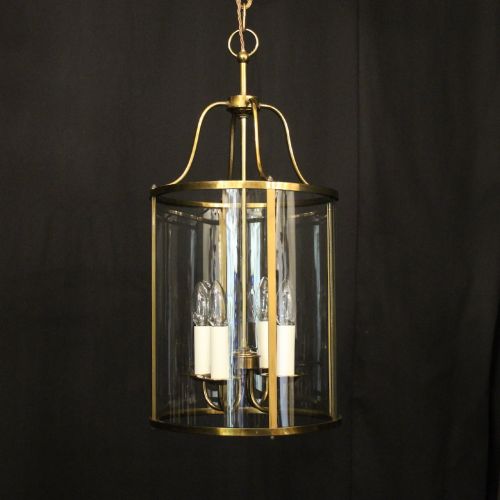
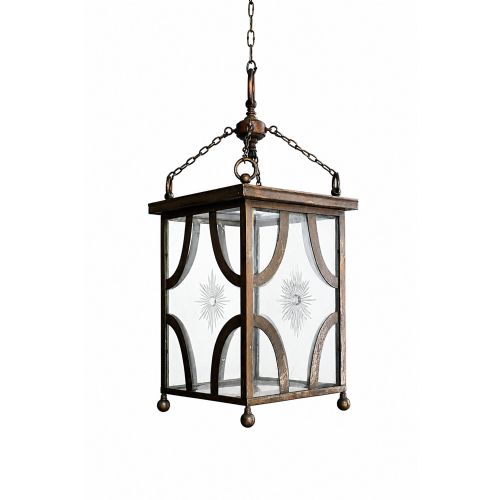
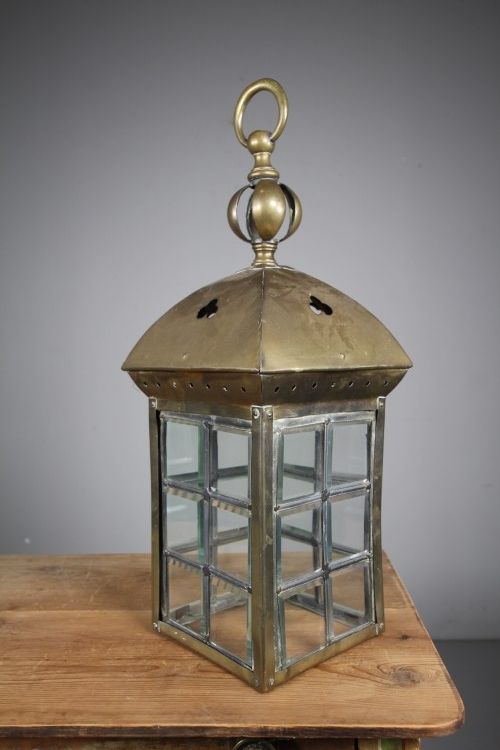
An english ceiling lantern is a hanging light fixture designed primarily for entrance halls, corridors, and landings, appearing in various historic styles across this selection. Buyers find pieces ranging from compact hall lanterns to large pendant lights intended to illuminate transitional spaces.
The most common examples on this page date from the nineteenth and early twentieth centuries, spanning the Victorian, Edwardian, and later periods. These fixtures utilise glass and metal construction to catch and diffuse light from multiple internal bulbs.
Makers and designers drew upon historical idioms, producing items that align with Grand Regency, Rococo Revival, Arts and Crafts, Gothic Revival, and Aesthetic Movement design principles. The forms take shape as convex glass panels set in brass, bronze, or wrought iron frames.
How they were made
Metalwork frames form the structural backbone of these pieces, constructed from brass, gilded bronze, wrought iron, and polished metal. Artisans shaped and joined these components to support the weight of heavy glass elements while maintaining decorative coherence.
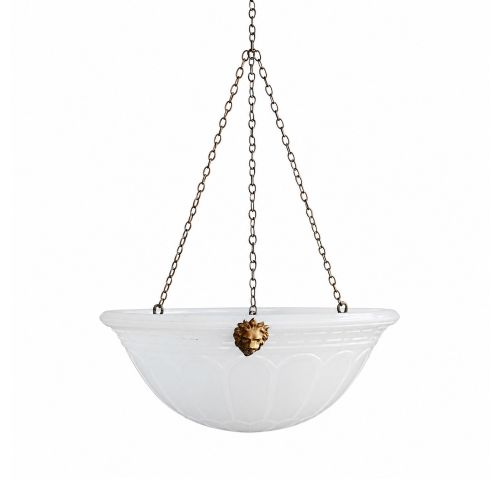
Glass panels and shades incorporate clear cut glass, moonstone glass, and amber or stained glass variations. These panes were fitted into metal cages or suspended as single pendants, diffusing light through textured or translucent surfaces.
Listings feature periods from 1850 through the Edwardian era to 1930, utilising brass, bronze, and moonstone glass.
What varies in quality
The refinement of the cast metalwork and the weight of the frame distinguish superior examples from simpler production. Heavier gauge brass and carefully chased bronze elements demonstrate greater skill than lighter, pressed metal alternatives.
The choice and treatment of the glass also determine standard, with hand-cut crystals and evenly blown moonstone panels showing superior clarity and finish. Details such as original gilding and sophisticated period framing styles elevate the status of individual items.
The English Ceiling Lantern Glossary
- Hall lantern
- A hanging light fixture specifically designed for narrow entrance spaces and corridors. These fixtures usually feature enclosed glass panels held within a metal framework.
- Moonstone glass
- An opaque, milky white glass type that diffuses light softly without harsh glares. It appears frequently in early twentieth-century lighting.
- Gilded bronze
- Bronze metal treated with a thin layer of gold or gold-coloured leaf. This technique provides a durable, lustrous surface finish popular in formal nineteenth-century pieces.
- Cut glass
- Glass decorated by grinding facets or patterns into the surface using a wheel. This process creates reflective properties that scatter light around a room.
English Ceiling Lantern: Frequently Asked Questions
Where should an english ceiling lantern hang?
These fixtures suit entrance halls, stairwells, and high-ceilinged corridors where vertical space allows them to hang freely. Their design directs illumination downward while casting ambient light through the surrounding glass.
Positioning them centrally ensures balanced lighting in transitional areas of a home. Consideration of drop height prevents obstruction while maintaining visual impact.
How do I identify an Edwardian lantern?
Edwardian pieces often feature lighter brass frames and simplified geometric or neoclassical ornamentation compared to heavier Victorian designs. The use of clear cut glass or moonstone glass is typical for this era.
Proportions tend to be refined rather than imposing, reflecting the lighter domestic interiors of the early twentieth century. Construction methods show machine precision alongside traditional assembly.
What is a convex glass lantern?
A convex glass lantern incorporates curved glass panels that bulge outward from the metal frame. This curvature disperses light across a wider angle than flat glass panes.
The technique creates a softer, more rounded silhouette that characterises many mid-nineteenth to early twentieth-century hall lights.
How do Gothic Revival lanterns differ?
Gothic Revival pieces draw inspiration from medieval architecture, utilising pointed arches, tracery, and heavy bronze or iron work. They often reflect ecclesiastical or solemn design motifs.
These lanterns possess a heavier, more architectural presence than standard domestic hall lighting of the same period.