



English Burr Walnut Bureau
An English burr walnut bureau brings together rich timber figures and practical writing fitted interiors from the seventeenth century onwards.
English Burr Walnut Bureau
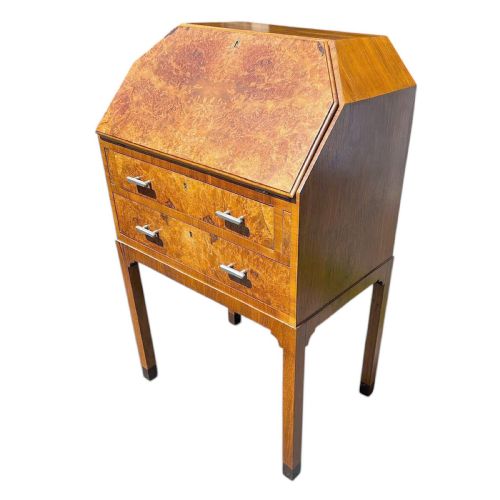
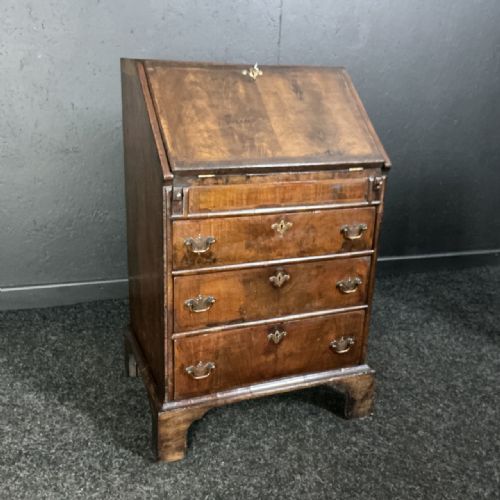
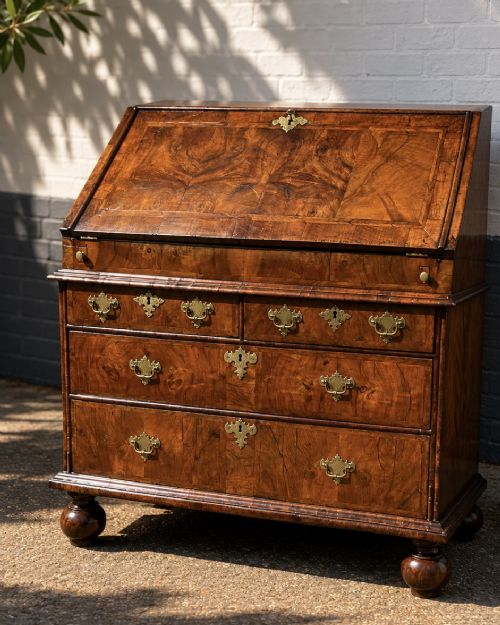
An English burr walnut bureau combines a sloping fall front that opens to reveal internal pigeonholes and small drawers with a set of larger drawers beneath. The selection ranges from early eighteenth century Queen Anne and George I examples to later Art Deco pieces and Victorian Davenport writing desks.
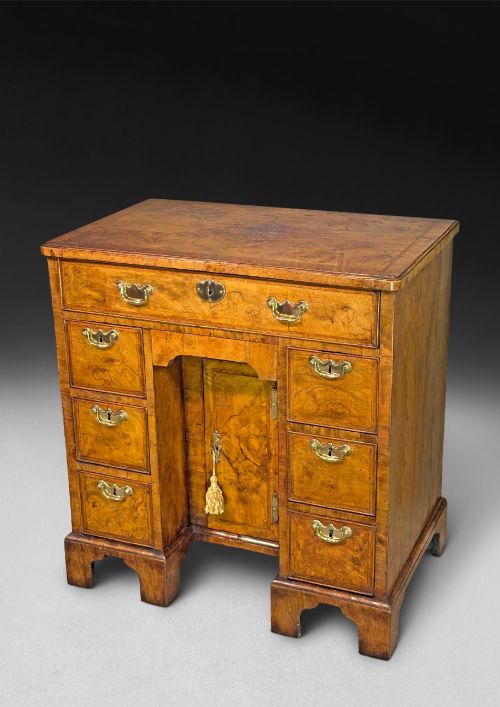
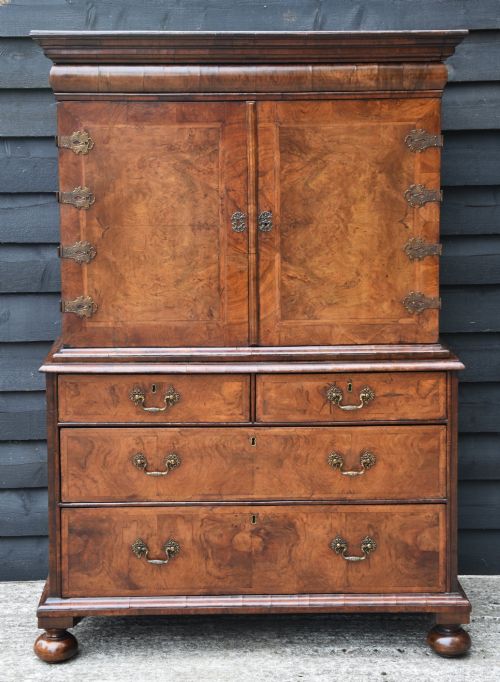
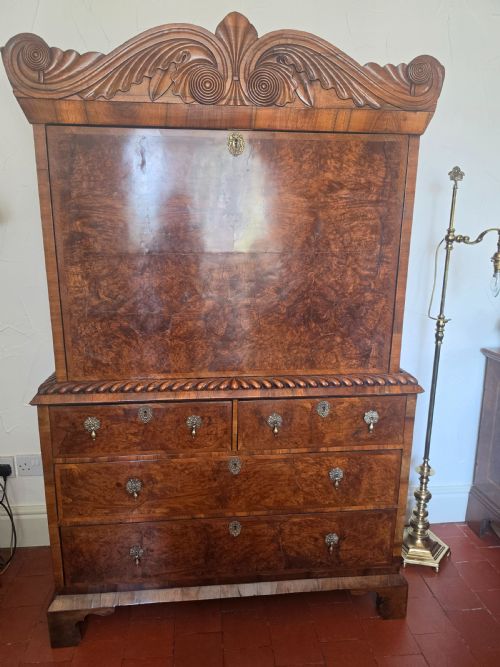
Bureau bookcases add a glazed or panelled upper cabinet for displaying books or silver, while kneehole desks and escritoires offer alternative writing formats. The pieces on this page span styles from William and Mary to 1930s modernist designs.
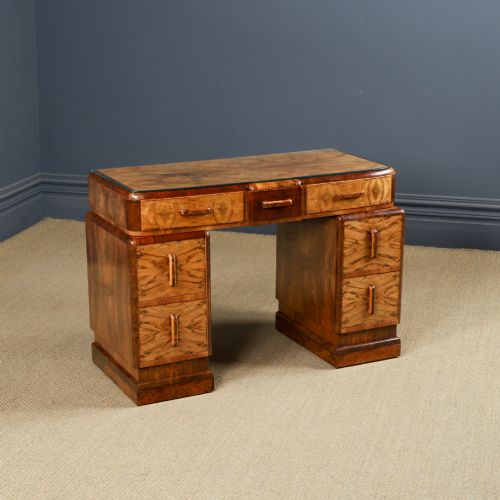
Earlier iterations often display figured walnut veneers with feather banding, whereas later twentieth century examples introduce cloud shapes and skyscraper pedestal profiles.
Materials and construction
Cabinet makers applied thin slices of highly figured burr walnut and burl veneers onto stable secondary timbers such as oak, pine, or general wood foundations. Crossbanding and geometric stringing frequently border the drawer fronts and fall flaps to frame the swirling grain patterns.
Brass handles, escutcheons, and hinges secure the moving parts, alongside occasional ormolu mounts on mid-nineteenth century bureau plat variations. Glass panels feature in the upper doors of taller bookcase formats to protect the contents within.
Listings feature walnut, burr walnut, burr elm, oak, brass, and glass across periods from the seventeenth century to 1930.
Assessing quality and proportion
The choice and symmetry of the burr walnut veneer dictate the visual impact, with matched grain patterns across the fall front and drawer faces marking superior cabinet work. Early examples rely on the depth of the natural walnut figure and original surface patination rather than applied ornamentation.
Internal configuration also separates standard pieces from finer commissions, where secret compartments, shaped pigeonholes, and well-executed secondary timbers demonstrate higher craftsmanship.
The English Burr Walnut Bureau Glossary
- Burr walnut
- A veneer taken from the warted growths or burls of walnut trees, producing swirling, intricate grain patterns. It requires skilled cutting and application by the cabinet maker.
- Fall front
- A hinged writing flap that drops down to create a horizontal desk surface. It conceals internal drawers and pigeonholes when closed.
- Kneehole desk
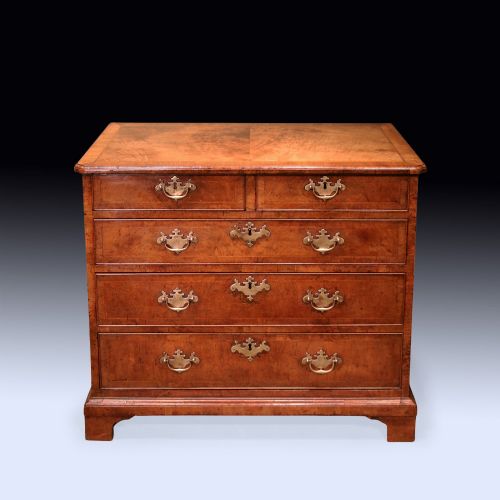
- A compact writing table featuring a central recess for the user's legs, flanked by pedestals of small drawers. These often date from the Georgian and Queen Anne periods.
- Escritoire
- A tall writing cabinet with a drop-down writing surface enclosed behind a single large door or fall flap. Early versions appeared around the turn of the eighteenth century.
- Crossbanding
- A narrow strip of veneer laid around the border of a panel so that the grain runs at right angles to the central wood. This technique frames the primary burr walnut surface.
English Burr Walnut Bureau: Frequently Asked Questions
What is an English burr walnut bureau?
An English burr walnut bureau is a writing desk featuring a sloping front flap that lowers to reveal small drawers and compartments. They are built from timber adorned with decorative burr walnut veneers.
These pieces range from early eighteenth century Queen Anne and George I examples to 1930s Art Deco interpretations.
How do I date an antique walnut bureau?
Dating relies on construction methods, hardware, and stylistic details such as bracket feet, interior drawer arrangement, and veneer types. Seventeenth and eighteenth century pieces display different proportions compared to Victorian or 1930s revivals.
Examining the secondary woods inside the drawers also helps determine the manufacturing period.
Where should I place a bureau in my home?
A bureau fits well in a living room, study, or bedroom where the drop-front can serve as a functional writing desk. Selecting a spot away from direct sunlight protects the walnut veneer and preserves the polish.
Compact kneehole desks and smaller fall front models suit rooms with limited floor space.
What is the difference between a bureau and a bureau bookcase?
A standard bureau consists of a writing section with drawers below and a sloping flap above. A bureau bookcase incorporates an upper cabinet with glass or solid doors for storage and display.
Both forms utilise figured walnut and follow similar stylistic periods from the seventeenth century onwards.