





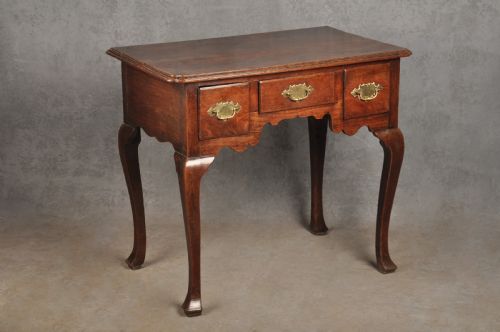
English Brown Wood Console
These English brown wood console pieces are timber tables built for halls and reception rooms, prized for their rich grain and period craftsmanship.
English Brown Wood Console
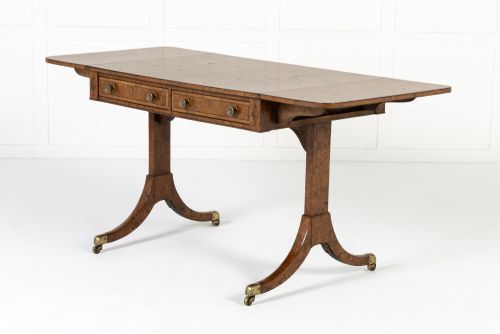
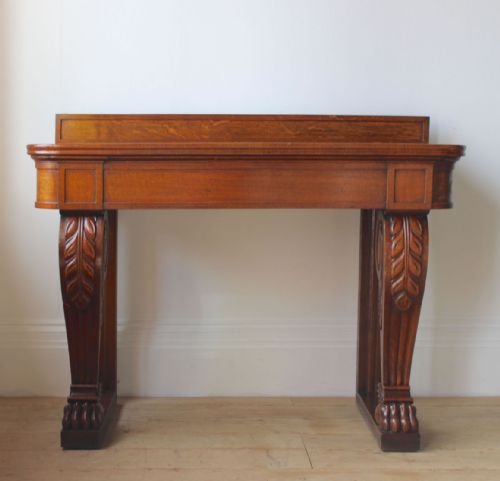
An english brown wood console encompasses side tables, lowboys, and serving pieces produced across the eighteenth, nineteenth, and early twentieth centuries. These timber items serve narrow spaces in hallways, parlours, and drawing rooms where surface area is required without depth.
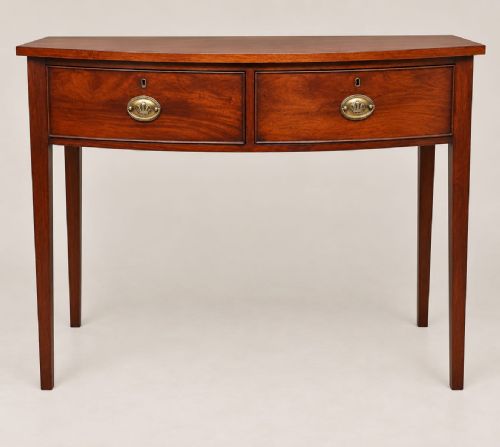
The selection on this page leans heavily toward mahogany and walnut forms from the Georgian, Regency, and Victorian periods. Buyers meet bow-fronted side tables, demi-lune card tables, and occasional serving pieces featuring classic English cabinet-making traits.
How they were made
Cabinet makers utilised solid timbers such as mahogany, walnut, oak, and cherrywood for structural integrity and longevity. These woods were frequently paired with contrasting string inlays and boxwood details to define edges and drawers.
Surfaces relied on natural wax polishing to bring out the depth of the dark grain rather than heavy modern varnishes. Brass hardware, baize linings, and occasional glass elements completed the functional design of these tables.
English Brown Wood Console Retail Price Guide 2026
Typical asking prices for english brown wood console among the pieces listed under this phrase on Sellingantiques today, from the lower quarter to the upper quarter. They describe what is for sale here now, not the wider market.
Several folding tables hide baize-lined playing surfaces inside their timber frames, ready for an impromptu evening of nineteenth-century card games.
What varies in quality
The standard of timber selection largely dictates the caliber of an english brown wood console, separating finely figured grain from plain stock. Superior examples display thoughtful book-matching and careful alignment of drawer timbers.
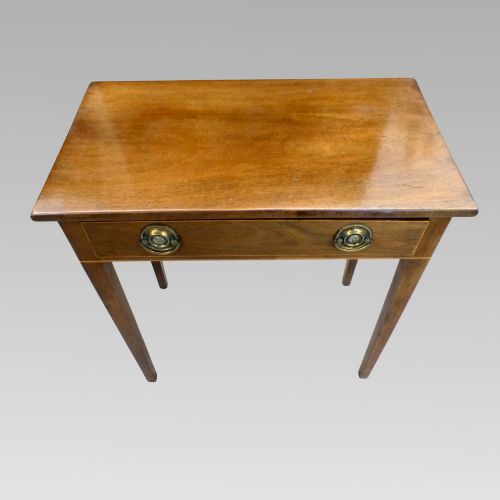
Refinement in secondary details, such as crisp string inlay, clean dovetail joints, and proportioned turned or tapering legs, separates ordinary utility items from finer parlour pieces.
The English Brown Wood Console Glossary
- Lowboy
- A small seventeenth or eighteenth-century dressing or side table featuring one or more rows of drawers beneath the top. They typically stand on four slender legs.
- Demi-lune
- A half-moon shape popular for console and card tables designed to sit flush against a wall. This profile maximises floor space in compact hallways.
- String inlay
- A narrow strip of contrasting wood inlaid into the surface to create delicate decorative borders. It is characteristic of finer eighteenth-century cabinet work.
- Bagatelle table
- A nineteenth-century cue sports table adapted for indoor parlour use, combining furniture design with entertainment. These folding surfaces often double as occasional tables.
English Brown Wood Console: Frequently Asked Questions
Where should I place an english brown wood console?
These narrow tables suit entrance halls, narrow corridors, and reception rooms where floor space is limited. Their shallow profiles allow them to hold lamps or decorative items without obstructing pathways.
They also function effectively against living room walls beneath mirrors or artwork, providing a grounded focal point in traditional interiors.
How do I care for antique brown wood surfaces?
Maintain the timber by applying natural beeswax periodically to nourish the grain and protect against drying. Avoid placing these tables in direct sunlight or near heat sources to prevent timber splitting.
Dust regularly with a soft, dry cloth and lift items rather than sliding them across the polished surface to avoid scratching.
How do I identify a Georgian console table?
Georgian tables often feature rich mahogany or walnut timber, straight or cabriole legs, and understated classical proportions. Look for hand-cut dovetails within the drawer construction as an indicator of period manufacture.
Mouldings and carving tend to be restrained and architectural, reflecting the design tastes of the eighteenth century.
Can I use a card table as a console?
Many folding card tables from the eighteenth and nineteenth centuries function well as console furniture when closed flat against a wall. Their hinged tops double the surface area when opened for dining or games.
Their finished backs and detailed timber work ensure they look appropriate in a hallway or parlour even when folded.