





English Brass Instrument
An English brass instrument brings mechanical precision and functional design into a room, offering a tangible link to historical science, navigation, and domestic observation.
English Brass Instrument
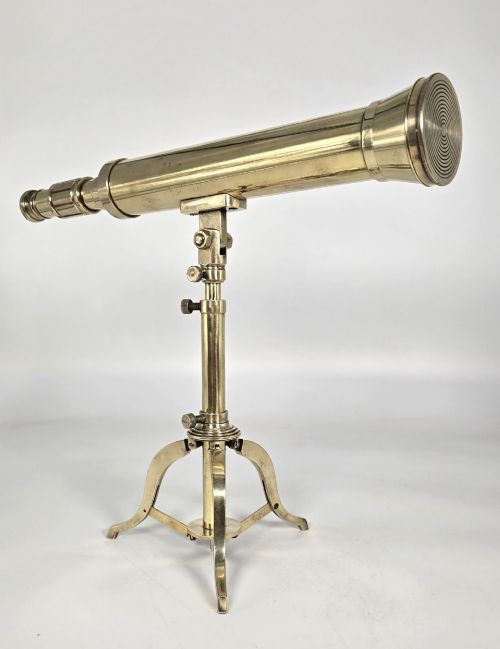
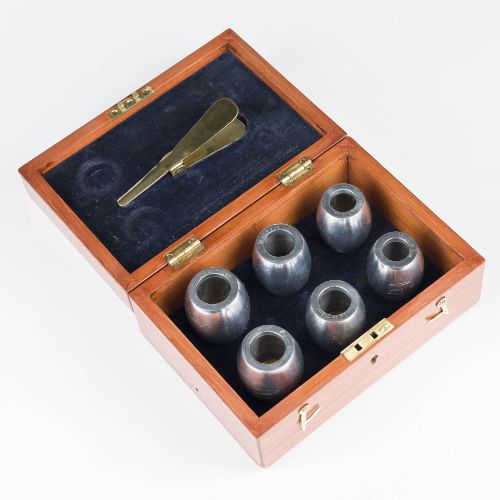
An English brass instrument encompasses a diverse array of scientific, navigational, and domestic apparatuses produced across the Georgian, Victorian, Edwardian, and interwar periods. These objects range from library telescopes and marine chronometer clocks to aneroid barographs, drafting tool sets, and pocket compasses.
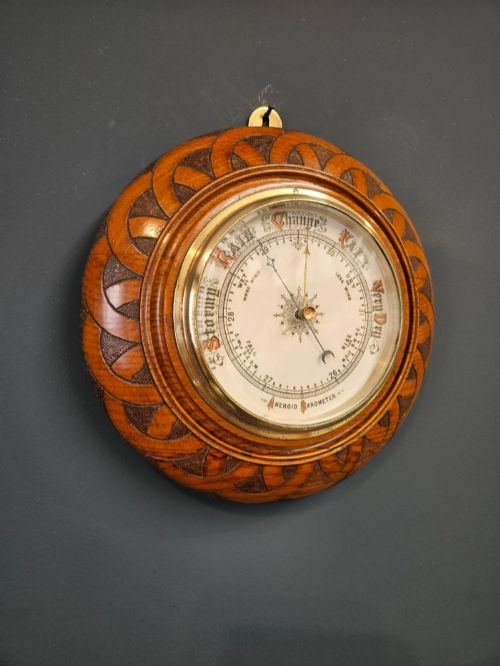
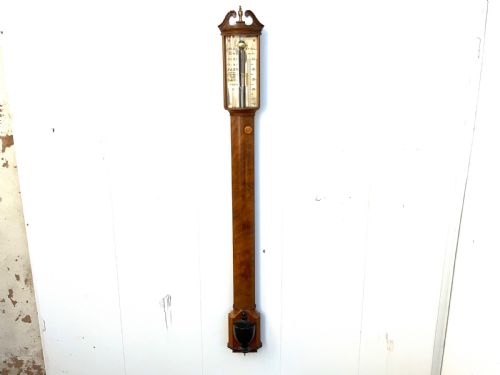
The domestic barometers and meteorological instruments appear frequently alongside maritime and optical apparatuses. Such pieces served practical functions in households, ships, and observatories before transitioning into decorative and collectible items.
How they were made
Constructed predominantly from polished brass alongside secondary materials such as mahogany, oak, walnut, fruitwood, and leather, these instruments rely on robust metalwork and cabinetry. Makers mounted delicate glass dials, bevelled glass panels, and silvered metal scales within turned or polished timber housings.
Optics and mechanisms incorporate multi-draw brass tubing, silvered dials, and finely calibrated internal movements. Cases feature dovetailed or turned construction in hardwoods, frequently accented with bone or mother of pearl details.
English Brass Instrument Retail Price Guide 2026
Typical asking prices for english brass instrument among the pieces listed under this phrase on Sellingantiques today, from the lower quarter to the upper quarter. They describe what is for sale here now, not the wider market.
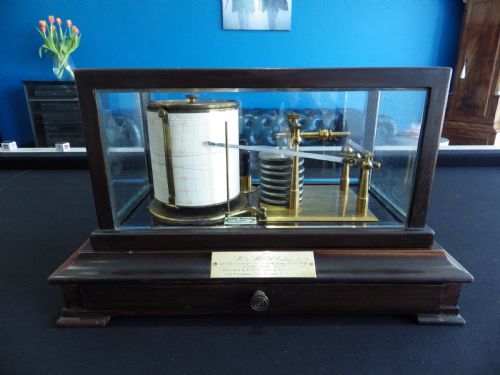
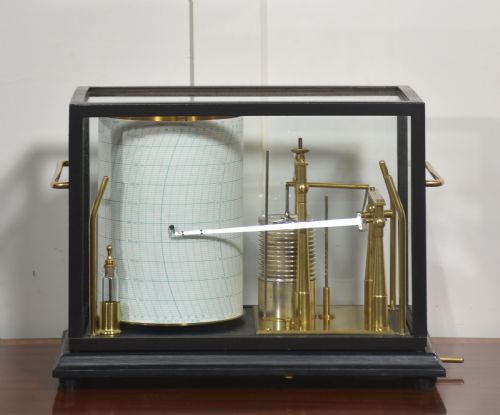
Certain barographs preserve historical weather records on their original paper charts, capturing atmospheric pressure from decades past.
What varies in quality
Quality differentiates standard commercial production from specialised workshop output by identified makers such as Short & Mason or W&S Jones. Superior examples exhibit crisper engraving on silvered dials, finer calibration in scientific movements, and more substantial brass casting.
Cabinetwork distinguishes the tier of an instrument, with selected mahogany, walnut, or satinwood housings displaying superior grain and joinery. Complete sets featuring original fitted boxes, matching tripods, or retained chart drawers elevate the standing of an apparatus.
De Grave Short And Co·W And S Jones·Short And Mason·Bramwell And Harbron·Litherland Davies·Richardson·Newton And Co·Stanley·Swift And Son·Negretti And Zambra·Sandrino·H Hughes·Dollond·Davis·Broadhurst And Co
The English Brass Instrument Glossary
- Barograph
- A self-recording meteorological instrument that produces a continuous graphical trace of atmospheric pressure on a paper chart. These devices are typically housed in mahogany or oak cases with bevelled glass panels.
- Aneroid barometer
- A device for measuring atmospheric pressure without liquid, utilising a flexible metal box that expands or contracts with pressure changes. The internal movement links to a visible indicator needle on a silvered or porcelain dial.
- Marine chronometer
- A precision timepiece designed to maintain accurate time at sea for navigation and longitude calculation. These high-grade clocks are housed in gimbaled wooden boxes.
- Skeletonised movement
- A watch or clock movement designed with open plates and bridges to reveal the internal gear train and escapement. This construction showcases the mechanical complexity of the instrument.
- Fusee
- A conical pulley used in clockwork to equalise the declining power of a mainspring as it unwinds. This mechanism ensures consistent torque and timekeeping accuracy.
English Brass Instrument: Frequently Asked Questions
How do you read a barometer?
A barometer indicates changes in atmospheric pressure through an indicator needle moving across a graduated dial, often marked with weather descriptions like rain, change, and fair. Observing the movement of the needle helps indicate short-term weather shifts.
Many examples feature a secondary pointer set by hand to track whether pressure is rising or falling since the last observation.
How do you clean brass?
Brass components on historical instruments require gentle maintenance to preserve their aged surface patina rather than achieving a bright modern shine. Soft dry cloths remove dust from intricate parts without disturbing delicate lacquer or engraving.
Harsh chemical polishes should be avoided because they strip the historical surface character and can damage adjacent wood, leather, or glass elements.
How do you date an instrument?
Dating an English brass instrument involves examining maker signatures, patent dates, material choices, and stylistic traits associated with specific periods like the Victorian or Edwardian eras. Inscribed names and workshop locations often link a piece to active operational years.
Cabinet timbers, typeface designs on dials, and mechanical configurations further narrow the decade of manufacture.