


English Brass Fire Tools
English brass fire tools are essential hearth furniture that brings functional warmth and period character to a fireplace.
English Brass Fire Tools
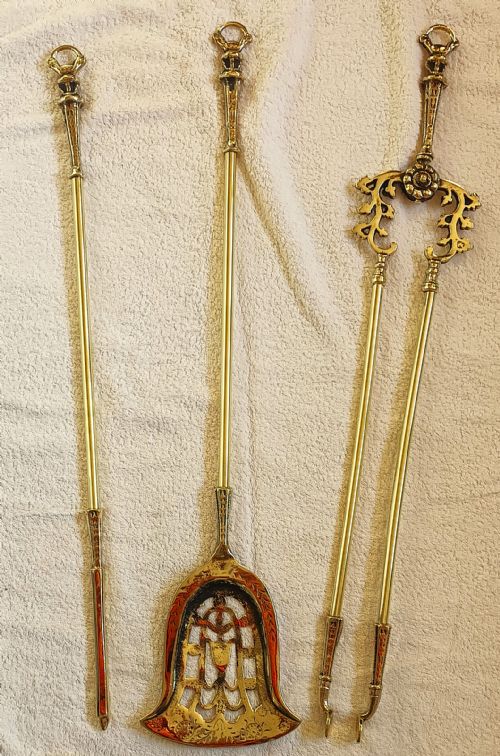
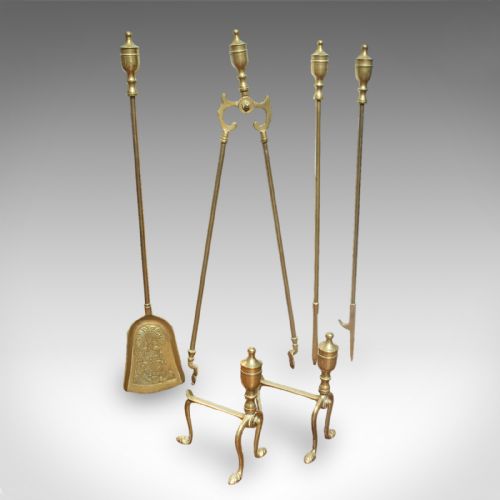
English brass fire tools comprise sets of companion items designed for tending hearths, most frequently appearing in Victorian and nineteenth-century forms. These groupings typically include shovels, pokers, and tongs alongside companion stands or rests. Buyers seeking english brass fire tools will encounter comprehensive companion sets and individual fire irons made for daily use beside the fireplace.
The majority of pieces seen on this page date from the Victorian era, spanning the nineteenth century up to the early twentieth century. Styles range from plain Victorian utilitarian designs to decorative Aesthetic Movement and Neoclassical interpretations. Object types encompass fireside accessories, fire dogs, and complete companion suites intended to sit ready by the hearth.
Materials and construction
The primary material used is brass, often combined with steel or iron for the working shafts and tips of pokers and tongs. Copper and gilt metal also appear in companion accessories and hearth furniture. Construction methods rely on traditional metalworking techniques that join durable iron cores with polished brass handles and mounts.
Makers shaped these metals into shovel blades, tong arms, and poker shafts designed to withstand regular heat and heavy use. The resulting pieces balance rigid iron strength with the bright decorative appearance of brass.
Listings feature Victorian, nineteenth-century, and early twentieth-century pieces in brass, steel, iron, copper, and gilt metal.
Assessing quality in hearth equipment
Quality in these items is determined by the weight of the metal and the integrity of the joints between handles and shafts. Finer examples display substantial casting weight and carefully finished brass surfaces that retain crisp detail on handles and rests. Lesser pieces show lighter construction and simpler, plain connections.
The presence of matching sets and coordinated companion stands also influences the cohesion of the group. Pieces retaining their original companion rests or fire dogs demonstrate a higher degree of original intent and completeness.
The English Brass Fire Tools Glossary
- Companion set
- A group of fireside tools, usually consisting of a shovel, poker, and tongs, arranged together on a stand or rest.
- Fire irons
- The individual metal implements used for tending a coal or wood fire, comprising pokers, shovels, and tongs.
- Aesthetic Movement
- A nineteenth-century design style emphasising visual beauty and artistic detail over heavy historicism.
- Neoclassical
- A style drawing on classical Greek and Roman motifs, visible in the restrained ornament of late nineteenth-century hearth accessories.
- Fire dogs
- Metal supports placed in a hearth to hold logs, often paired with matching tool rests in Victorian settings.
English Brass Fire Tools: Frequently Asked Questions
What tools come in a set?
Standard companion sets typically contain a coal shovel, a poker, and a pair of tongs designed for handling solid fuel. These three core implements cover the basic needs of tending an active hearth.
Additional pieces such as hearth brushes or specialised rests occasionally accompany the main trio, especially in larger nineteenth-century suites.
How do I date these tools?
Dating relies on stylistic clues, manufacturing techniques, and material combinations recorded across Victorian and nineteenth-century examples. Aesthetic Movement and Neoclassical details help narrow down the period of manufacture.
Georgian pieces show different handle profiles and casting methods compared to later Victorian counterparts, though many surviving sets belong to the nineteenth century.
Can I use them on a fire?
Most antique brass fire tools are constructed with sturdy iron or steel internal shafts beneath their brass elements, making them suitable for gentle hearth use. However, fragile decorative casting or worn joints on older pieces suggest light handling is advisable.
Using them carefully preserves the historical finish while maintaining their original function beside the fireplace.
What is a companion stand?
A companion stand is a dedicated rack or heavy-based holder designed to keep fire irons neatly upright when not in use. These holders match the metal and style of the tools they support.
Rests and fire dogs serve a similar organising purpose by keeping pokers and shovels accessible near the hearth.