
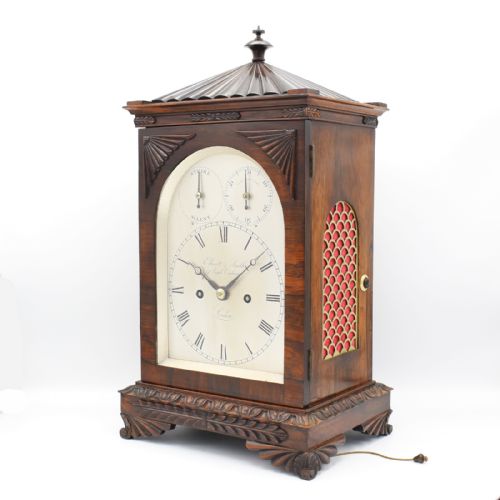
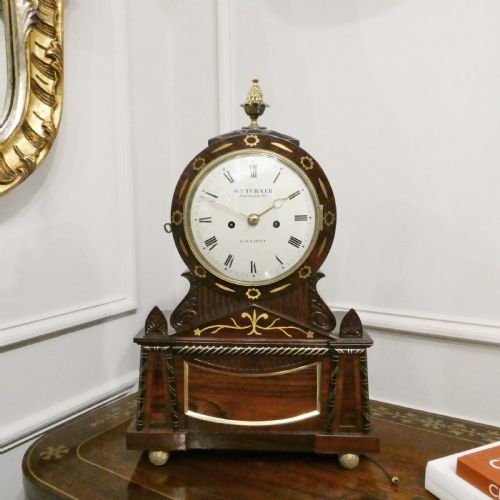
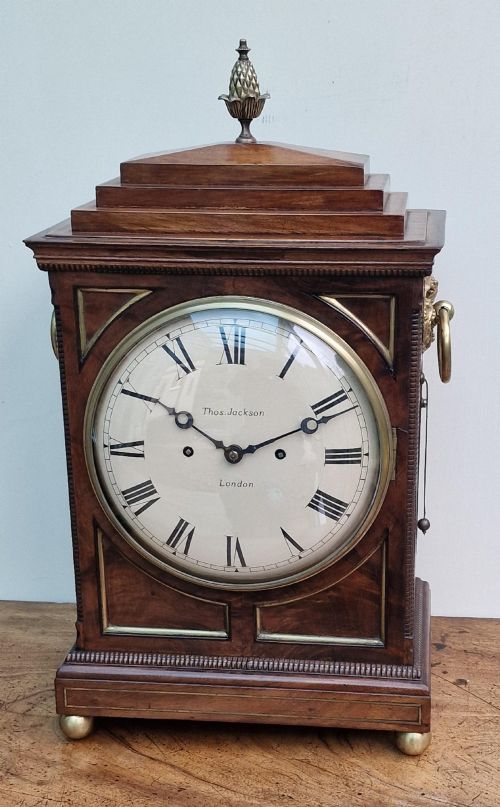


English Bracket Clock London
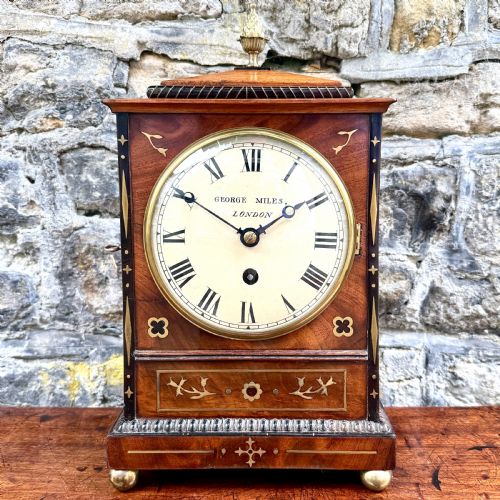
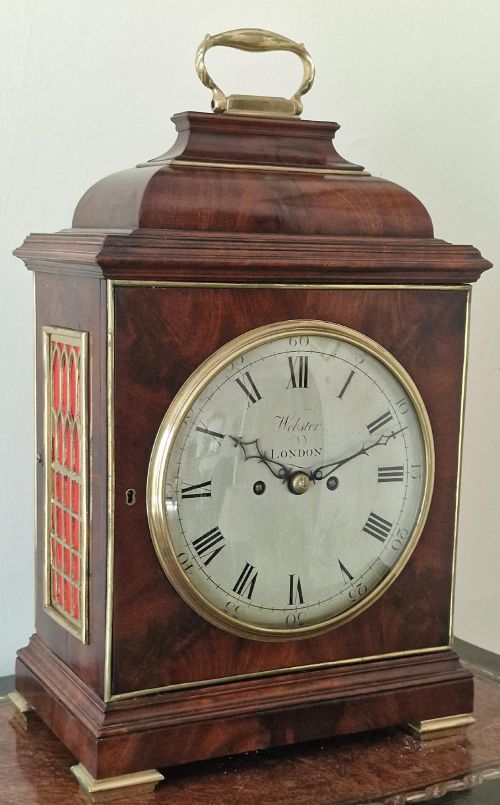
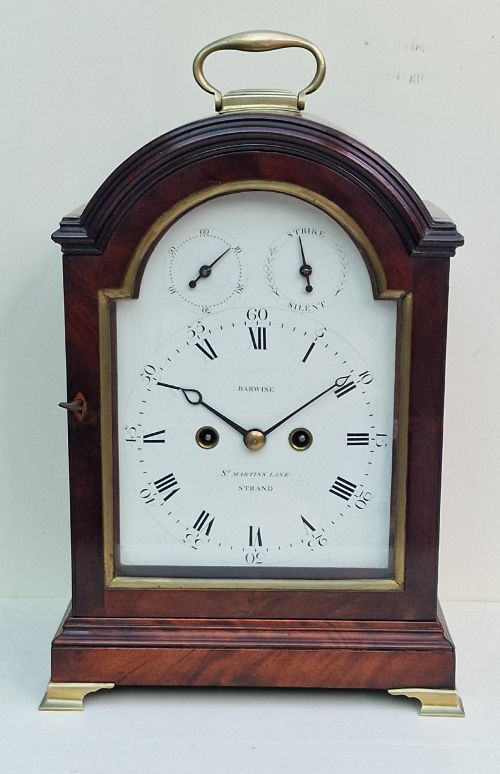
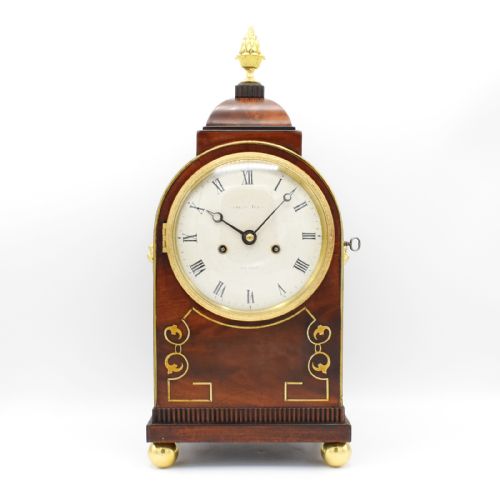
When you search for an english bracket clock london, you are looking at portable mechanical timekeepers housed in timber and glass cases made by capital horologists.
English Bracket Clock London
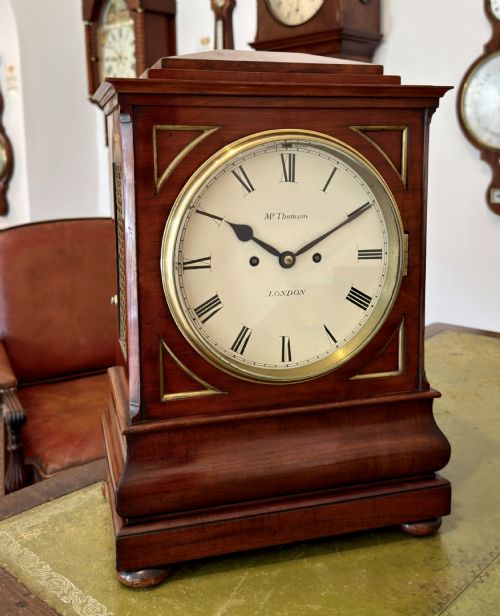
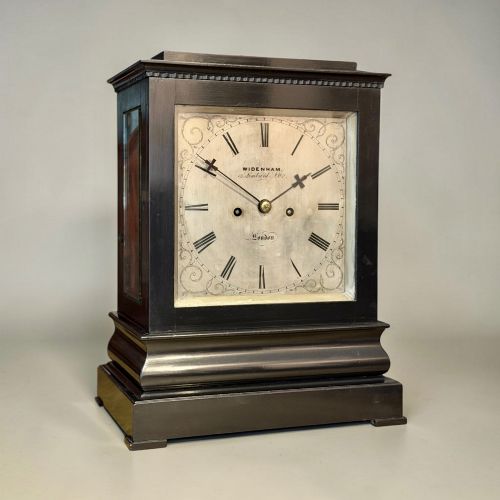
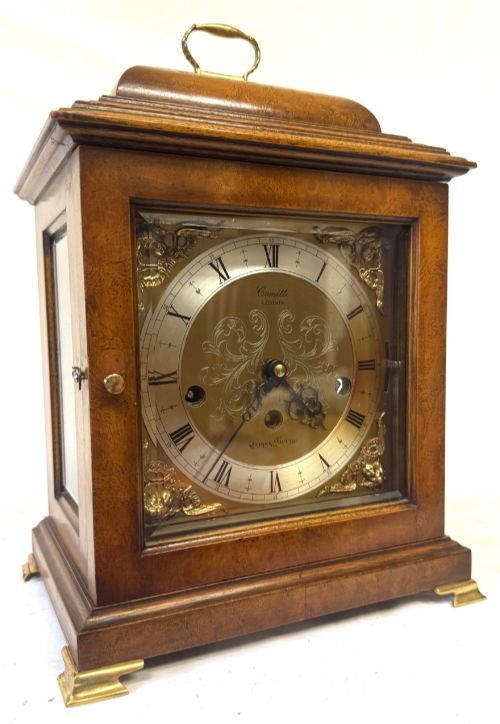
An english bracket clock london is a portable mechanical timepiece designed to sit on a table, shelf or bracket, appearing primarily across the Georgian, Regency and Victorian periods. These pieces take forms such as library clocks, table clocks and mantel clocks housed in architectural or basket-topped timber cases.
Makers working in the capital produced these timekeepers utilising materials including mahogany, ebonised wood, rosewood and brass. The selection on this page centres heavily on mahogany and ebonised cases fitted with silvered metal dials and glass panels.
How They Were Made
Cases were constructed from dense timbers like mahogany and rosewood, frequently enhanced with brass inlay, ormolu mounts and silvered metal dials behind glass doors. Woodworkers shaped these materials into architectural forms, basket tops and balloon styles to enclose the intricate mechanical movements.
Internal mechanisms rely on fusee movements, which regulate the pull of the mainspring to maintain steady timekeeping as the spring unwinds. Makers also incorporated striking and musical capabilities into the brass gear trains, driven by weights or springs.
Several London makers tucked their signatures onto internal movement backplates, ensuring only those who opened the case knew who built the gears.
What Varies in Quality
The standard of an english bracket clock london depends upon the crispness of the timber carving, the precision of the brass inlay and the refinement of the movement. Master horologists in the capital employed superior finishing on internal gears and casework.
Case materials also distinguish examples, with dense burr walnut, ebony and finely figured mahogany marking out superior output. The execution of the silvered dial and the complexity of the fusee or striking train further separate standard production from masterwork output.
Thomson of London·Widenham of London·Cousens & Whiteside·Comitti Of London·Webster·Barwise·Charles Pratt London·Ellicott & Smith·Turner of London·Thomas Jackson·George Orpwood·Bush of London·Webster Cornhill London·Francis Perigal·Thomas Moss·Dent·John Pepys London·William Speakman·Cording of London·William Payne·Des Granges·Connell·Phillips Brothers·Barrett London·Paul Philip Barraud
The English Bracket Clock London Glossary
- Bracket clock
- A portable mechanical timekeeper originally designed to sit on a wall bracket or table. These pieces feature enclosed movements and glazed access doors.
- Fusee
- A conical pulley used in mechanical clocks to equalise the torque of the mainspring as it winds down. This mechanism ensures consistent power delivery to the gear train.
- Silvered metal
- A brass or copper dial surface treated with a silver compound to create a matte white finish. Graduations and maker names are then engraved and blackened upon it.
- Ebonised wood
- Timber treated with a dark stain or finish to imitate ebony. This dark surface provided a contrasting backdrop for brass mounts and silvered dials.
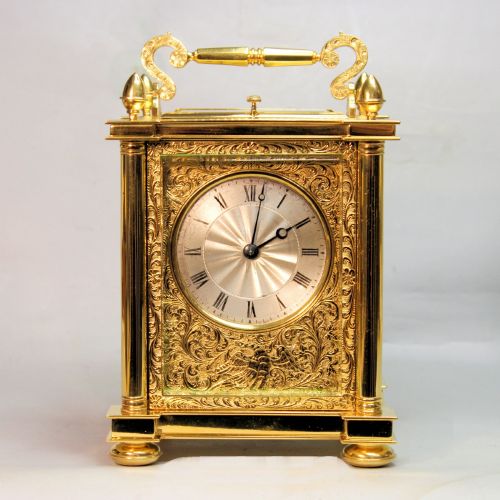
- Carriage clock
- A small portable spring-driven timepiece fitted with a carrying handle and glass panels. Makers produced these for travel and domestic table use.
English Bracket Clock London: Frequently Asked Questions
What is a fusee movement?
A fusee is a conical pulley connected to the mainspring via a cord or chain. It regulates the varying power of the spring as it uncoils.
This mechanism ensures the clock maintains an even force and keeps accurate time throughout its running cycle.
Where were these clocks placed?
These timekeepers were designed for domestic and institutional interiors, sitting on wooden wall brackets, library tables or mantelpieces. Their portable nature allowed owners to move them between rooms.
Larger examples required sturdy tables or dedicated wall brackets to support their substantial timber and brass weight.
How do I date a clock?
Dating relies on stylistic clues in the timber case, such as Regency brass inlay or Georgian architectural proportions. Maker signatures and dial signatures also help anchor the piece to a specific era.
Internal movement construction methods evolved over the seventeenth, eighteenth and nineteenth centuries, providing further chronological markers.
Did all london makers sign dials?
Capital horologists frequently inscribed their names and trading addresses directly onto the silvered metal or painted dials. Some makers also engraved their details onto the backplate of the internal movement.
Unsigned dials do appear, though signed examples help connect the piece to documented workshops and trading partnerships.