


English Blanket Box
An English blanket box is a sturdy receptacle for textiles and household goods, prized for its honest construction and deep domestic history.
English Blanket Box
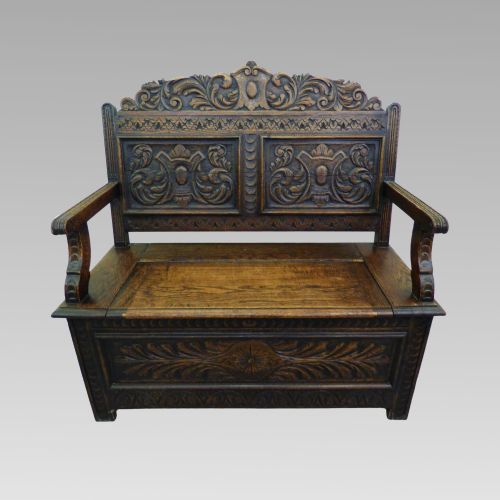
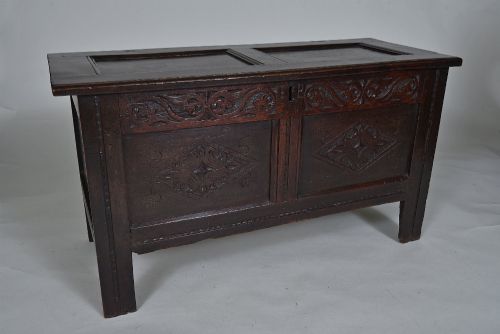
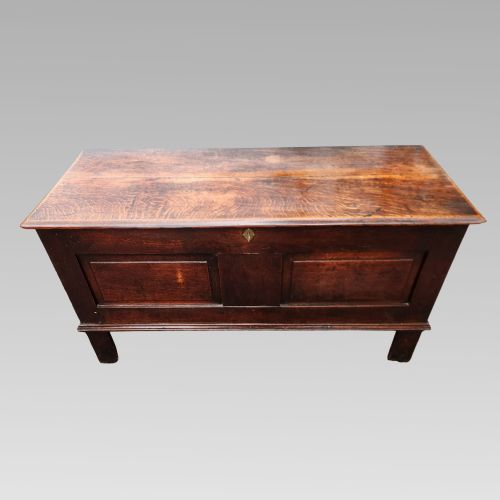
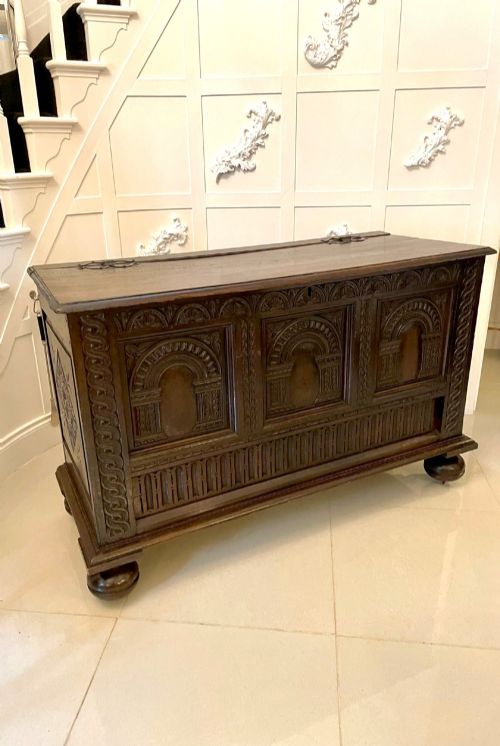
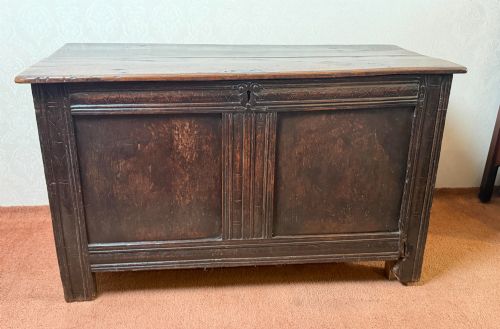
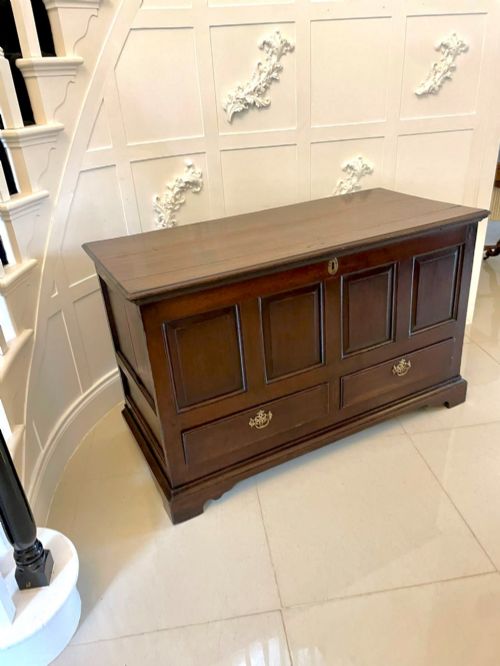
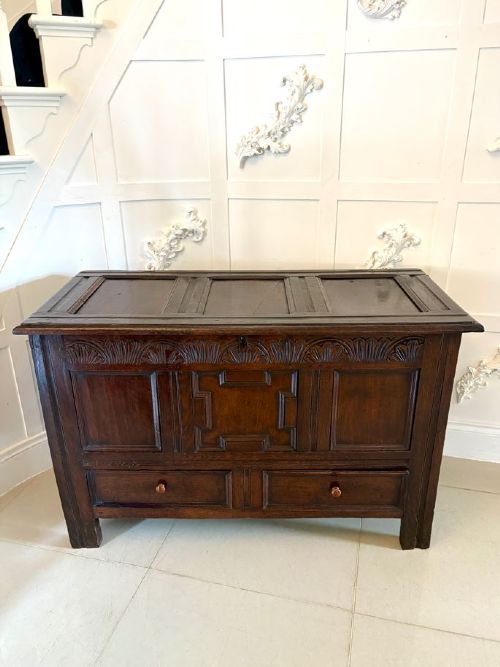
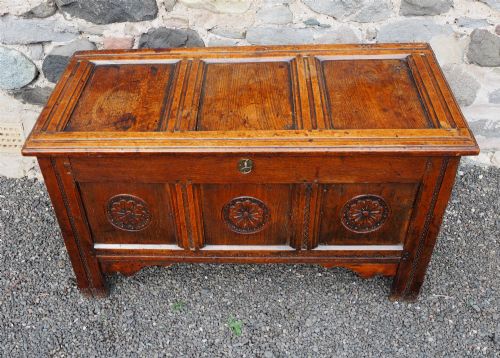
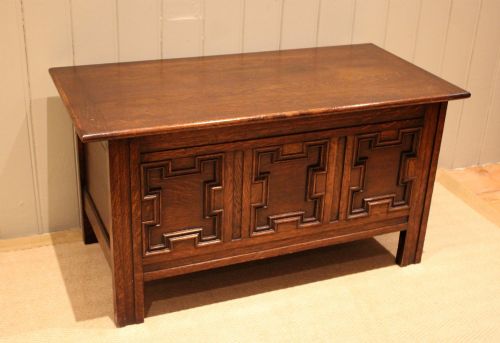
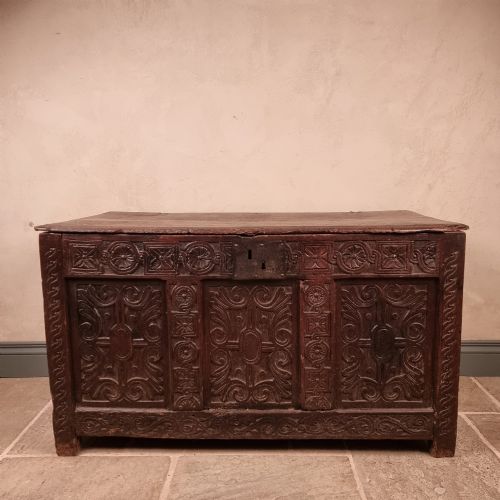
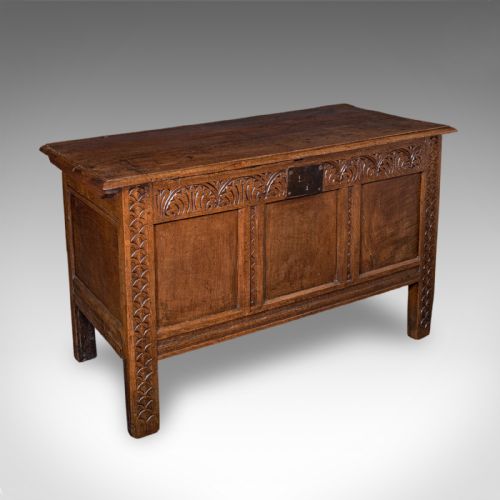
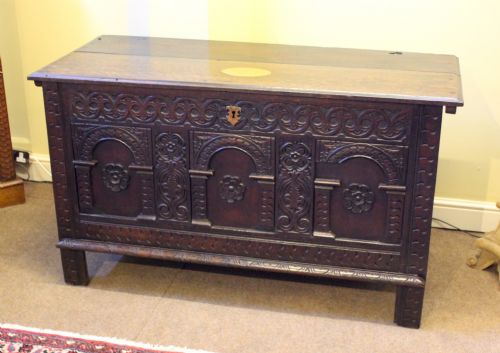
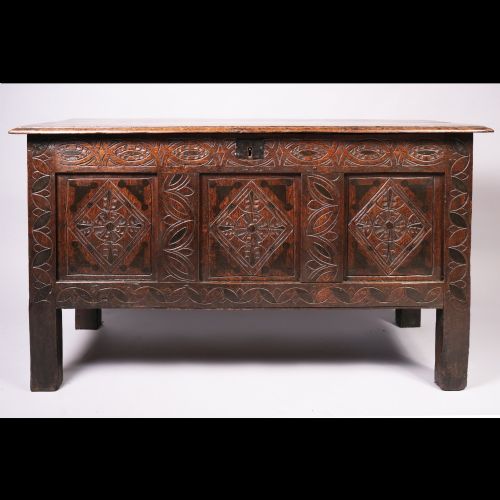
The English blanket box appears in various guises across multiple centuries, serving as a fundamental storage piece in domestic spaces. Buyers encountering this selection will frequently meet robust oak coffers from the sixteenth, seventeenth, and eighteenth centuries, often displaying panelled or carved fronts.
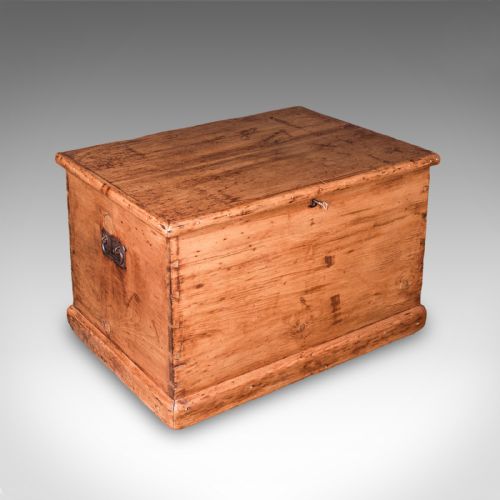
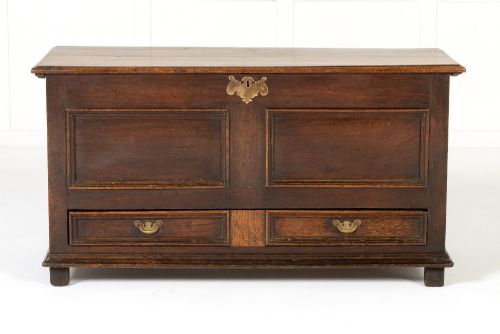
Beyond the early oak examples, the selection includes pine blanket boxes, leather and camphorwood trunks from the Victorian era, and mule chests fitted with lower drawers. These items range from plain boarded utility boxes to arcaded and carved pieces designed for prominent rooms.
Originating as practical furniture for holding linens and woollens, these chests also function as window seats or occasional tables in modern interiors. The pieces span periods from the Tudor era through the Stuart reigns and into the nineteenth century.
Materials and construction
Timbers such as native English oak dominate the earlier centuries, joined using traditional pegged frame-and-panel construction that accommodates seasonal wood movement. Later Victorian trunks introduce pine, camphorwood, and leather, supplemented by iron or steel reinforcement for transport and security.
Surface ornamentation on the timber examples relies on hand-carved arcading, panels, and moulded detailing rather than applied veneers. Iron hinges, locks, and binding provide both structural integrity and functional utility to the chests.
English Blanket Box Retail Price Guide 2026
Typical asking prices for english blanket box among the pieces listed under this phrase on Sellingantiques today, from the lower quarter to the upper quarter. They describe what is for sale here now, not the wider market.
Listings feature English blanket boxes spanning from the sixteenth century through the Victorian era, utilising oak, pine, camphorwood, and leather.
Distinctions in quality
The standard of an English blanket box rests upon the integrity of its original timbers, the crispness of the hand-carved panels, and the survival of early hardware such as hinges and locks. Pieces retaining their original lids and floorboards command greater interest than those subjected to extensive timber replacement.
Proportion and execution distinguish regional vernacular work from more formal workshop production, where balanced panels and controlled carving define the better examples. The depth of the colour in the aged oak and the minimal intrusion of later alterations separate the refined specimens from heavily restored ones.
The English Blanket Box Glossary
- Coffer
- A heavy wooden chest, typically constructed from oak, used historically for storing valuables, documents, or textiles. These pieces often feature hinged lids and sturdy boarded or panelled sides.
- Mule chest
- A storage chest featuring one or more drawers built beneath the main compartment. This form bridges the gap between the traditional coffer and the chest of drawers.
- Arcaded
- Decorated with a series of arched motifs carved into the wood. This style is frequently found on seventeenth-century panels.
- Boarded box
- A primitive form of chest constructed from simple thick planks nailed or pegged together at the corners rather than jointed into a framed structure.
- Camphorwood
- An aromatic timber utilised in nineteenth-century trunks and chests to repel insects. Its distinctive scent helps protect stored woollens and linens.
English Blanket Box: Frequently Asked Questions
What is an English blanket box?
An English blanket box is a traditional wooden or leather-covered chest used for storing household textiles, garments, and valuables. These items range from early boarded and panelled oak coffers to later Victorian pine and camphorwood trunks.
They represent centuries of domestic storage solutions, evolving from simple receptacles for linen into decorative furniture pieces found in bedrooms, hallways, and living spaces.
How were these chests used?
Historically, these chests served as secure storage for household linens, blankets, clothing, and church valuables before fitted wardrobes became common. Their flat lids also allowed them to double as tables, benches, or beds during travel.
In contemporary interiors, they function as practical storage furniture for blankets and shoes, while also serving as window seats, coffee tables, or decorative focal points.
How do I date an oak coffer?
Dating an oak coffer involves examining the construction methods, joint types, and decorative motifs present on the piece. Sixteenth and seventeenth-century examples typically employ pegged frame-and-panel construction with hand-carved arcading or geometric patterns.
Later eighteenth-century pieces often introduce simpler mouldings, dovetail joints in associated drawers, or secondary softwoods. Tool marks and the type of hinges used also offer clues to the period of manufacture.
Can I use a blanket box as a seat?
Most sturdy wooden and metal-bound chests are structurally capable of supporting weight when fitted with a secure, original lid. Early oak coffers and Victorian shipping trunks were built to withstand heavy use and transport.
Adding a loose cushion allows these chests to function comfortably as window seats or hallway benches while keeping textiles safely stored inside.