
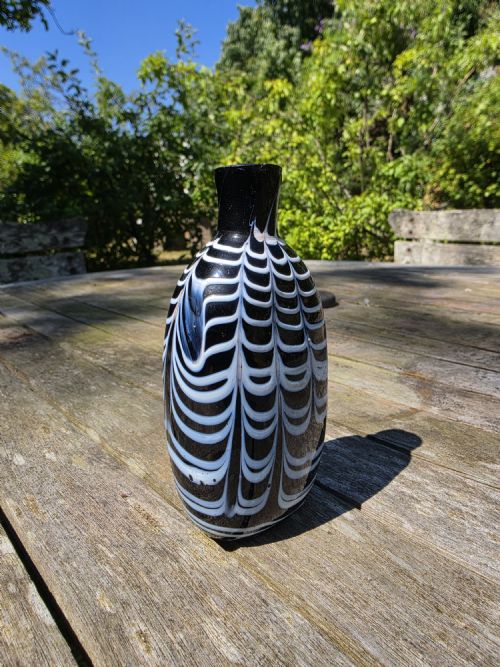


English Glass Flask
An english antique glass flask brings portable craft and period design into your hand.
English Glass Flask
An english antique glass flask spans functional travel gear and vanity items, taking the form of hip flasks, scent bottles, decanters, and serving bottles. These pieces emerge from periods including the Georgian era, Victorian times, the Edwardian period, and the 1920s Art Deco movement.
The version most commonly met on this page combines a blown or cut glass body with sterling silver, silver plate, or leather cases. Surviving examples range from late eighteenth-century Nailsea work to early twentieth-century travel and drinking vessels.
How they were made
Makers shaped the vessels using blown glass techniques, cut glass methods, and overlay applications in colours such as cranberry and green. Metalwork elements like sterling silver and silver plate provide mountings, screw caps, and drinking cups.
Protective outer elements involve fitted leather cases and crocodile or alligator skin sleeves. Surface treatments include hammered finishes, enamel decoration, and Mary Gregory style painted scenes.
Listings feature items spanning the Georgian era through to the 1920s, utilising sterling silver, cut glass, leather, and enamel.
What varies in quality
The clarity and depth of the glass cutting separate standard containers from finer productions, alongside the weight and gauge of the sterling silver mounts. Integral matched sets or combined materials like leather and metal integration show superior workshop execution.
Maker marks and hallmarking provide clear indicators of origin and workshop standards. The survival of original caps, stoppers, and fitted leather cases preserves the integrity of the piece.
Asprey London·Henry Perkins·Barnsley and Co·James Dixon and Sons
The English Glass Flask Glossary
- Nailsea Glassworks
- A historic glass production site known for distinctive patterned and looped glass designs. Pieces attributed to this source display characteristic nineteenth-century or earlier blowing traits.
- Cranberry Glass
- A rich red-pink transparent glass coloured with gold chloride during production. This material appears frequently in Victorian table and scent wares.
- Sterling Silver
- An alloy containing standard proportions of pure silver and other metals for durability. English examples carry traditional hallmarks indicating the assay office and year.
- Mary Gregory Glass
- Glass decorated with white enamel silhouettes depicting children in natural settings. This technique gained popularity during the late Victorian period.
- Overlay Glass
- A method where a layer of coloured glass covers a clear or contrasting inner body. Cutting through the outer layer reveals the contrasting base colour beneath.
English Glass Flask: Frequently Asked Questions
How were these flasks used?
Owners carried hip flasks on hunts, walks, and journeys for quick access to liquor or water. Scent and perfume bottles served personal grooming needs on dressing tables and in travel cases.
Desk flasks and decanters remained stationary in homes or offices for serving drinks throughout the nineteenth and early twentieth centuries.
How do I care for my flask?
Clean glass bodies gently using warm water and avoid harsh detergents that might damage historic silver or enamel work. Leather cases require conditioning to prevent drying and cracking over time.
Store pieces away from direct sunlight and extreme temperature changes to protect both the glass and the metal fittings.
How do I identify the period?
Examine hallmarks on the silver mounts to determine exact assay office years and maker marks. Glass cutting styles, colour palettes, and the presence of leather or enamel finishes help narrow down the decade of production.