





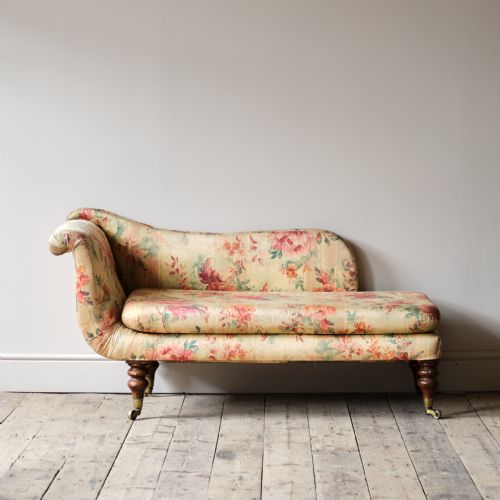

English Daybed
An english antique daybed brings singular comfort and repose to a room, offering a place for daytime resting with timeless elegance.
English Daybed
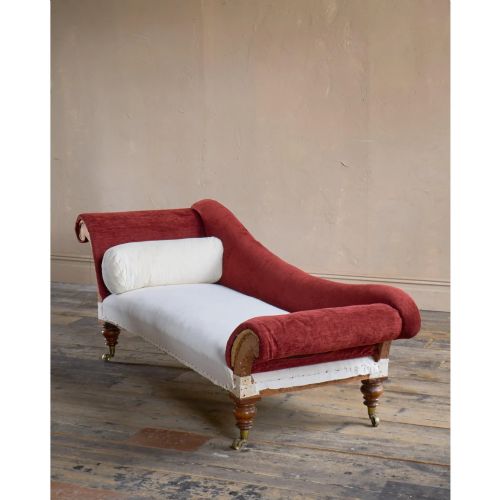
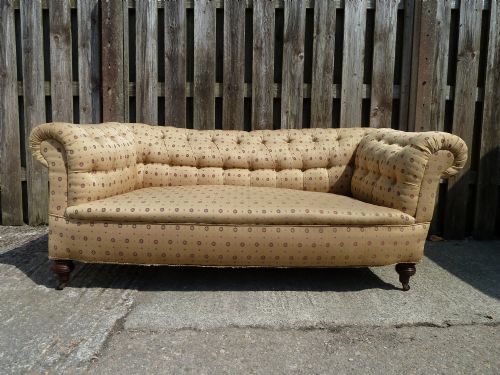
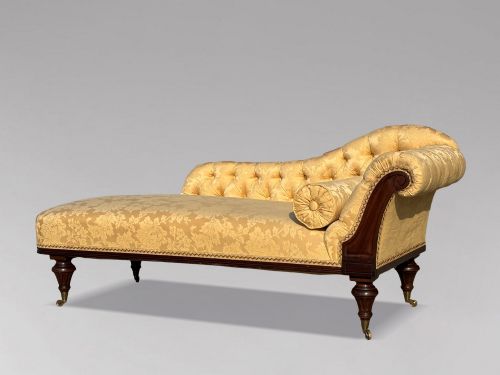
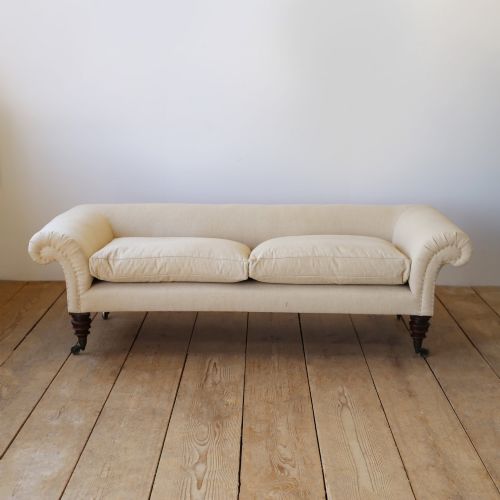
When you search for an english antique daybed, you encounter a versatile family of seating that includes day beds, chaise longues, and long sofas designed for reclining. The pieces on this page span the Regency and Victorian eras, bringing together forms from grand country houses and town residences.
The version most commonly met here is the nineteenth century chaise longue or upholstered day bed, often featuring scrolled ends and supported on turned wooden legs with original castors. These items reflect the nineteenth century taste for relaxed domestic comfort, moving from the refined lines of the Regency period towards heavier Victorian upholstery.
Makers and workshops of the period produced these day beds in mahogany, rosewood, walnut, and gilt wood, upholstered in fabrics ranging from simple calico to rich velvet. Whether described as a day bed, a chaise longue, or a couch, each piece serves the dual purpose of seating and horizontal rest.
Materials and Construction
Upholstery was central to the construction, using traditional stuffing beneath fabrics such as calico, velvet, and various upholstery textiles. Frames ranged from exposed polished wood structures to fully upholstered pieces like the Chesterfield sofa and box ottoman daybed.
English Daybed Retail Price Guide 2026
Typical asking prices for english daybed among the pieces listed under this phrase on Sellingantiques today, from the lower quarter to the upper quarter. They describe what is for sale here now, not the wider market.
Some daybeds double as box ottomans, proving that nineteenth-century Victorians were just as keen on clever storage as we are today.
Standards of Workmanship
Quality in an english antique daybed lies in the crispness of the timber carving, the elegance of the wood turning, and the integrity of the frame construction. Pieces associated with notable makers display superior joinery and more refined proportions in the scrolled ends and legs.
The grade of the secondary woods, the retention of original brass castors, and the sculptural flow of the open arms or backrests separate standard workshop pieces from high-end commissions. Finer day beds maintain a balanced silhouette that harmonises support with decorative grace.
Holland and Sons·Howard & Sons·H. Goodall & Sons·Jas Shoolbred·Gillows·Miles & Edwards·Robson & Sons
The English Daybed Glossary
- Regency
- An English design period spanning the early nineteenth century, characterised by classical restraint, mahogany timbers, and scrolled forms. Pieces from this era often show neoclassical influence.
- Castor
- A small wheel attached to the base of furniture legs to permit rolling. Original brass castors are valued by collectors for authenticity.
- Ottoman
- A piece of upholstered seating without a back or arms, sometimes built with a reversible box mechanism for storage or varied use.
- Upholstery
- The work of providing furniture with padding, springs, webbing, and covering fabric. Traditional methods use materials like calico and horsehair beneath top covers.
English Daybed: Frequently Asked Questions
How do I date an english antique daybed?
Dating relies on observing stylistic markers, timber choices, and construction details characteristic of nineteenth century design. Regency examples often feature clean mahogany frames and classical lines, while later Victorian pieces tend towards heavier upholstery and turned legs with castors.
Attributions to makers such as Howard and Sons or Holland and Sons also help establish a date range within the nineteenth century. Examining the secondary woods and upholstery methods provides further chronological clues.
Where were day beds placed?
In historical interiors, day beds and chaise longues were positioned in principal reception rooms, dressing rooms, and country house drawing rooms. They offered a comfortable resting place during the day without requiring guests to retire to a bedroom.
Their decorative wood frames and fine upholstery made them focal points in room layouts. Today, they function well in similar living spaces as statement seating.
How do I care for the upholstery?
Caring for antique upholstery involves gentle dusting and protection from direct sunlight to preserve textiles such as velvet and calico. Professional cleaning is recommended for antique fabric to maintain the integrity of the underlying stuffing.
Wooden frames benefit from occasional polishing with appropriate wax to nourish mahogany, rosewood, or walnut surfaces. Checking the stability of the frame and castors ensures the piece remains secure during use.