



Enamelled Tea Spoons
These enamelled tea spoons bring colour and fine metalwork to the table, combining silver with vibrant glass finishes.
Enamelled Tea Spoons
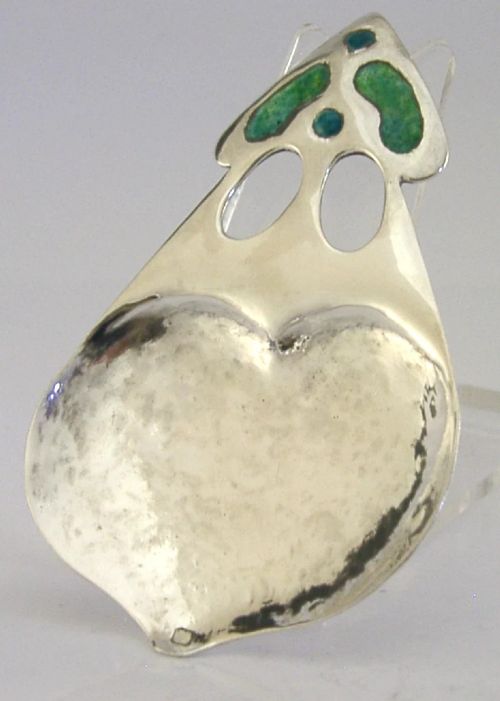
When you search for enamelled tea spoons, you encounter small serving pieces primarily created in silver during the nineteenth and twentieth centuries. These utensils range from individual caddy spoons to full matched sets housed in fitted presentation cases.
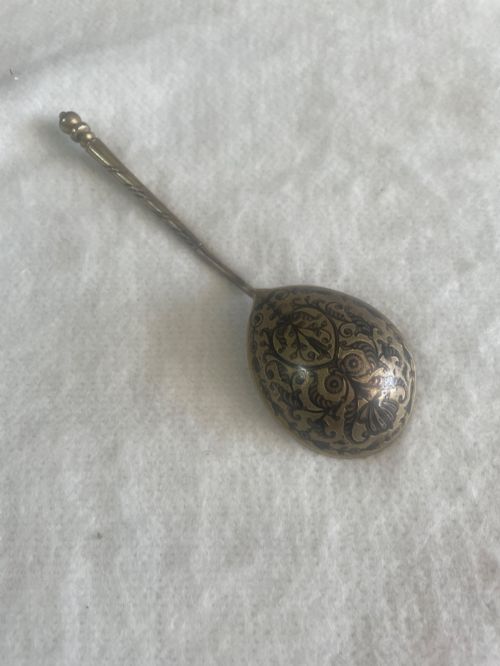
The pieces on this page span several distinct periods, with nineteen-century Russian imperial work appearing alongside twentieth-century Art Deco and mid-century designs. You will also find related forms such as coffee spoons and caddy spoons included among the standard teaspoons.
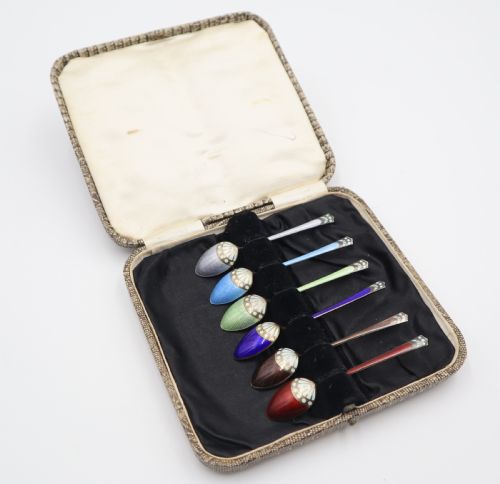
Art Deco examples often arrive as sets of six with geometric coloured decoration, while earlier nineteenth-century pieces frequently display intricate cloisonne work. Cased sets complete with saucers or small cups occasionally appear to broaden the selection.
Materials and construction
Makers formed these spoons using solid silver, sterling silver, or silver gilt as the primary structural metal. Applied enamel provides the vibrant surface colour, fused to the metal base through high-temperature firing.
Techniques range from smooth polished enamel surfaces to detailed cloisonne work where thin metal wires create cells for the coloured glass paste. Presentation boxes lined with satin and leatherette frequently accompany the finest sets to protect the delicate bowls and stems.
Enamelled Tea Spoons Retail Price Guide 2026
Typical asking prices for enamelled tea spoons among the pieces listed under this phrase on Sellingantiques today, from the lower quarter to the upper quarter. They describe what is for sale here now, not the wider market.
Card suits on teaspoons bring a playful gamble to afternoon tea.
Assessing quality
Quality in these items rests upon the precision of the metalwork and the condition of the fused glass surface. Superior examples display intact enamel without chips or hairline fractures, maintaining crisp borders between differing colour fields.
The weight of the silver foundation and the clarity of the maker or period marks further distinguish standard production from exceptional pieces. Sets that retain their original fitted leatherette and satin cases generally indicate a higher level of original preservation.
David Andersen·Vasily Agafonov
The Enamelled Tea Spoons Glossary
- Cloisonne
- An enamelwork technique where fine metal wires are soldered to a metal base to form compartments filled with coloured glass paste. This method creates intricate patterned designs across the spoon bowls and handles.
- Silver Gilt
- Silver that has been coated with a thin layer of gold, providing a rich warm finish. This treatment protects the underlying metal from tarnishing.
- Caddy Spoon
- A short-handled spoon specifically designed for measuring loose tea leaves from a caddy. These often feature wider bowls and decorative handles.
- Sterling Silver
- An alloy of silver containing a high purity standard, widely utilised for durable tableware. This material forms the sturdy backbone of many twentieth-century teaspoons.
- Leatherette
- A synthetic material mimicking leather, frequently utilised for the exterior covering of fitted presentation boxes. It provides a durable protective shell for cased cutlery sets.
Enamelled Tea Spoons: Frequently Asked Questions
What are enamelled tea spoons used for?
These small spoons serve both decorative and practical functions during tea or coffee service. They add a bright flash of colour to the table setting.
Historically, specific forms like caddy spoons measured dry tea leaves, while standard teaspoons stirred sugar or milk into hot cups.
How do I date an enamelled tea spoon?
Dating relies heavily on hallmarks stamped into the silver, along with the distinct artistic style of the piece. Art Deco sets from the nineteen-thirties show characteristic geometric lines, whereas nineteenth-century pieces often display dense Russian cloisonne patterns.
Examining the accompanying presentation case and typography inside the box can also offer helpful clues regarding the manufacturing era.
Are these spoons meant for daily use?
While sturdy enough for occasional service, the glass enamel coating requires careful handling to prevent chipping. Many collectors prefer to display cased sets or utilise them only on special occasions.
If you choose to use them regularly, hand washing and careful storage in fitted boxes will preserve the delicate surfaces for the future.