


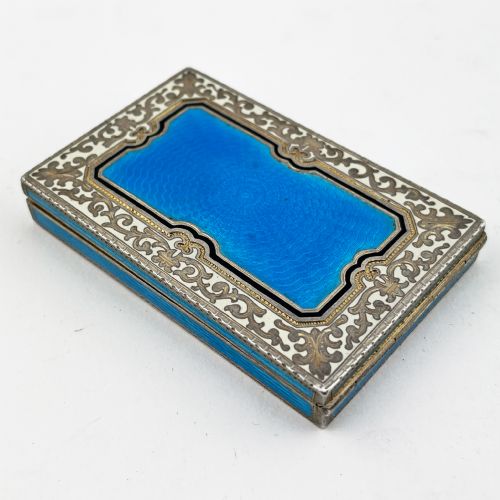
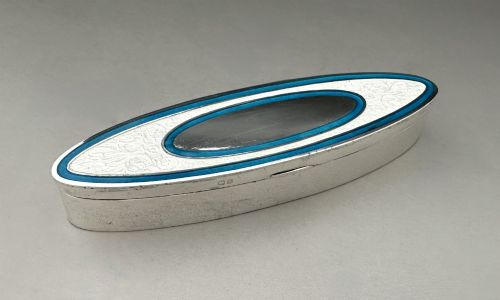


Enamelled Snuff Box
An enamelled snuff box brings the intense colour and fine detail of miniature painting to a pocket-sized container.
Enamelled Snuff Box
An enamelled snuff box is a small lidded container designed to hold ground tobacco, though many survive alongside related patch and pill boxes. When you search for this phrase, you encounter pieces spanning the eighteenth and nineteenth centuries, with Georgian English workshops providing a large share of the examples.
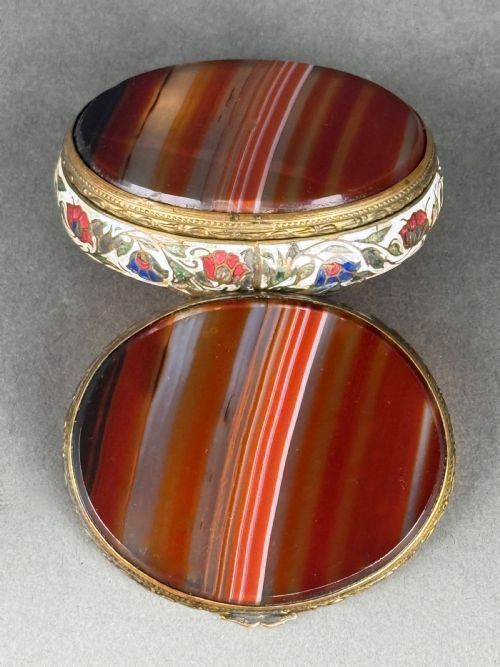
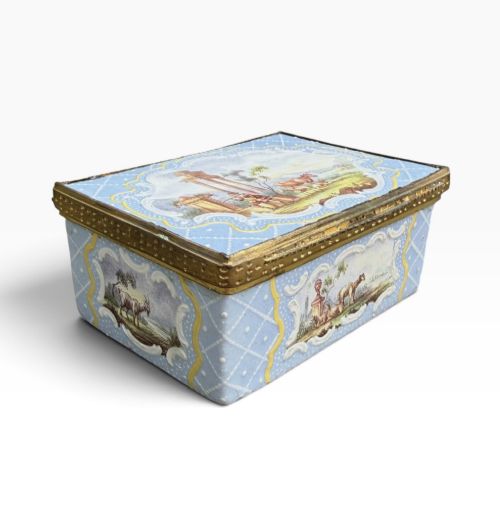
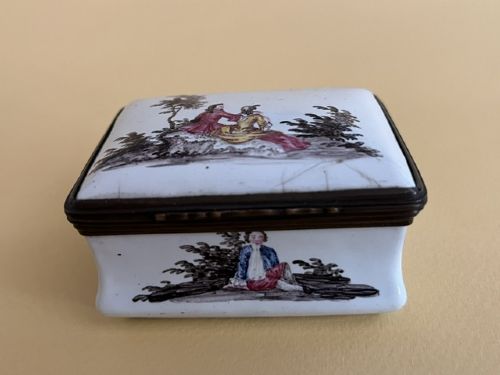
The English tradition is represented by Staffordshire and Bilston factories producing copper boxes with opaque white or coloured enamel coatings painted with landscapes, figures or inscriptions. Alongside these English pieces, continental European makers contribute silver, gold and gilt metal versions featuring guilloche and champleve techniques.
Forms range from simple ovals and rectangles to novelty trinket containers and pocket vinaigrettes. Eighteenth-century examples often carry sentimental messages or topographical views on their lids, while later nineteenth-century pieces lean towards geometric guilloche patterns and intricate metalwork mounts.
Materials and Technique
The foundation of an eighteenth-century English box is typically copper, shaped by hand and coated with a vitreous enamel paste that is fired in a kiln to create a smooth, glossy surface. Artisans then hand-painted the scenes and inscriptions directly onto the hardened enamel using mineral pigments before a final low-temperature firing.
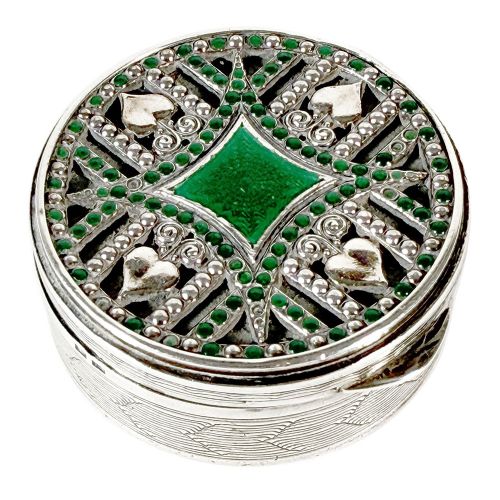
Continental pieces from the nineteenth century often substitute copper for sterling silver or silver-gilt, incorporating techniques like guilloche where a mechanical lathe cuts precise patterns into the metal beneath a translucent layer of enamel. Champleve and cloisonne methods also appear, where metal compartments hold the coloured glass pastes.
Enamelled Snuff Box Retail Price Guide 2026
Typical asking prices for enamelled snuff box among the pieces listed under this phrase on Sellingantiques today, from the lower quarter to the upper quarter. They describe what is for sale here now, not the wider market.
Object forms span standard snuff and patch boxes to specialised containers including double-sided pill boxes, card cases and vinaigrettes.
Assessing Quality
Quality rests upon the crispness of the hand-painting and the complexity of the metal chassis. Finer eighteenth-century pieces display detailed brushwork in the miniature scenes without blurring at the edges, whereas standard examples show simpler, repetitive floral motifs or plain coloured grounds.
The weight and finish of the metal mounts dictate the standard of construction, with substantial silver-gilt or gold hinges closing flush against the body. Inferior boxes often exhibit uneven enamel shrinkage around the interior rims or poorly aligned brass hinges that fail to secure the lid tightly.
George Adam Scheid·Jean-Baptiste Isabey·Khlebnikov
The Enamelled Snuff Box Glossary
- Bilston enamel
- A term applied to eighteenth-century enamelled copper boxes produced in the Staffordshire town of Bilston. These items frequently feature hinged lids decorated with hand-painted landscapes or sentimental phrases.
- Guilloche
- A decorative technique where a mechanical lathe engraves a precise, intricate pattern into a metal surface. Enamellists then apply translucent coloured enamel over the engraving so the pattern shows through.
- Patch box
- A small container used originally to hold cosmetic fabric patches worn on the face during the Georgian period. They are structurally identical to snuff boxes but typically shallower and fitted with an interior mirror.
- Champleve
- An enamelling method where troughs or cells are carved into a metal plate and filled with vitreous enamel paste before firing. The surrounding metal walls remain visible as a linear framework.
- Vinaigrette
- A small hinged box featuring an internal pierced grille that held a sponge soaked in aromatic vinegar. Wealthy owners carried them to mask unpleasant odours in public spaces.
Enamelled Snuff Box: Frequently Asked Questions
What is an enamelled snuff box?
An enamelled snuff box is a small pocket container created by fusing powdered glass to a metal base at high temperatures. Artisans decorated the resulting smooth surface with hand-painted scenes, portraits or inscriptions.
Historically, these containers held ground tobacco for inhalation, though their small size made them equally useful for carrying pills or cosmetic patches. The combination of metalwork and miniature painting allowed makers to turn functional objects into portable works of art.
How do I date an antique enamel box?
Dating relies on examining the base metal, the shape of the box and the style of the painted decoration. Eighteenth-century English examples usually feature copper bases with opaque white enamel linings and hand-painted pastoral scenes.
Nineteenth-century continental pieces frequently incorporate sterling silver, engine-turned guilloche patterns or bright translucent enamels. Maker marks, hallmarks on the silver mounts and stylistic clues within the painted clothing or hairstyles also help narrow the decade of production.
How were patch boxes used?
Patch boxes held small pieces of gummed silk, velvet or taffeta cut into shapes like stars, crescents or dots. Georgian ladies and gentlemen applied these patches to the face to cover blemishes or highlight complexions.
Because patches needed occasional replacement away from the dressing table, pocket-sized containers with interior mirrors became essential accessories. Their construction mirrors that of snuff boxes, though they are often shallower to accommodate thin fabric patches.
How do I care for antique enamel?
Antique enamel requires gentle handling because the glass surface can chip or scratch if dropped against hard objects. Cleaning should involve only a soft, dry cloth to remove dust without disturbing delicate metal mounts or aged paint.
Avoid exposing these boxes to harsh chemical cleaners, ultrasonic baths or prolonged direct sunlight, which can fade certain historical mineral pigments. Storing them in lined display cases or dedicated pouches protects both the enamel and the structural hinges.