






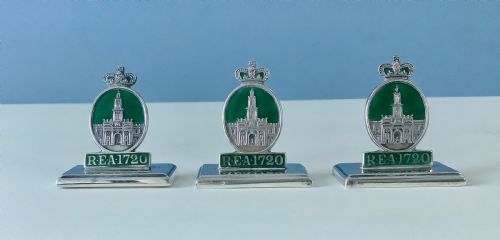


Enamelled Silver Set
An enamelled silver set brings together precious metal and glass enamel in matched collections spanning the Edwardian period to the mid-twentieth century.
Enamelled Silver Set
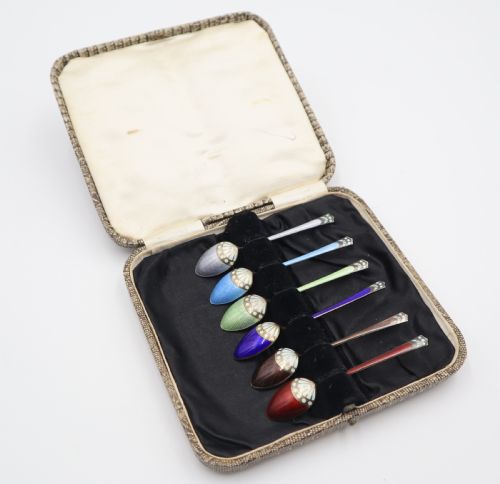
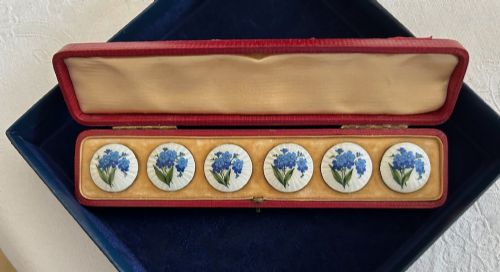
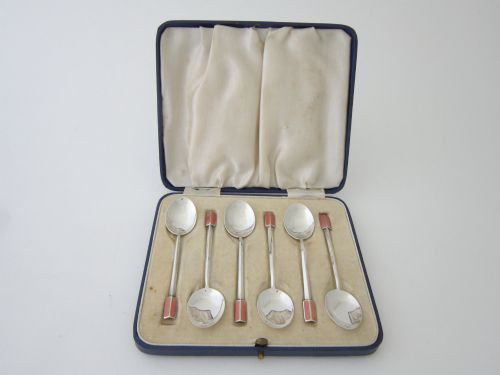
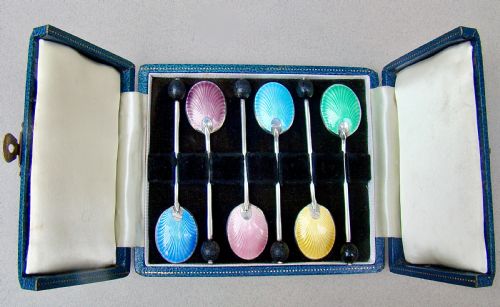
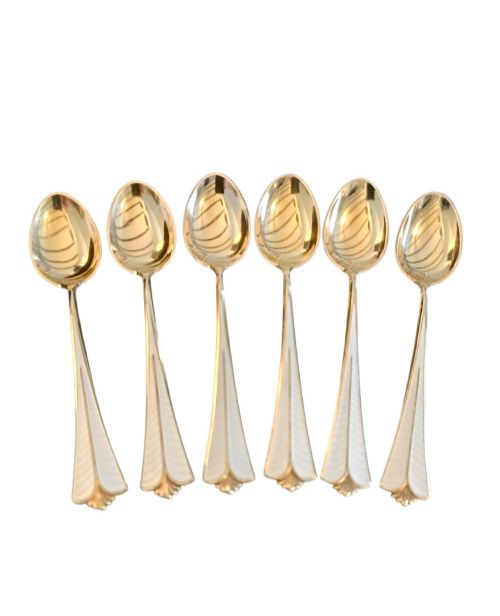
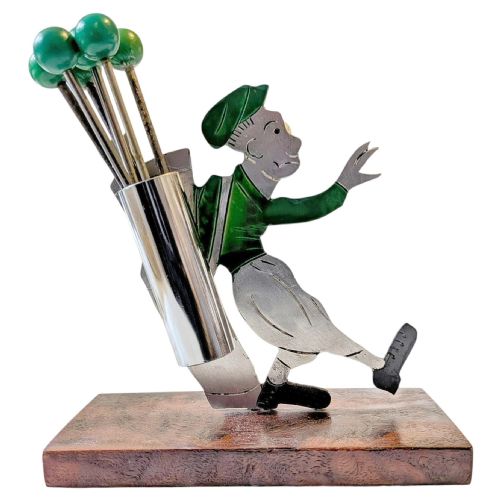
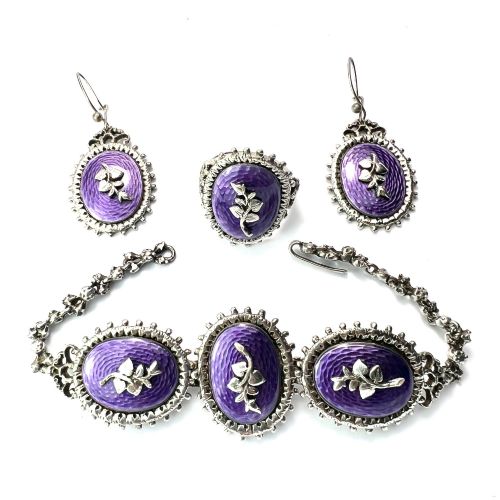
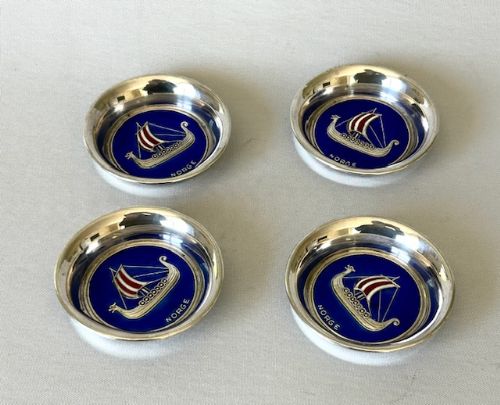
When you search for an enamelled silver set, you encounter matched collections designed for dining, dressing table use, or personal adornment. The items span various forms, including cased coffee and teaspoons, cocktail sticks, menu holders, buttons, and dressing table jars.
You are most likely to meet twentieth-century pieces on this page, particularly Art Deco spoons and tableware from the 1920s and 1930s. British makers, Scandinavian workshops, and continental designers feature prominently across the available selections.
The assortment extends from small boxed sets of six teaspoons to larger cruet sets, barware, and vanity items. Each group demonstrates the purposeful coordination of silver mounting with vitreous enamel decoration.
Materials and construction
Craftsmen built these pieces using sterling silver or silver gilt foundations combined with coloured glass enamel. Techniques such as guilloche engraving beneath translucent enamel create geometric patterns, while cloisonne and plique-a-jour methods introduce distinct cell work and light-catching translucency.
Auxiliary materials like wood, cut glass, velvet, and satin appear within fitted presentation cases or as structural components for boxes, perfume bottles, and brushes. These elements support the silver and enamel focal points without overshadowing the metalwork.
Enamelled Silver Set Retail Price Guide 2026
Typical asking prices for enamelled silver set among the pieces listed under this phrase on Sellingantiques today, from the lower quarter to the upper quarter. They describe what is for sale here now, not the wider market.
Materials span sterling silver, silver gilt, and wood alongside cut glass, velvet, and satin used within fitted presentation cases.
Assessing quality in enamelled silver
Quality rests upon the precision of the metalwork and the condition of the vitreous enamel surface. Superior examples exhibit crisp guilloche engraving underneath smooth, unblemished enamel layers with even colour saturation.
The integrity of the original fitted case and the clarity of hallmarks add distinct merit to a collection. Maker attribution to notable firms and unified execution across every component elevate the standing of the entire set.
Turner & Simpson·David Andersen·Harold Arthur Lazarus·Martin Mayer·Liberty & Co
The Enamelled Silver Set Glossary
- Guilloche
- A decorative mechanical technique whereby precise patterns are engraved into metal before translucent enamel is applied over the top. This allows light to reflect through the coloured glass in geometric waves.
- Cloisonne
- An ancient enamelling method where thin metal wires are soldered to a metal base to form compartments, which are then filled with coloured enamel paste and fired. The resulting design displays distinct metallic outlines between the colour fields.
- Plique-a-jour
- A vitreous enamelling technique akin to cloisonne, but without a backing metal, allowing light to shine through the transparent enamel like stained glass. It is frequently seen on delicate Art Nouveau pieces such as butterfly pendants.
- Silver Gilt
- Silver that has been coated with a thin layer of gold, providing a rich yellow or warm gold appearance while retaining a solid silver structural core. This finish is common on the bowls of spoons and interior mounts.
- Menu Holder
- A small upright desk or table accessory designed to display meal cards during formal dinners. They are frequently cast in themed shapes or mounted with enamel plaques.
Enamelled Silver Set: Frequently Asked Questions
How should I clean enamelled silver?
Use a soft cloth and mild soapy water to gently wipe the surfaces, avoiding harsh silver dips that can penetrate hairline cracks in the enamel.
Dry the pieces immediately with a lint-free cloth and store them away from direct sunlight to preserve the vibrancy of the coloured glass.
Were these sets intended for daily use?
Many sets were manufactured for special dining occasions or formal entertaining, housed in velvet-lined presentation boxes to protect them between uses.
Dressing table items and vanity jars were kept on permanent display, while cutlery sets saw seasonal deployment during holiday gatherings and dinner parties.
How do I identify Art Deco pieces?
Art Deco examples typically display strict geometric lines, stylized motifs, and engine-turned guilloche patterns under vibrant monochrome or contrasting enamel colours.
These pieces date predominantly from the 1920s and 1930s, reflecting the modernist design aesthetic of the interwar period.
What is the difference between guilloche and cloisonne?
Guilloche relies on a machine-engraved metallic base beneath a continuous sheet of translucent enamel, producing uniform patterns that shimmer in the light.
Cloisonne builds visible raised wire boundaries by hand to segregate different pools of opaque or transparent enamel colours into distinct pictorial cells.