



Enamelled Silver Mirror
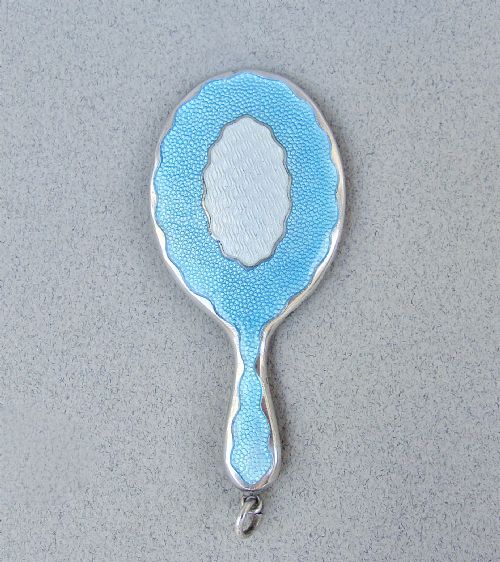
An enamelled silver mirror brings bright colour and metallic sheen to the dressing table, combining bright vitreous enamel with sterling silver.
Enamelled Silver Mirror
An enamelled silver mirror search gathers portable vanity items and small dressing accessories, most frequently seen as pocket compacts and hand mirrors from the early decades of the twentieth century. These objects bridge the gap between functional personal items and miniature works of decorative art, reflecting the aesthetic shifts of their eras.
The pieces listed here lean heavily towards the clean geometric lines of the Art Deco period alongside earlier Art Nouveau curves and mid-century Italian work. Hand mirrors and powder compacts dominate the forms, frequently incorporating glass mirrors, suede linings, and metal mesh alongside the central enamelled decoration.
How they were made
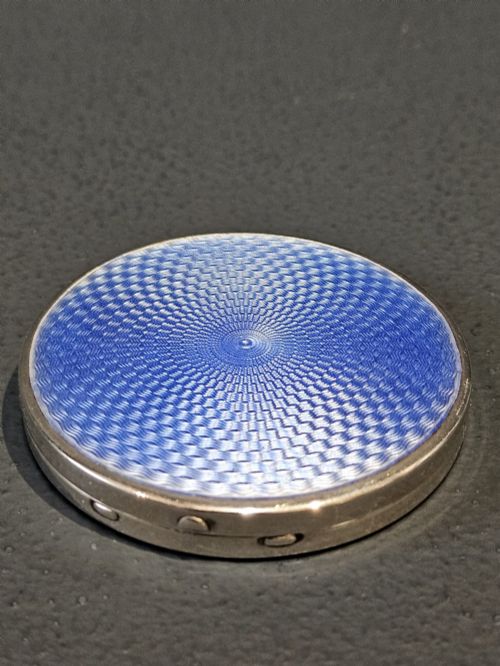
Maker workshops combined sterling silver and 800 silver with vitreous enamel, applying coloured glass paste to metal bases and firing them in a kiln to fuse the surface. Many examples employ guilloche technique, where the silver base is machine-turned with intricate geometric patterns that show translucent through layers of enamel.
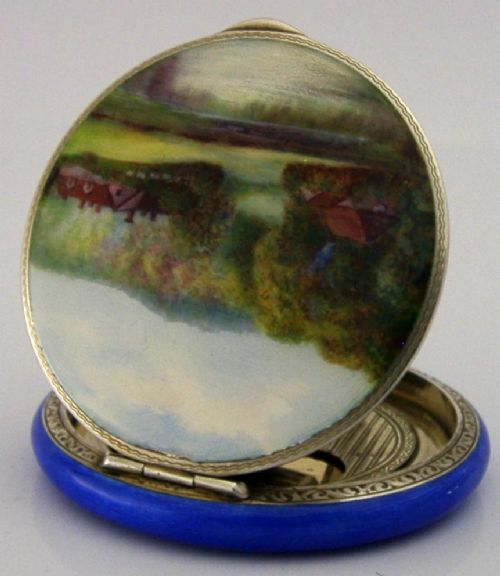
Interior elements include fitted glass mirrors, suede linings, and delicate metal mesh used in combination compacts designed to hold loose powder. Metalwork bears assay marks and hallmarks indicating city of origin, such as Birmingham and London, or foreign silver standards.
Enamelled Silver Mirror Retail Price Guide 2026
Typical asking prices for enamelled silver mirror among the pieces listed under this phrase on Sellingantiques today, from the lower quarter to the upper quarter. They describe what is for sale here now, not the wider market.
The selection spans the Art Nouveau, Art Deco, and Mid-Century periods, utilising sterling silver, 800 silver, and vitreous enamel.
What varies in quality
Quality rests in the precision of the engine-turned guilloche engraving beneath the translucent enamel and the crispness of the hand-painted or enamelled details. Pieces bearing the marks of established silversmiths and named makers demonstrate finer execution in the hinges, clasps, and overall metal chassis.
The preservation of the vitreous surface dictates desirability, as does the complexity of the design, ranging from simple monochrome panels to multi-coloured figurative or abstract compositions. The integration of auxiliary materials like suede linings and internal mesh frames further separates standard production from finer luxury goods.
Henry Williamson·Henry Matthews·Evans·Giuliano Spinelli·Richard Hudnut·Meyle & Mayer·Houbigant
The Enamelled Silver Mirror Glossary
- Guilloche
- An ornamental engraving technique where a mechanical lathe cuts precise repeating patterns into a metal substrate. This textured surface is then coated with translucent enamel.
- Vitreous enamel
- A material made by fusing powdered glass to a metallic substrate through firing at high temperatures. It creates a smooth, durable, and glossy coloured surface.
- Silver-gilt
- Silver that has been coated with a thin layer of gold over its exterior surface. This finish adds a warm golden tone to the underlying silver framework.
- Powder compact
- A small portable case containing a mirror and a compartment for cosmetic face powder. These often include sifters, mesh screens, or powder puffs.
- Assay mark
- A stamp or series of stamps applied to precious metals indicating the purity of the metal, the maker, and the office of testing.
Enamelled Silver Mirror: Frequently Asked Questions
How do I identify Art Deco mirrors?
Art Deco examples feature symmetrical geometric patterns, stark colour contrasts, and engine-turned guilloche engraving beneath translucent enamel. The overall form prioritises straight lines and streamlined shapes typical of the interwar period.
Maker marks and silver hallmarks often help confirm the exact decade of production.
What materials are used in compacts?
Standard materials include sterling silver, 800 silver, and silver-gilt paired with vitreous enamel and glass mirrors. Interiors frequently contain suede linings and metal mesh.
Some pieces integrate alternative metals or fabrics depending on the manufacturer and the specific decade of creation.
How were these compacts used originally?
Owners carried these portable cases in handbags for quick touch-ups throughout the day, utilising the integrated mirror and powder well. Combination pieces housed multiple cosmetics or coins in dedicated internal sections.
They functioned as both everyday accessories and status items reflecting contemporary fashion trends.