


Enamelled Silver Cutlery
Enamelled silver cutlery combines precious metalwork with vibrant vitreous colour, bringing a striking decorative touch to table settings.
Enamelled Silver Cutlery
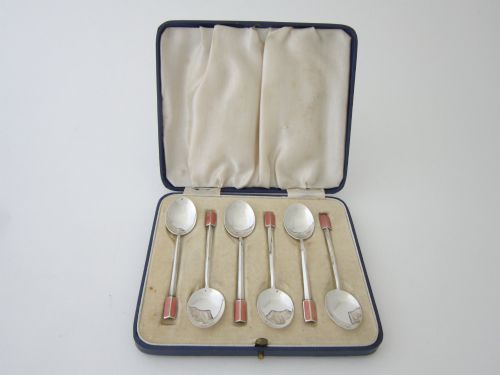
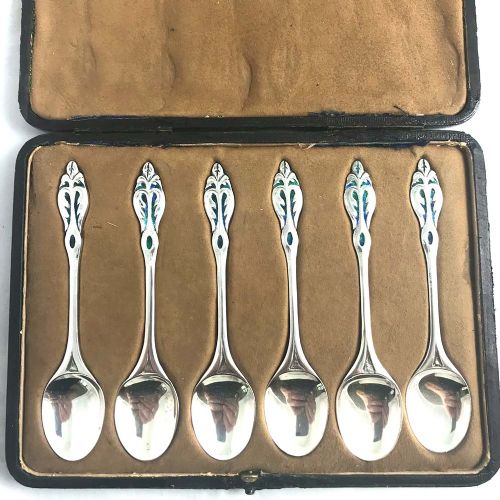
Enamelled silver cutlery encompasses spoons and forks shaped from solid silver, sterling silver, and silver gilt, frequently decorated with colourful vitreous enamel. These pieces range from individual spoons to complete cased sets intended for tea or coffee service.
The selections available here lean heavily towards twentieth-century productions, particularly Art Deco sets from the nineteen-thirties alongside nineteenth-century Russian cloisonne pieces and Scandinavian designs. Teaspoons and coffee spoons dominate the forms, often presented in fitted leatherette or satin-lined cases.
Buyers will encounter items originating from British makers and retailers such as Liberty and Harrods, alongside continental European workshops including Danish and Norwegian producers. The styles reflect shifts from Arts and Crafts and Art Nouveau aesthetics through to clean Mid-Century Modern lines.
Materials and construction
Makers formed these items using solid silver, sterling silver, or silver gilt as a foundation, applying vitreous enamel to the bowls or handles to introduce vibrant colour. Gold gilt is frequently applied to the silver surfaces to enhance the visual contrast against the enamel work.
Techniques such as cloisonne involve soldering fine metal wires onto the silver base to create compartments which are then filled with powdered glass and fired in a kiln. The resulting glazed surface is subsequently ground and polished smooth to sit flush with or complement the surrounding metalwork.
Listings feature items spanning the nineteenth century through to the nineteen-sixties, incorporating sterling silver, enamel, and leatherette materials across multiple stylistic periods.
Assessing quality
The standard of these items is determined by the precision of the metalwork, the complexity of the enamelling technique, and the preservation of the delicate glass surfaces. Finer examples display meticulous wirework in cloisonne pieces and smooth, even coats of vitreous enamel without pitting or stress fractures.
Completeness significantly influences the standing of a set, particularly when items retain their original fitted boxes lined in satin or leatherette. The reputation of the retailer or workshop, such as Liberty or established Scandinavian designers, also distinguishes higher-tier production from standard commercial output.
David Andersen·Vasily Agafonov·Liberty and Co·Harrods London
The Enamelled Silver Cutlery Glossary
- Vitreous enamel
- A material made by fusing powdered glass to a metallic substrate through firing at high temperatures. This creates a durable and glossy coloured coating on the silver surface.
- Cloisonne
- An ancient decorative technique where metal wires are soldered to a metal base to form cells that hold coloured enamel paste. These compartments create intricate patterns across spoons and forks.
- Silver gilt
- Silver objects that have been coated with a thin layer of gold on their exterior surfaces. This technique provides the rich appearance of solid gold while utilising silver as the structural base.
- Sterling silver
- An alloy consisting of silver and other metals, usually copper, designed to increase durability while maintaining a high purity standard. It serves as the primary material for many high-quality spoons and forks.
- Leatherette
- A simulated leather material commonly used to cover protective presentation cases for cutlery sets. It offers a durable exterior finish while keeping the interior lined with softer fabrics like satin.
Enamelled Silver Cutlery: Frequently Asked Questions
What are enamelled silver spoons used for?
These utensils were primarily designed for formal tea and coffee service, used for stirring hot beverages or serving small portions. Many sets were intended for display or special social occasions rather than daily dining.
Because of the delicate vitreous glass surfaces, owners typically reserved them for light domestic use or kept them safely stored within their original fitted presentation cases.
How do I care for enamelled silver cutlery?
Cleaning requires gentle hand washing with mild soap and warm water, avoiding abrasive cloths or harsh silver dips that can damage the glass enamel. Dry the pieces thoroughly with a soft cloth immediately after washing to prevent moisture marks.
Storage in dedicated lined boxes or anti-tarnish pouches helps protect the fragile enamel from scratching against other metal items in a drawer.
Why are some spoons gold gilt?
Applying a layer of gold over the silver base, known as silver gilt or vermeil, enhances the visual warmth of the piece and provides a barrier against tarnishing. This treatment was often applied to the bowls of teaspoons to protect the silver from chemical reactions with acidic foods or tea.
It also creates a striking aesthetic contrast when paired with brightly coloured vitreous enamel handles.
Are cased sets more desirable?
Cased sets complete with original fitted presentation boxes in materials like leatherette and satin generally command greater interest from collectors. The packaging often bears the retailer's stamp, providing proof of origin and original context.
Keeping the cutlery together in its designated box also ensures better long-term preservation of the delicate enamel surfaces.