
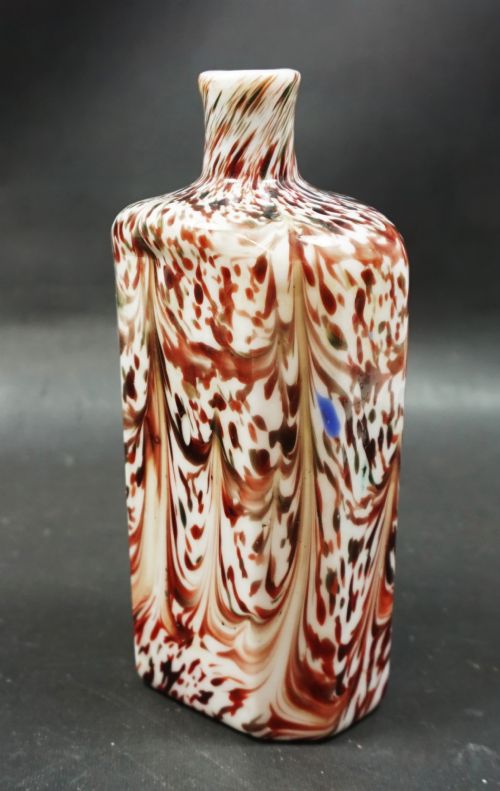


Enamelled Glass Scent Bottle
Discover the intricate artistry of an enamelled glass scent bottle, where brilliant coloured glass meets delicate painted or fused metalwork.
Enamelled Glass Scent Bottle
An enamelled glass scent bottle combines the tactile weight of blown or moulded glass with the decorative precision of enamel work, serving as both personal fragrance container and portable vanity object.
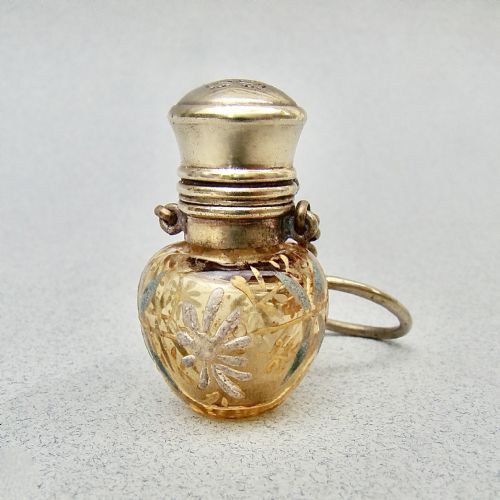
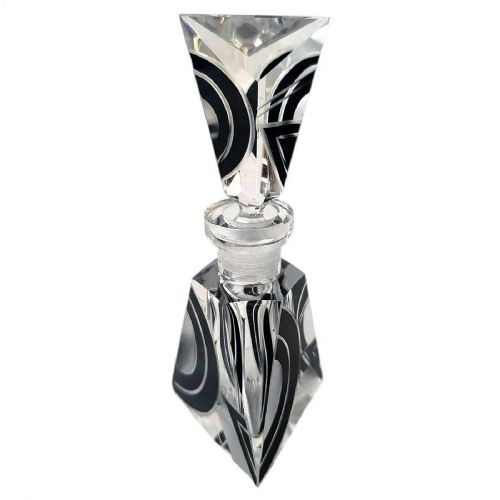
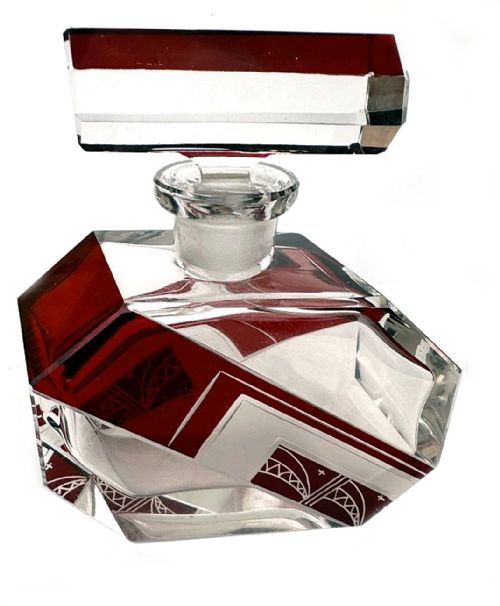
Buyers encounter two primary aesthetic lineages on this page: ornate Victorian and Edwardian chatelaine pieces adorned with hand-painted motifs or translucent guilloche enamel, and geometric Art Deco designs originating from makers in places like the Czech Republic.
Forms range from miniature pocket flasks and chatelaine companions designed to hang from a belt to larger dressing table atomizers and globular bottles mounted in sterling silver or ormolu.
How They Were Made
Craftsmen utilised various glass techniques including cutting, pressing, and moulding, producing bodies in vibrant hues such as cranberry, Bristol blue, green, and milk glass.
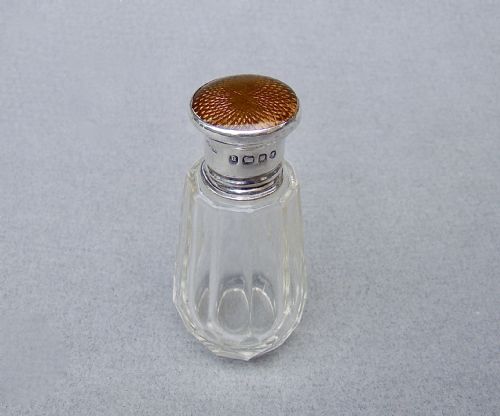
Surface decoration frequently involved applied enamel painted directly onto the glass, or complex guilloche enamel fused over engine-turned sterling silver mounts and lids.
Metal components such as collars, hinged caps, and atomizer hardware were fabricated from sterling silver, silver gilt, chrome, or ormolu, often bearing hallmarks that record the city and year of assay.
Listings span multiple eras from eighteenth-century Swiss flasks to mid-century British pieces, demonstrating enduring demand for enamelled glass vessels.
What Varies in Quality
The distinction between standard production and top-tier examples lies in the crispness of the glass cutting and the precision of the enamel application, whether executed by hand or mechanical transfer.
Maker attribution elevates desirability, particularly when pieces bear signatures from renowned designers like Karl Palda or René Lalique, or carry marks from prominent silversmiths.
The integration between the glass body and its metal mounts dictates overall refinement, where secure closures, intact guilloche patterns, and well-preserved gilding indicate superior original manufacture.
Karl Palda·Henry Perkins·René Lalique·Charles May·James Fenton·Mappin And Webb
The Enamelled Glass Scent Bottle Glossary
- Guilloche enamel
- A decorative technique where a geometric pattern is mechanically engraved into metal beneath a transparent layer of enamel. This method allows light to reflect through the coloured glass-like coating.
- Chatelaine
- A decorative belt hook worn with a series of suspended chains carrying small utility items such as scent bottles, keys, or watches. They were popular accessories during the Victorian period.
- Ormolu
- A metallic alloy used to imitate gold, applied as a surface finish to bronze or other metal mounts. It provides a rich, warm tone around the necks and bases of glass bottles.
- Mary Gregory
- A style of white enamel painting depicting Victorian children, usually silhouetted against foliage or natural backgrounds on coloured glass. The technique gained widespread popularity in the late nineteenth century.
- Atomizer
- A mechanical spray device fitted to perfume bottles to disperse liquid scent in a fine mist. Many twentieth-century examples incorporate chrome or metal squeeze mechanisms.
Enamelled Glass Scent Bottle: Frequently Asked Questions
How do I identify a Victorian scent bottle?
Victorian examples frequently display rich coloured glass bodies, such as cranberry or Bristol blue, often paired with elaborate sterling silver mounts, repousse lids, or hand-painted Mary Gregory figures.
Assay office marks and date letters stamped on the silver collars provide precise manufacturing years, linking the piece to makers working in Birmingham or London during the nineteenth century.
What defines an Art Deco perfume bottle?
Art Deco pieces typically showcase clean geometric lines, stylised motifs, and contrasting glass colours like amber, green, or frosted clear glass. Many originate from Czech workshops associated with designers like Karl Palda.
These bottles often omit heavy chatelaine chains in favour of standalone geometric silhouettes or integrated metal atomizer hardware intended for dressing table display.
Were these bottles meant for travel?
Smaller chatelaine and miniature bottles were specifically manufactured for personal carriage, featuring secure screw-top or hinged silver lids designed to prevent fragrance leakage while suspended from a belt or carried in a pocket.
Larger flasks and atomizer versions remained stationary on dressing tables, holding greater quantities of perfume for daily domestic use.
What is guilloche enamel?
Guilloche enamel involves engraving a precise, repeating pattern into a metal surface - usually sterling silver - before applying a translucent coat of coloured enamel. The underlying pattern creates depth and shimmering light reflection.
This technique appears frequently on Edwardian and Art Deco bottle caps and vanity sets, produced by specialised silversmiths and enamel workshops.