




Enamelled Glass Pot
An enamelled glass pot brings together vibrant colour and precious metalwork, offering a decorative vessel for the dressing table.
Enamelled Glass Pot
An enamelled glass pot is a small lidded vessel used for vanity and dressing table accessories, frequently housing trinkets, cosmetics or ink. The items found here span the Victorian, Edwardian and Art Deco eras, alongside mid-century examples and nineteenth-century French pieces.
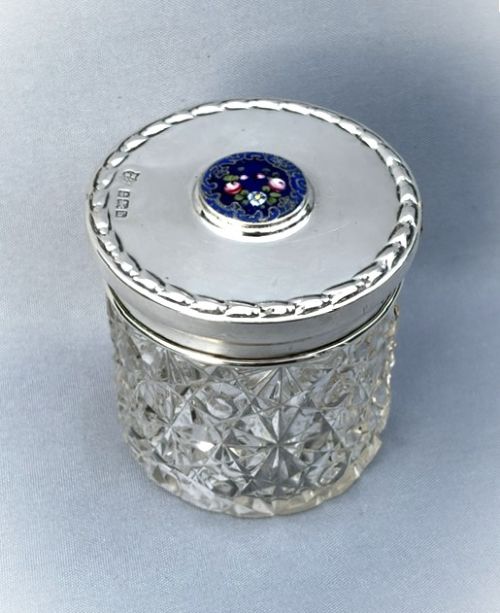
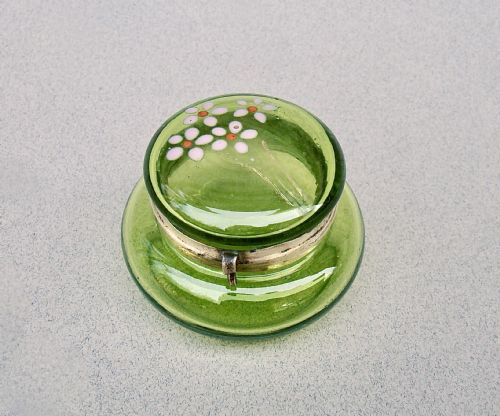
Buyers will most commonly encounter vanity jars and dressing table jars featuring fitted sterling silver, brass or metal lids. These containers often utilise cut glass, Bristol blue glass, cranberry glass or etched glass bodies paired with colourful enamel work.
Materials and construction methods
Glass is blown, moulded or cut to form the base vessel, sometimes incorporating cased colours such as deep blue or cranberry tones. Sterling silver mounts and hinged or lift-off lids are frequently stamped with hallmarks indicating assay offices like Birmingham and London.
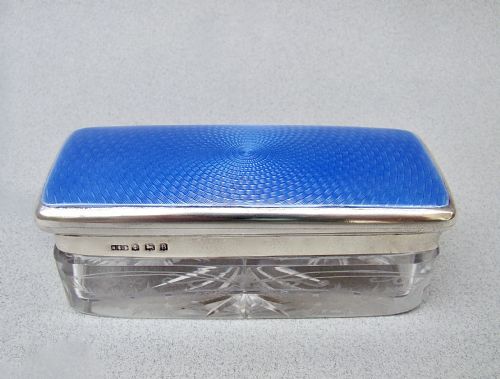
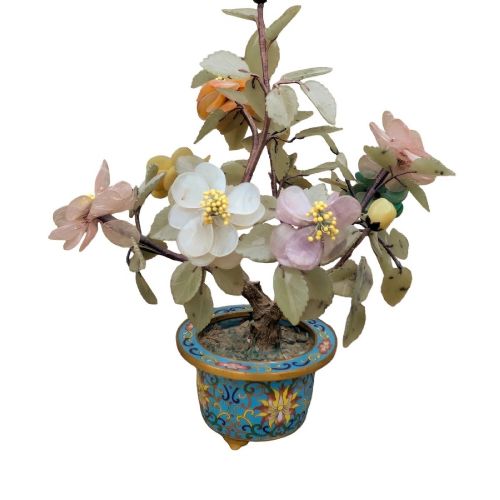
Enamel is applied directly to metal surfaces or integrated through guilloche techniques, creating patterned engine-turned backgrounds beneath translucent coloured glazes. Additional decorative elements incorporate porcelain inserts, hardstone details and cloisonne work.
Enamelled Glass Pot Retail Price Guide 2026
Typical asking prices for enamelled glass pot among the pieces listed under this phrase on Sellingantiques today, from the lower quarter to the upper quarter. They describe what is for sale here now, not the wider market.
Listings feature items spanning the nineteenth century through the Art Deco period, incorporating sterling silver, brass, cut glass and guilloche enamel.
Judging the standard of manufacture
The sophistication of the enamel work dictates much of the visual appeal, particularly where guilloche engraving catches the light beneath translucent layers. Crisp hallmarks on the sterling silver mounts also confirm the age and origin of the piece.
The clarity and weight of the glass body, whether heavy cut crystal or vibrant coloured glass, distinguish finer examples from standard production. A secure, well-fitted lid that closes flush to the glass rim demonstrates superior craftsmanship.
Henry Clifford Davis
The Enamelled Glass Pot Glossary
- Guilloche Enamel
- Enamel applied over a metal surface that has been mechanically engraved with a precise geometric pattern. This technique creates a shimmering, light-reflective background visible through the translucent glaze.
- Sterling Silver
- An alloy of silver containing ninety-two point five percent pure silver and seven point five percent other metals, usually copper. Most British dressing table jars utilise this standard for their decorative lids.
- Bristol Blue Glass
- A deep, cobalt-tinted glass historically produced in Bristol during the eighteenth and nineteenth centuries. It remains a popular material for nineteenth-century dressing table accessories.
- Cranberry Glass
- A rich pinkish-red glass produced by adding gold chloride to the molten glass batch. It appears frequently in Victorian and early twentieth-century lidded boxes.
- Hallmark
- A series of official stamps applied to precious metals in Britain to indicate the purity, maker, assay office and year of assay. These marks provide precise dating for silver-lidded glass pots.
Enamelled Glass Pot: Frequently Asked Questions
What were enamelled glass pots used for?
These pots served primarily on dressing tables and vanity desks to hold pins, small trinkets, powder, creams or ink. Their decorative nature meant they remained on display rather than stored away.
Today they function equally well for holding modern small items or simply as decorative vanity accents.
How do I date a silver and enamel jar?
Dating relies heavily on the silver hallmarks stamped onto the lid or collar mounts, which record the assay office and exact year of production. Stylistic clues such as Art Deco geometric lines or Victorian floral motifs also narrow down the period.
Looking at the cut of the glass and the thickness of the metal mount provides further confirmation of the era.
How should I clean my glass pot?
Glass and silver require separate care to preserve the integrity of the enamel and metal mounts. Use a soft, dry cloth for the enamel and gentle silver polish kept strictly away from the glass surface.
Avoid submerging lidded pots in water, particularly antique pieces with historic adhesives or delicate hinge mechanisms.
What is guilloche enamel?
Guilloche is a decorative technique where metal is engine-turned into an intricate, repeating geometric pattern using a lathe. Coloured enamel is then fired over the engraved metal so the pattern shows through the translucent finish.
This method was exceptionally popular during the Art Deco and Edwardian periods for dressing table sets.