


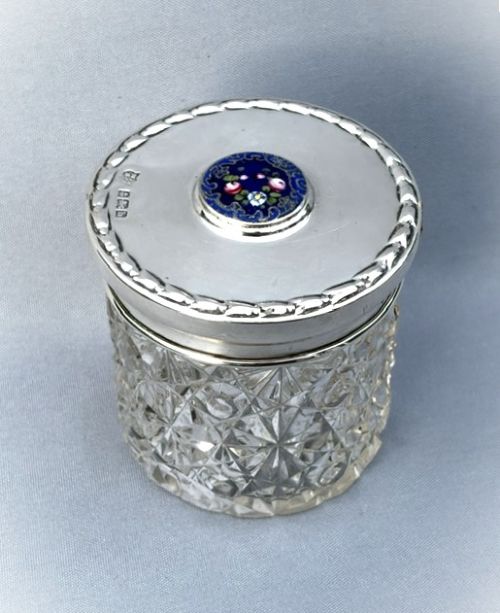



Enamel Powder Jar
An enamel powder jar brings colour and fine metalwork to the dressing table, offering a glimpse into the dressing habits of past centuries.
Enamel Powder Jar
An enamel powder jar is a dressing table accessory designed to hold loose powder or small trinkets, combining a glass or metal body with a decorated lid. You will most frequently encounter pieces from the Edwardian and Art Deco periods, alongside Victorian examples.
The forms range from heavy cut glass bowls and cylindrical jars to small trinket boxes and lidded pots. Many pieces originate from English workshops or nineteenth-century French makers, reflecting changing styles in vanity storage over the decades.
How they were made
Makers combined sterling silver or base metal mounts with blown glass, frequently employing cut glass or coloured vessels in cranberry, Bristol blue, and green. The metal components were shaped in silversmithing workshops, often bearing hallmarks from assay offices such as Birmingham.
Enamel work took several forms, including translucent guilloche enamel applied over engine-turned metal grounds and painted opaque English enamel. Craftsmen fused powdered glass to metal under high heat to create the smooth, glossy surfaces seen on the lids.
Enamel Powder Jar Retail Price Guide 2026
Typical asking prices for enamel powder jar among the pieces listed under this phrase on Sellingantiques today, from the lower quarter to the upper quarter. They describe what is for sale here now, not the wider market.
Victorian ladies stored secrets and face powder in the exact same spot on the dressing table.
What varies in quality
The distinction between standard pieces and the finest examples lies in the precision of the guilloche engine-turning and the clarity of the enamel colour. Richer hues in the glass body and intricate geometric or floral patterns on the lid indicate superior craftsmanship.
Substantial sterling silver mounts and crisp hallmarks add weight and authority to a piece, separating mass-produced accessories from finer dressing table sets. The thickness of the glass and the weight of the metal determine the durability and tactile appeal of the jar.
Henry Clifford Davis
The Enamel Powder Jar Glossary
- Guilloche enamel
- Enamel applied over a metal surface that has been mechanically engraved with an intricate geometric pattern. This technique allows light to reflect through the translucent coloured glass.
- Sterling silver
- An alloy of silver containing 92.5 percent pure silver and 7.5 percent other metals, usually copper. It provides the durable structure for the lids and collars of these jars.
- Cut glass
- Glass decorated by cutting facets or patterns into its surface using a wheel. This method adds weight and sparkle to the body of the dressing table jar.
- Hallmark
- A mark stamped on precious metals indicating the standard of purity, the assay office, and the year of manufacture. These stamps help date and attribute British silver mounts.
- Dressing table accessory
- An umbrella term for items used in personal grooming and vanity organisation, including powder jars, trinket boxes, and hairbrushes.
Enamel Powder Jar: Frequently Asked Questions
What is an enamel powder jar?
An enamel powder jar is a small lidded container used historically on dressing tables for holding cosmetic powder, pins, or trinkets. They combine a glass or metal base with a decorative enamelled metal lid.
These pieces reflect the vanity styles of the Victorian, Edwardian, and Art Deco eras, serving both a functional purpose and as decorative vanity items.
What materials are used in these jars?
The bodies are typically formed from clear, cut, or coloured glass such as cranberry, Bristol blue, and green, paired with metal or sterling silver mounts. The lids feature fired enamel, sometimes laid over machine-turned guilloche metal.
Some examples utilise base metals or solid silver throughout the lid construction, depending on the manufacturing period.
How were these jars used?
They sat upon dressing tables and dressing chests as part of matching vanity sets used during morning and evening grooming routines. Ladies stored face powder, dusting powder, or small precious items inside them for daily use.
Today, they function as decorative containers for modern dressing tables or as display pieces for collectors of vanity items.