



Enamel Match Case
An enamel match case is a pocket container for carrying matches safely, combining protective metalwork with decorative coloured glass surfaces.
Enamel Match Case
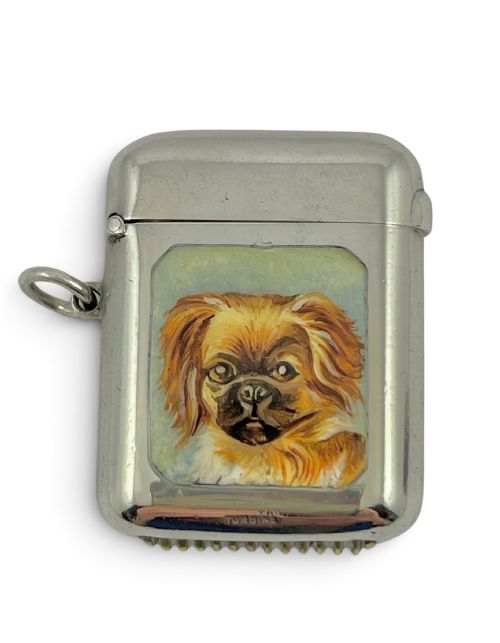
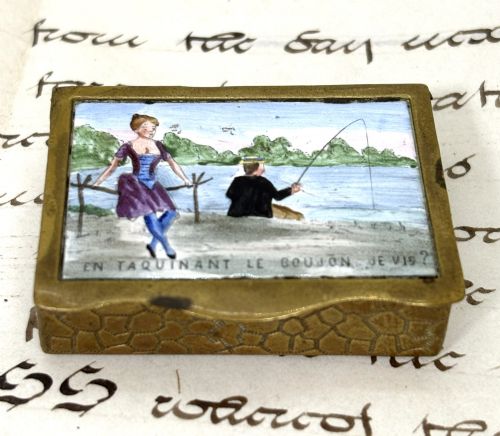
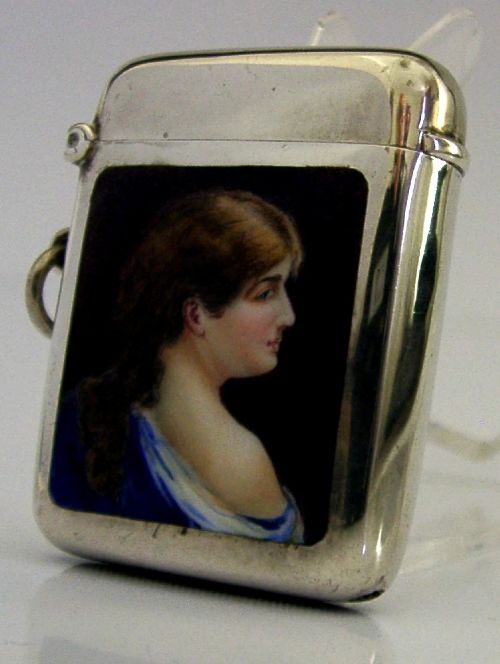
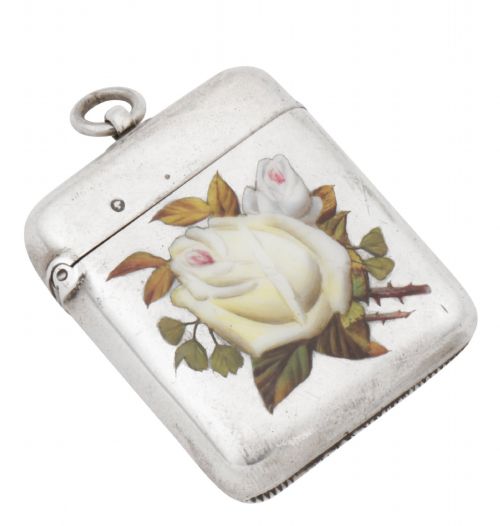
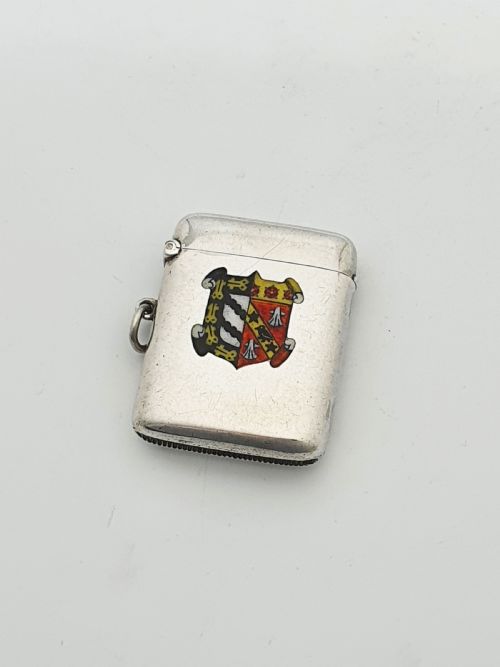
When you search for an enamel match case, you are looking at small pocket containers designed to hold safety matches or paper matchbooks securely. The pieces seen here span from the Victorian and Edwardian eras into the Art Deco period, alongside 19th Century French examples. The version you are most likely to meet on this page is a sterling silver vesta case featuring hand painted or guilloche enamel decoration on the front.
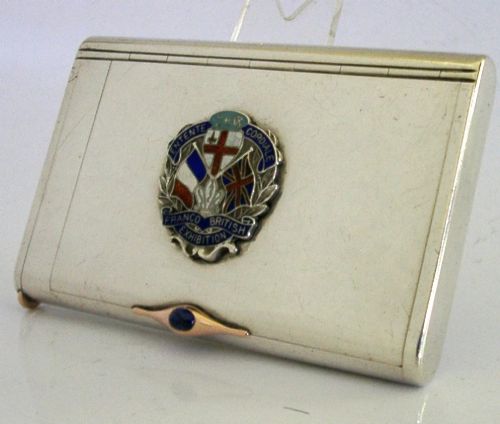
The objects take several distinct forms across the inventory, appearing as traditional vesta cases for wooden matches, larger cigarette vesta combinations, and rectangular matchbox sleeves. Origins trace to British assay offices including Birmingham and Chester, alongside continental workshops in France. Each piece reflects the portable luxury requirements of the nineteenth and early twentieth centuries.
Materials and construction
The foundation of these pieces relies on metals such as sterling silver, brass, bronze, and gold, shaped into hinged boxes with striker grooves on the base. Artisans applied vitreous enamel or painted porcelain directly onto the metal ground, fusing the glass powders at high temperatures to create permanent colour. Guilloche techniques involve engine turning the underlying metal so intricate patterns show through translucent enamel layers.
Makers integrated functional elements like spring loaded lids and suspension loops into the rigid metal structures. Hand painted details depict floral motifs, portrait figures, sporting subjects, and military crests directly onto the enamel surface before final firing. The resulting items unite silversmithing precision with miniature painting traditions.
Listings feature sterling silver, brass, bronze, and gold combined with vitreous, guilloche, and painted enamel across Victorian and Edwardian periods.
Quality variations
Quality in these pieces rests primarily on the complexity and preservation of the enamel work. Fine examples display intricate hand painting or precise engine turned guilloche patterns beneath intact translucent glass, whereas lesser pieces show plain opaque surfaces or simple applied crests. The crispness of the metal chasing and the tightness of the spring hinge also separate standard production items from superior workshop output.
The distinction between ordinary utility items and exceptional pieces involves artistic execution. Specialised figural forms, such as dog heads, jockey caps, or sentry boxes, demand advanced sculptural skill from the maker. Well preserved painted miniatures retain sharper detail and richer colour saturation than worn or damaged equivalents.
William Neale·Sampson Mordan·Walker And Hall·Aspreys
The Enamel Match Case Glossary
- Vesta case
- A small pocket container designed to hold matches and strike them on a serrated base.
- Vitreous enamel
- A material made by fusing powdered glass to a metallic substrate through firing.
- Guilloche
- A decorative engraving technique where a mechanical instrument etches precise geometric patterns into metal.
- Assay mark
- Official stamps indicating metal purity and the office where the piece was tested.
Enamel Match Case: Frequently Asked Questions
What is an enamel match case used for?
These containers held matches safely in pockets or handbags without accidental ignition.
They protected delicate wooden matches or paper matchbooks from moisture and crushing during daily travel.
How do I date a silver enamel match case?
Assay office marks and date letters stamped on the silver frame provide the exact year of manufacture.
Stylistic markers like Art Deco geometric patterns or Victorian floral painting styles also indicate the period.
What is the difference between a vesta and a matchbox case?
Vesta cases feature an internal spring lid and a striker on the bottom for short wooden matches.
Matchbox cases are rectangular sleeves built to slide over standard sliding card boxes or paper matchbooks.
How should I clean antique enamel?
Use a soft dry cloth to remove dust from the glass and metal surfaces without abrasive pressure.
Avoid liquid dips and harsh silver polishes that can seep under the enamel borders and cause lifting.