



Enamel Dressing Set
These enamel dressing set pieces combine polished metal and coloured vitreous glass, offering a dressing table arrangement that reflects personal grooming history.
Enamel Dressing Set
An enamel dressing set comprises matching or companion pieces intended for the dressing table, including hand mirrors, brushes, jars and perfume bottles. These objects gather together items used in daily toilette routines into a cohesive display on a vanity surface.
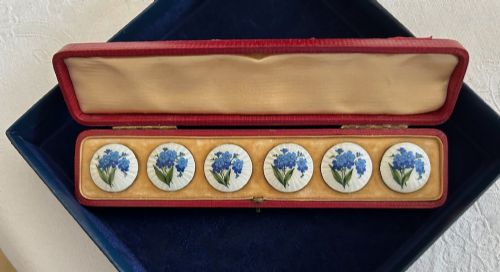
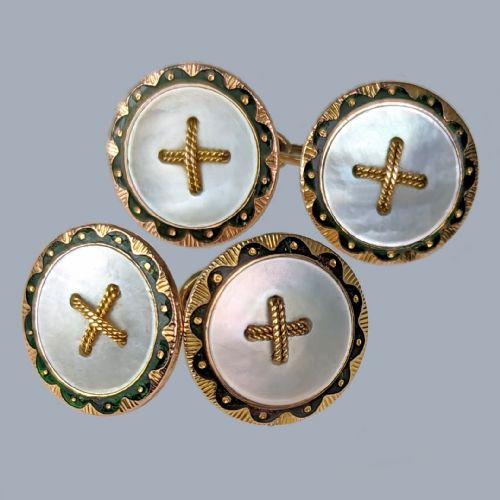
The pieces encountered on this page span the Victorian, Edwardian, George V and Art Deco periods, shifting from ornate nineteenth-century work to clean geometric lines. Forms range from heavy glass jars with precious metal and enamel lids to handheld mirrors and associated buttons or small containers.
How they were made
Makers fused powdered glass onto metal bases such as sterling silver, 9ct gold or gilt bronze through high-temperature firing, creating durable coloured surfaces. Techniques like guilloche introduced fine machine-turned geometric patterns beneath translucent enamel layers.
Metalwork involved casting, hammering and hallmarking precious metals, whilst glass containers were blown or moulded to fit decorative metal collars. Details sometimes incorporated mother of pearl, diamonds or hand-painted motifs such as Mary Gregory green glass designs.
Enamel Dressing Set Retail Price Guide 2026
Typical asking prices for enamel dressing set among the pieces listed under this phrase on Sellingantiques today, from the lower quarter to the upper quarter. They describe what is for sale here now, not the wider market.
The selection includes objects produced across the Victorian, Edwardian, George V and Art Deco eras.
What varies in quality
Quality rests upon the crispness of the engine-turning beneath translucent enamel and the weight and purity of the underlying metal, whether silver or gold. Superior execution displays even colour saturation across the vitreous surface without bubbling or misalignment.
Sets that retain their original matching components and undamaged glass elements demonstrate higher preservation levels. Finer examples also show careful chasing on the metal mounts and secure bezels holding the enamel panels in place.
Solomon Blanckensee Son
The Enamel Dressing Set Glossary
- Guilloche
- A decorative engraving technique that etches precise repeating geometric patterns into a metal substrate before translucent enamel is applied.
- Champleve
- An enamelling method where troughs or cells are hollowed out of a metal surface and filled with vitreous paste prior to firing.
- Sterling silver
- A standard alloy of silver containing ninety-two point five percent pure silver and seven point five percent other metals, commonly marked with hallmarks.
- Gilt bronze
- Bronze metal that has been coated with a thin layer of gold using fire gilding or electroplating methods.
- Mary Gregory
- A style of white enamel painting on coloured glass, typically depicting Victorian children in pastoral settings.
Enamel Dressing Set: Frequently Asked Questions
What items belong in an enamel dressing set?
A complete grouping generally includes hand mirrors, hair and clothes brushes, powder jars and perfume bottles designed in a matching aesthetic.
Smaller associated items like button sets or small trinket boxes sometimes accompany the larger vanity pieces.
How do I date an enamel dressing set?
Hallmarks stamped onto the silver or gold mounts provide precise assay office locations and production years.
Stylistic cues also help, as Art Deco sets show geometric motifs from the nineteen-thirties while Edwardian and Victorian pieces feature softer floral or ornate chased borders.
How should I clean enamel dressing pieces?
Enamel surfaces require gentle cleaning with a soft cloth and mild soapy water to avoid scratching the vitreous glass layer.
Harsh silver dips must be kept away from the enamel and glass portions to prevent chemical damage to the coloured sections.
Why do some sets have guilloche patterns?
Guilloche engraving was applied beneath translucent enamel to catch the light and create shimmering depth across the vanity items.
This engine-turned texture was popular during the Edwardian and Art Deco periods for adding sophisticated visual movement to metal surfaces.