

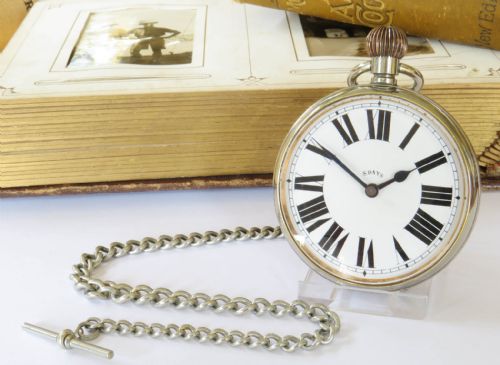


Enamel Clock Face
An enamel clock face brings a crisp, clean white ground and steady hand-painted numerals to a room, offering both reliable utility and quiet charm.
Enamel Clock Face
When you search for an enamel clock face, you encounter a variety of forms ranging from grand architectural outdoor dials to domestic pocket watch indicators and wall clock plates. The examples found here span several distinct periods including Georgian, Victorian, Edwardian, and Art Deco, reflecting shifting interior tastes.
The most common formats you will meet on this page are substantial turret or wall clock dials alongside larger goliath pocket watches adapted for desk use. These pieces cross various styles such as French Provincial, French Industrial, and Victorian Industrial, showing how utilitarian mechanisms were housed in durable materials.
Objects on this page originate from diverse contexts, including longcase clocks, desk pieces, and pocket watches by makers like Jn Wright Linton and Joyce Whitchurch. Each surviving face demonstrates the enduring appeal of fused glass over metal substrates for legible timekeeping.
How they were made
These pieces rely primarily on enamel fused onto a metal base such as steel, iron, or brass to create a smooth, impervious dial surface. This technique provided early horologists with a bright white background that resisted tarnishing and remained legible in various lighting conditions.
Fitted components often incorporate glass covers, nickel bezels, and chrome surrounds to protect the fragile glazed surface from damage and dust. The juxtaposition of polished metal frames with glossy vitreous enamel defines the structural integrity of these dials.
Enamel Clock Face Retail Price Guide 2026
Typical asking prices for enamel clock face among the pieces listed under this phrase on Sellingantiques today, from the lower quarter to the upper quarter. They describe what is for sale here now, not the wider market.
Joyce Whitchurch built a thirty-nine-inch outdoor turret dial meant to keep an entire village on schedule.
What varies in quality
Quality in these dials rests on the crispness of the hand-painted numerals and the absence of heavy firing flaws or deep hairline fractures in the vitreous layer. Finer examples maintain an unblemished white ground where the script remains sharp and distinct against the metal substrate.
The sophistication of the supporting metalwork, from heavy brass bezels to robust iron turret plates, dictates the overall calibre of the piece. Superior items retain their original mounting hardware and protective glass without clumsy replacements.
Joyce Whitchurch·Jn Wright Linton
The Enamel Clock Face Glossary
- Enamel
- A vitreous substance fused to a metal base through high-temperature firing. It provides a durable, glossy, and chemically stable surface for clock dials.
- Turret clock
- A large clock designed for placement in a tower or on the exterior of a building. These dials are built to be read from a considerable distance.
- Goliath pocket watch
- An oversized pocket watch popular around the turn of the twentieth century. They often sat on desks inside leather travelling cases.
- Comtoise wall clock
- A traditional weight-driven clock originating from the Jura region of France. They typically feature pressed brass surrounds and painted enamel chapter rings.
- Chapter ring
- The circular band on a clock face that bears the hour numerals. On enamel faces, these are usually painted directly onto the white ground.
Enamel Clock Face: Frequently Asked Questions
What is an enamel clock face?
An enamel clock face is a durable dial made by fusing powdered glass to a metal plate at high temperatures. This creates a smooth, wipe-clean surface that resists discolouration over decades of use.
These faces appear on everything from pocket watches and desk pieces to large wall clocks and outdoor turret timekeepers.
How do I clean an enamel dial?
Cleaning requires only a soft, dry cloth or a slightly damp sponge with mild soap to remove surface dust. Avoid harsh abrasives or chemical solvents that can dull the glossy finish or damage painted numerals.
Take care around any exposed edges where the vitreous coating meets the underlying metal frame.
Were these dials used outdoors?
Certain large-scale examples, such as turret clock dials, were specifically built to withstand external weather conditions. The fused glass surface protected the iron or steel backing from rust while remaining legible in daylight.
Smaller domestic versions remained indoors on walls, desks, or inside pocket watch cases.
How do I date an enamel face?
Dating relies on stylistic clues in the font of the numerals, the shape of the hands, and the surrounding metal case materials. Art Deco pieces show geometric clarity, while Georgian and Victorian examples often feature ornate script and heavy brass bezels.
Reference markers like maker signatures or associated movement types help narrow the period further.