



Empire Tent Basket Light
An empire tent basket light brings brilliant French Regency and Empire elegance to a room through cascading crystal drops and gleaming brass.
Empire Tent Basket Light
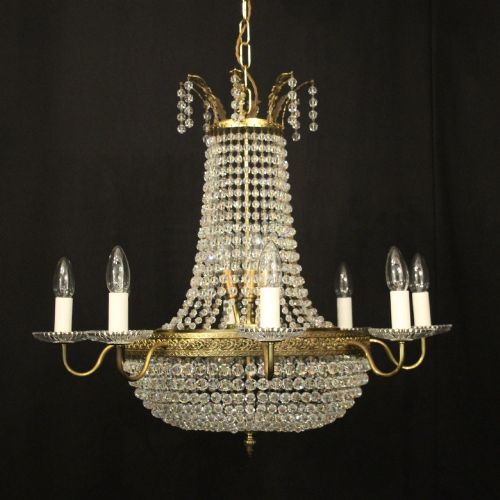
When you search for an empire tent basket light, you find decorative chandeliers and wall lights drawing on French Empire and Regency styles. These pieces primarily date from the early twentieth century alongside nineteenth-century examples, capturing a distinct period of classical illumination.
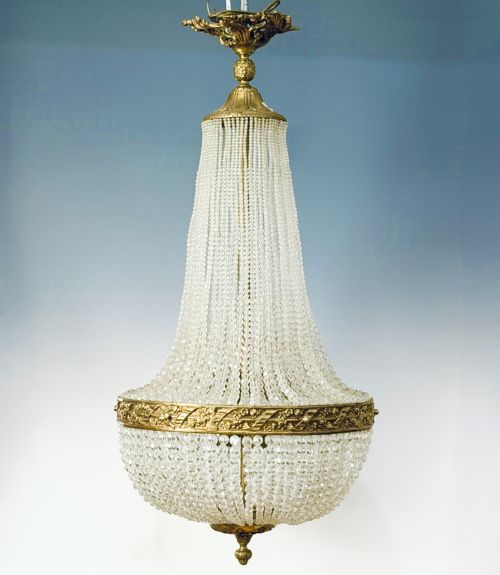
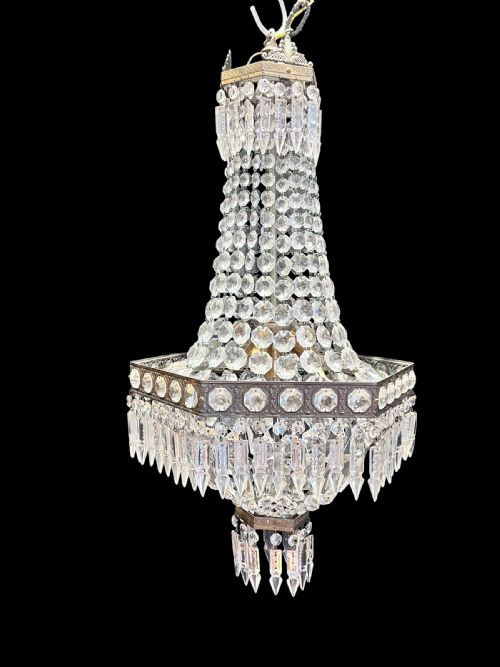
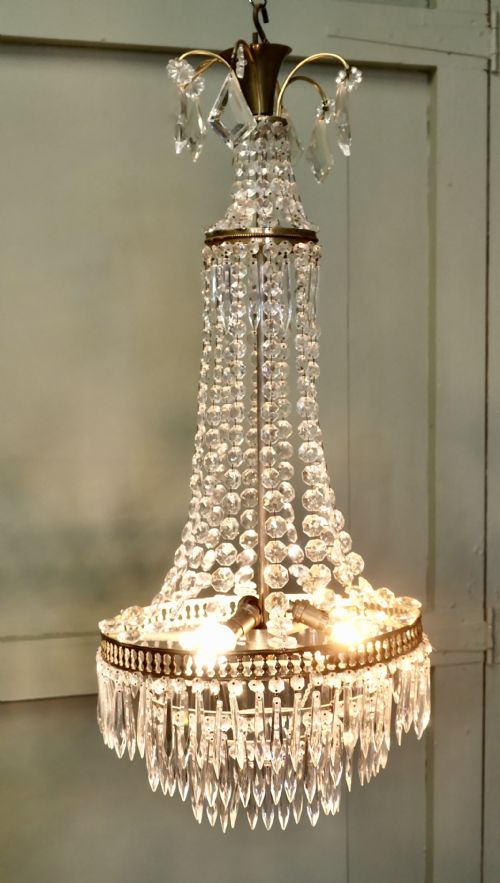
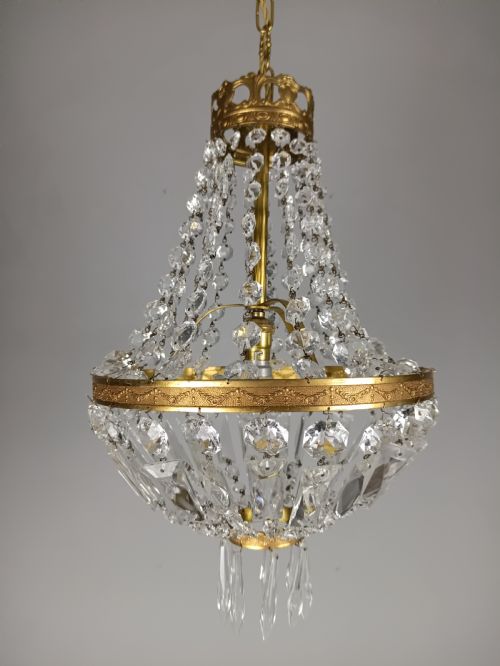
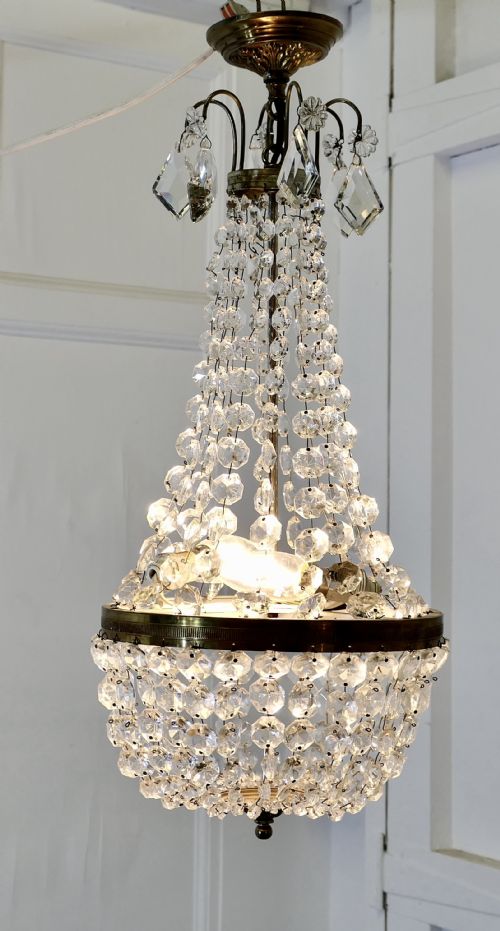
The form typically combines a conical tent top of strung beads leading down to a lower basket shape filled with cut glass or crystal drops. Wall lights and single-light or multi-light chandeliers dominate the selections, offering both prominent ceiling centrepieces and matching sconces.
Originating predominantly from French traditions, these fixtures utilise classical silhouettes that merge structural brass or gilt bronze frames with intricate glass arrangements. Buyers encounter various interpretations of the empire style, ranging from simple brass and glass constructions to elaborate waterfall and bag chandeliers.
How they were made
The construction relies heavily on combinations of brass, gilt bronze, and metal frames that support intricate networks of glass and crystal. Artisans strung small beads to form the characteristic upper tent shape above the lower basket.
Cut glass and cut crystal elements refract light through precise faceting, suspended carefully from the underlying metal framework. The integration of jasperware in certain pieces introduces ceramic detailing alongside traditional metalwork and glass components.
Empire Tent Basket Light Retail Price Guide 2026
Typical asking prices for empire tent basket light among the pieces listed under this phrase on Sellingantiques today, from the lower quarter to the upper quarter. They describe what is for sale here now, not the wider market.
One unexpected chandelier managed to incorporate Wedgwood jasperware into its classical frame, proving that even lighting makers enjoyed a spot of pottery.
What varies in quality
The refinement of the metalwork distinguishes finer examples, particularly where gilt brass or gilt bronze displays crisp casting and careful finishing. Heavier structural framing provides durability and maintains the precise geometry required for the tent and basket silhouette.
The grade of the glass and crystal creates noticeable differences in overall brilliance, with deeply cut facets producing sharper light refraction than plain pressed glass. Complete assemblies retaining their original strung bead configurations and matching crystal drops represent a higher standard of preservation.
The Empire Tent Basket Light Glossary
- Tent
- The upper conical section of strung glass beads that stretches upward from the main frame to the ceiling fitting. This configuration defines the classic empire profile.
- Basket
- The lower bowl-shaped section of a chandelier filled with hanging crystal drops and beads. It sits directly beneath the tent.
- Waterfall
- An arrangement of crystal drops that flows downward in overlapping tiers, mimicking cascading water. This feature adds vertical movement to the fixture.
- Gilt Bronze
- Bronze metal coated with a thin layer of gold or gilt finish, often seen in nineteenth-century French lighting. It provides a warm, enduring metallic lustre.
- Jasperware
- A type of fine stoneware developed by Wedgwood, featuring contrasting coloured reliefs applied to a solid background. It appears occasionally on specialised chandelier bodies.
Empire Tent Basket Light: Frequently Asked Questions
What is an empire tent basket light?
An empire tent basket light is a classical French-style lighting fixture featuring a conical upper tent of strung beads and a lower basket filled with crystal drops.
These chandeliers and wall lights combine brass, gilt bronze, and cut glass to create formal illumination inspired by Regency and Empire designs.
How were these chandeliers used historically?
These fixtures provided ambient illumination in formal drawing rooms, dining spaces, and grand halls during the nineteenth and early twentieth centuries.
Their reflective crystal elements maximised the impact of early lighting sources by scattering candle or gaslight across the room.
How do I live with one?
Hanging an empire tent basket light requires careful attention to ceiling height, as the cascading drops and lower baskets demand adequate clearance.
Pairing these fixtures with dimmer controls allows you to adjust the light output and fully appreciate the sparkle of the cut crystal.
How can I tell the periods apart?
Nineteenth-century examples often feature heavier gilt bronze frames and hand-cut crystal elements reflecting earlier manufacturing techniques.
Pieces from the early twentieth century frequently adopt lighter brass constructions while maintaining the traditional French Empire aesthetic.