


Empire Style Lamp Base
An empire style lamp base brings formal classical structure and rich metalwork into a room, offering weight and presence where modern lighting falls flat.
Empire Style Lamp Base
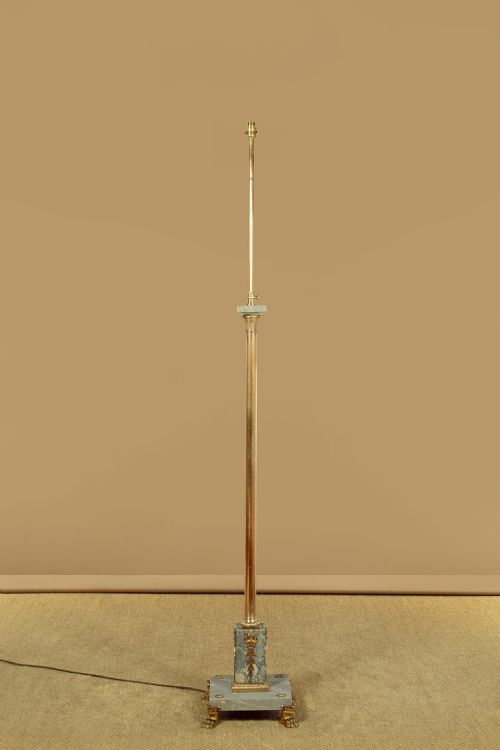
An empire style lamp base draws on classical antiquity and the Napoleonic era, manifesting chiefly as table lamps and occasionally as floor lamps. The selection centres heavily on nineteenth-century examples and later revivals, capturing the grand architectural vocabulary of the period.
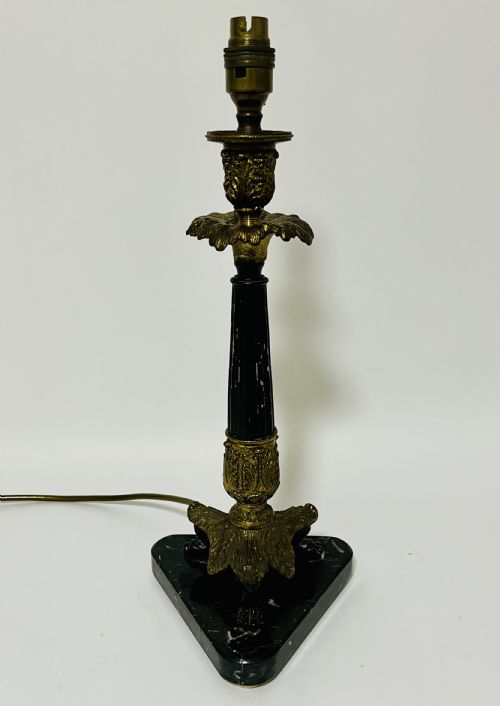
Makers configure these bases using column forms, urn shapes, and figural supports, often pairing them with matching side tables or gueridons in the broader listings. You encounter works rendered in brass, bronze, patinated metal, and marble, reflecting both strict French Empire design and subsequent revivals.
The aesthetic relies on symmetry, strict proportion, and historical motifs such as classical masks, rams' heads, and laurel wreaths. These pieces anchor a room's lighting scheme with an unmistakable historical authority.
What varies in quality
The integration of materials dictates overall success, seen where marble bases fit flush against metal collars without visible gaps or poor adhesives. Proportion and balance also vary, with superior pieces maintaining architectural harmony across the column, urn, and plinth.
Listings demonstrate a strong presence of nineteenth-century French manufacture, alongside twentieth-century revivals utilising marble, bronze, and toleware.
The Empire Style Lamp Base Glossary
- Ormolu
- Gilt bronze produced by applying a mercury and gold amalgam to cast bronze before heating. This technique creates a durable, deep golden finish characteristic of high-end French metalwork.
- Gueridon
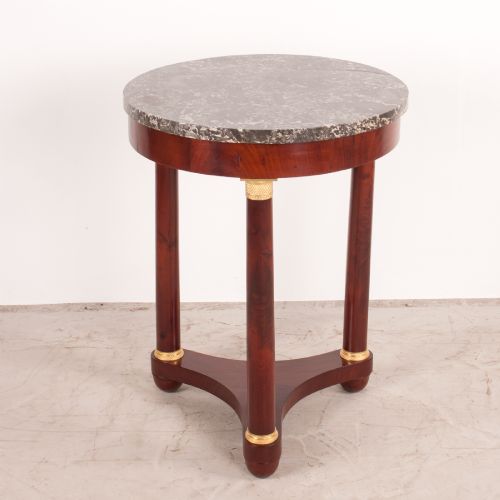
- A small round table, often with a central pillar, frequently adapted or associated with the placement of these lighting forms in period interiors.
- Tole Peinte
- Painted sheet metal used to construct lamp bodies and shades, offering a smooth dark surface that contrasts sharply with bright brass mounts.
- Classical Column
- An architectural support form adapted for lamp shafts, featuring fluted sides and classical capitals borrowed from ancient Greek and Roman orders.
Empire Style Lamp Base: Frequently Asked Questions
What defines an empire style lamp base?
These bases draw directly from classical antiquity and nineteenth-century French design, utilising heavy bronze, brass, and marble materials. They frequently incorporate architectural column shapes, urns, and distinct decorative motifs.
Craftsmen often combined patinated metal with gilt highlights to create formal, symmetrical lighting fixtures designed to command attention in a room.
How do I date an empire style lamp base?
Dating relies on examining the casting quality, the composition of the metal, and the method of assembly. Nineteenth-century examples often display hand-chased details and heavy cast bronze components.
Later revivals from the early twentieth century may utilise different wiring channels, machine-turned fittings, or softer brass alloys while retaining the same classical vocabulary.
Where should I place a tall bronze lamp base?
These substantial fixtures suit rooms with traditional furniture, such as heavy mahogany side tables, desks, or gueridons. Their physical weight requires stable surfaces capable of supporting tall columns and urns.
They function effectively as reading lights on sturdy side tables or as sculptural focal points on sideboards and pedestals.
Are these lamps usually wired for modern use?
Most antique bases have undergone rewiring at various points in their long histories to comply with contemporary electrical standards. Dealers frequently update flex and lamp holders while preserving the original metal body.
Buyers should inspect the internal wiring path to ensure the historic metal components remain protected from modern electrical fittings.