



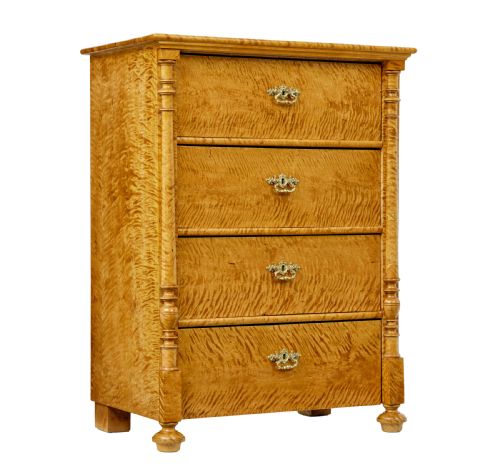

Empire Style Dresser
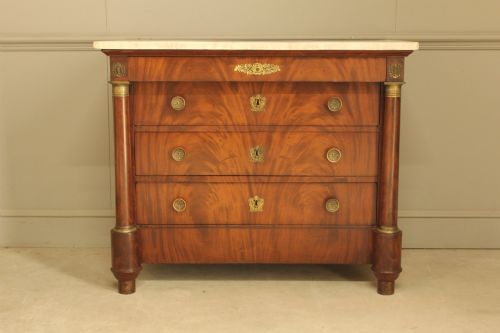
These empire style dresser examples combine architectural mahogany, birch, or walnut carcases with striking brass and ormolu mounts for a commanding neoclassical presence.
Empire Style Dresser
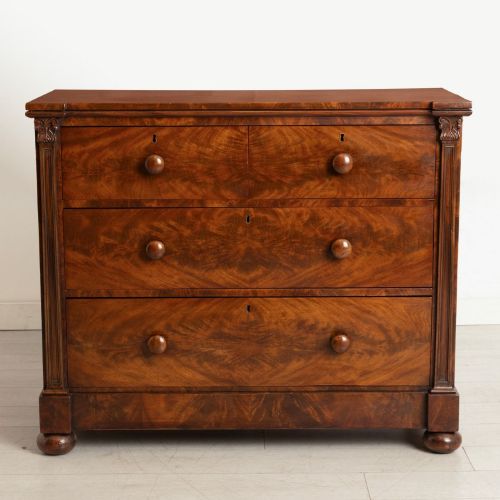
An empire style dresser typically takes the form of a commode or chest of drawers designed with the restrained geometry of the nineteenth century. The examples on this page span the nineteenth century and 1920, originating from French and Swedish workshops.
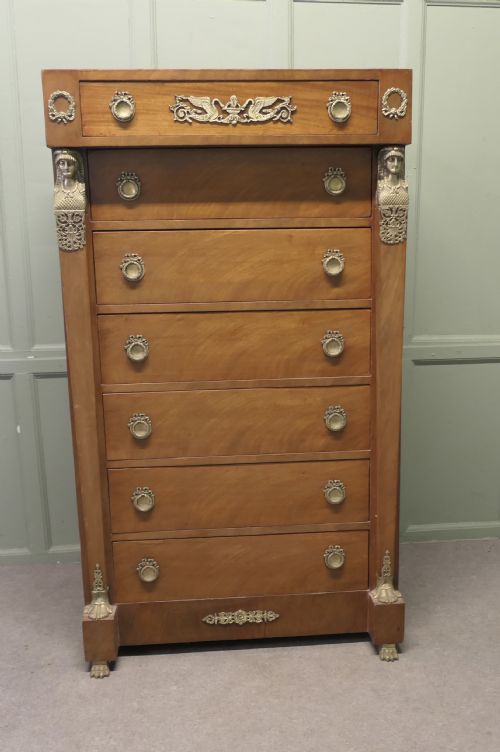
Buyers will encounter French commodes alongside Swedish empire revival birch chests of drawers, often featuring classic upright proportions. Console tables also appear within this design vocabulary, sharing the characteristic classical ornamentation of the period.
Materials and construction
Cabinetmakers utilised dense timbers including mahogany, rosewood, walnut, and tiger birch to build the structural carcases. Rich veneers were carefully laid across the drawer fronts to highlight the natural grain patterns of the wood.
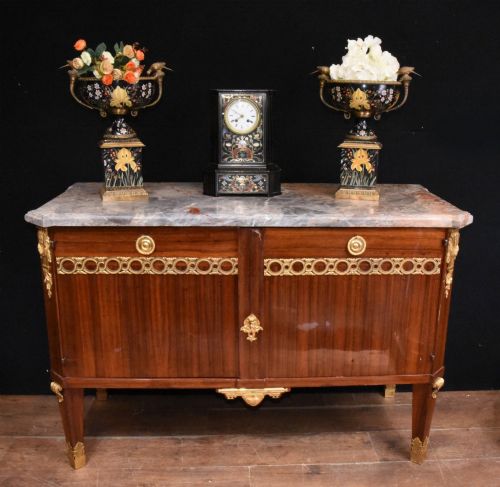
Surface detailing relied heavily on cast brass, ormolu, and gilt bronze mounts applied to corners, escutcheons, and feet. Many pieces are completed with heavy marble or fossil marble tops that provide a durable and contrasting working surface.
Empire Style Dresser Retail Price Guide 2026
Typical asking prices for empire style dresser among the pieces listed under this phrase on Sellingantiques today, from the lower quarter to the upper quarter. They describe what is for sale here now, not the wider market.
Current listings feature pieces spanning the nineteenth century and 1920, utilising mahogany, birch, walnut, rosewood, marble, and ormolu.
Judging quality and execution
The sophistication of the cast brass and ormolu mounts separates standard production from finer cabinetmaking. Crisp chisel work on the bronze elements indicates a higher tier of workshop output.
The selection and bookmatching of timber veneers across the drawer fronts dictate visual harmony. Superior examples display seamless grain continuity and well-chosen marble or fossil marble slabs fitted precisely to the carcase.
The Empire Style Dresser Glossary
- Ormolu
- Gilded bronze used for decorative mounts and furniture fittings. This technique gives metallic highlights that contrast sharply with dark mahogany and rosewood surfaces.
- Commode
- A low chest of drawers, often of French origin. These pieces typically feature deep lower drawers and a stone top.
- Fossil marble
- Limestone containing distinct organic fossils, polished to form a decorative tabletop. It adds considerable weight and a cool tactile quality to the chest.
- Paw foot
- A carved or cast foot shaped like an animal's paw. This neoclassical motif frequently anchors the corners of nineteenth-century case furniture.
- Empire Revival
- A later nineteenth-century aesthetic movement that revived the formal classical styles of the early eighteen hundreds. Furniture from this period reinterprets original French and Swedish motifs using native timbers like birch.
Empire Style Dresser: Frequently Asked Questions
What is an empire style dresser?
These pieces are nineteenth-century chests of drawers and commodes built to classical architectural proportions. They are defined by flat surfaces, minimal carved ornamentation, and prominent metal mounts.
Cabinetmakers constructed them primarily in mahogany, walnut, rosewood, and birch. Many include contrasting marble tops and distinctive paw feet.
Where were these chests made?
The pieces recorded here originate predominantly from French and Swedish workshops. French examples often feature rich mahogany and ormolu, while Swedish pieces frequently showcase birch veneers.
Both regional traditions adhere to the formal neoclassical design language of the period. This shared vocabulary spans the nineteenth century and into the early twentieth century.
How do I care for marble tops?
Marble and fossil marble surfaces require gentle cleaning with warm water and a soft cloth to avoid scratching the polished stone. Acidic liquids should be kept away from the stone to prevent surface etching.
The heavy stone simply rests upon the wooden carcase, so care must be taken during relocation. Periodic waxing of the surrounding timber will protect the veneer without affecting the stone.
How do I tell French and Swedish pieces apart?
French examples generally lean towards dark timbers such as mahogany and walnut, paired with gilt bronze mounts and fossil marble tops. They frequently take the form of formal commodes.
Swedish pieces often utilise light birch and tiger birch timber within an empire revival framework. The focus shifts toward the pale grain of the wood rather than heavy metallic contrast.