





Empire Display Bookcase
An empire display bookcase brings neoclassical grandeur into a room, combining architectural presence with visible storage for books and treasured objects.
Empire Display Bookcase
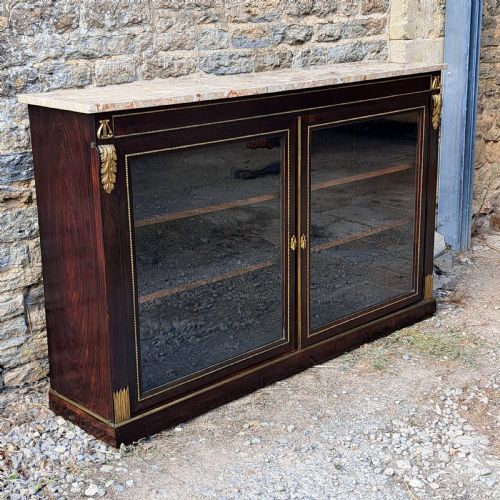
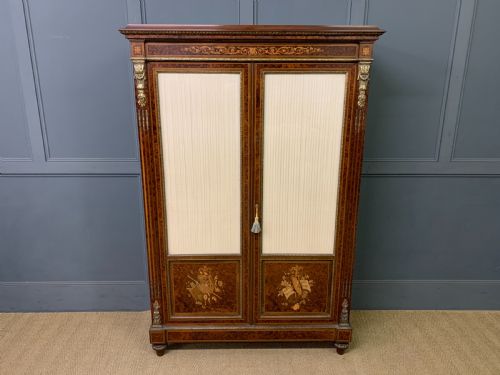
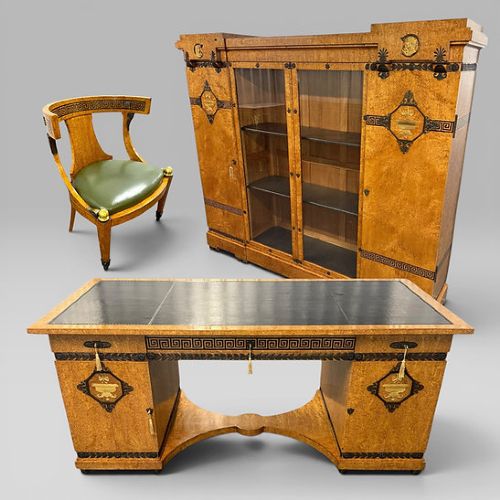
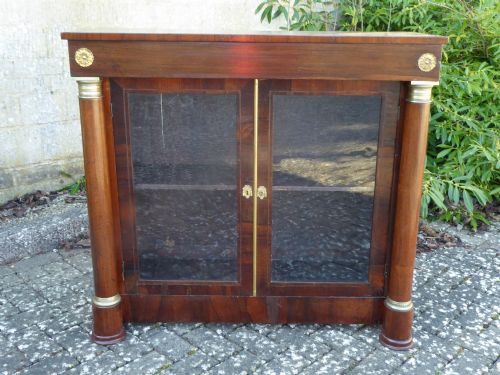
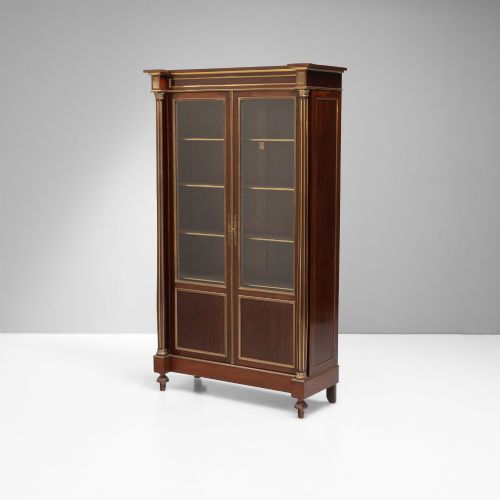
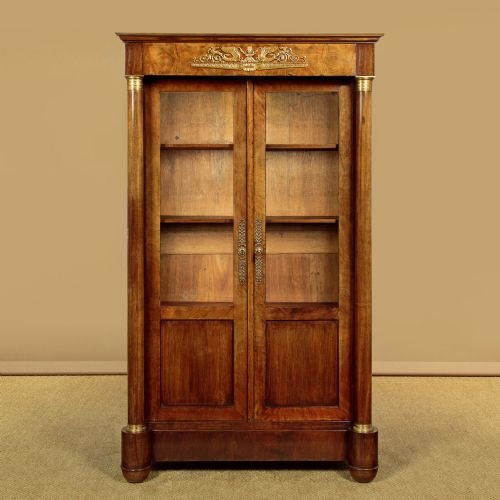
When you search for an empire display bookcase, you encounter substantial freestanding furniture pieces designed to house volumes while exhibiting decorative items behind glass or within open shelving. These pieces draw heavily on French Empire, Regency, and Napoleon III traditions, originating primarily across the nineteenth century through the early twentieth century.
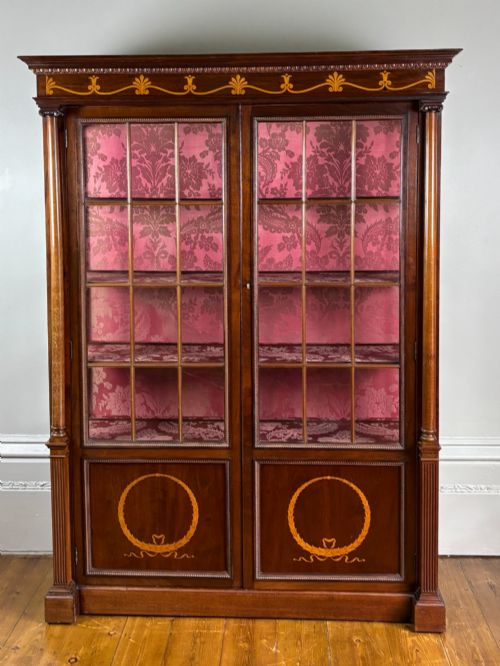
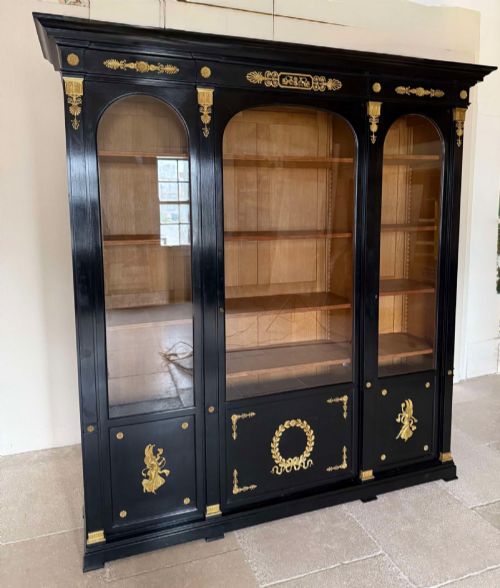
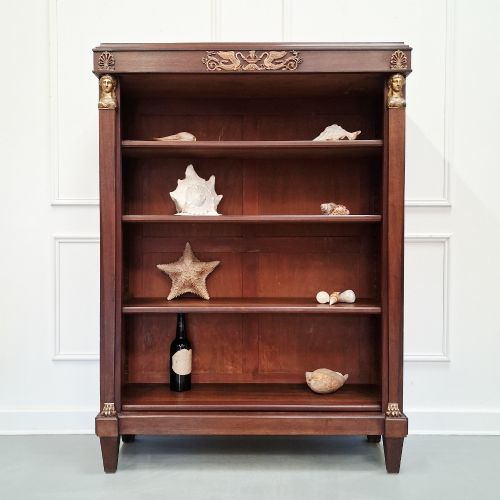
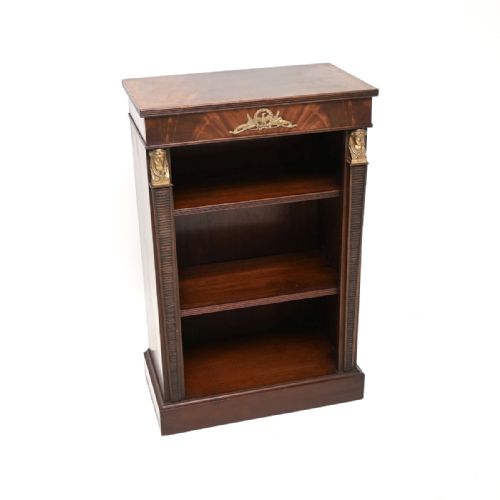
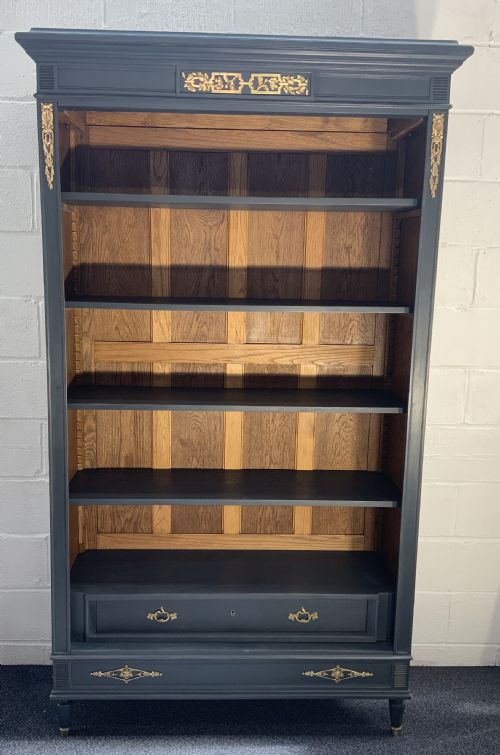
The forms on this page range from tall mahogany library pieces and glazed vitrines to ebonised cabinets and open shelving units with classical proportions. Many examples incorporate glazed doors or open bays to display collections, reflecting the formal interior requirements of grand libraries and reception rooms from the period.
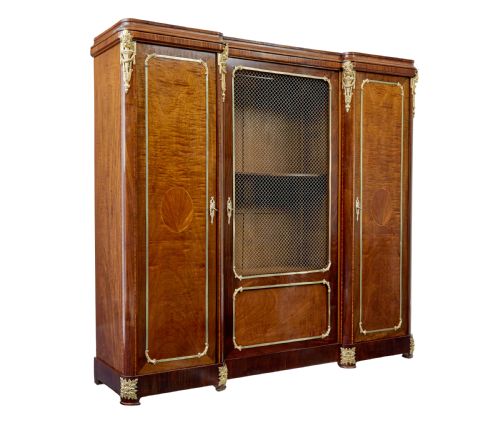
Geographic and stylistic influences lean strongly toward French neoclassical design, alongside English Georgian and Regency interpretations. Buyers meet both grand statement items in figured mahogany and smaller scale pieces finished in satinwood, burr maple, or ebonised wood.
Materials and Construction Techniques
Cabinet makers utilised dense timber carcases of mahogany, rosewood, burr maple, and satinwood, often enhanced by ebonisation or painted finishes. These foundational woods provided the necessary strength to support heavy rows of books and tall glazed doors without warping over decades.
Surface ornamentation relied heavily on cast and gilt ormolu mounts, brass stringing, and gilt metal details applied along cornices, pilasters, and door frames. Glazed panels were fitted into timber frames to protect the contents while maintaining visual lightness in formal rooms.
Marquetry and inlay techniques, such as boulle work incorporating tortoiseshell and brass, appear on select pieces to create intricate surface patterns. Structural integrity was maintained through traditional joinery, accommodating the weight of marble tops and substantial timber cornices.
Empire Display Bookcase Retail Price Guide 2026
Typical asking prices for empire display bookcase among the pieces listed under this phrase on Sellingantiques today, from the lower quarter to the upper quarter. They describe what is for sale here now, not the wider market.
Periods represented span from Georgian and Regency eras through the nineteenth century into early twentieth-century Empire revival pieces.
Distinctions in Quality
The standard of ormolu mounts and brass embellishments largely dictates the distinction between standard production and exceptional craftsmanship. Finely chased bronze mounts with sharp, crisp detailing indicate a workshop of higher standing than simpler, cast-metal alternatives.
Timber selection and grain matching reveal the care invested by the original maker. The use of highly figured mahogany, plum pudding mahogany, or burr maple across primary facades creates a cohesive, rich visual depth that plain timber carcases lack.
Proportion and architectural harmony define the superior pieces in this category. Cabinets that balance their classical columns, plinths, and cornices with refined joinery and undamaged original glass demonstrate superior design integrity.
Mercier Frères
The Empire Display Bookcase Glossary
- Ormolu
- Gilded bronze ornamentation applied to furniture. This technique was widely used in French Empire design to highlight structural lines and corners.
- Napoleon III
- A nineteenth-century French revival style incorporating eclectic influences, ebonised surfaces, and boulle marquetry. It frequently reinterprets earlier Empire motifs with rich decorative flair.
- Vitrines
- Display cabinets featuring glass panels designed to exhibit porcelain, books, or curiosities. They protect contents from dust while allowing full visibility.
- Ebonised
- Wood finished to resemble ebony, typically through staining or painting. This treatment was favoured in the nineteenth century to create a dramatic, high-contrast backdrop for gilt mounts.
- Boulle Marquetry
- An elaborate inlay technique using brass and tortoiseshell arranged in intricate patterns. It appears on high-status nineteenth-century French bibliotheques.
Empire Display Bookcase: Frequently Asked Questions
What is an empire display bookcase?
An empire display bookcase is a large neoclassical cabinet designed for storing books and exhibiting decorative objects. These pieces originate mainly from the nineteenth century and draw on French Empire and Regency styles.
They feature architectural elements such as columns, pilasters, and ormolu mounts, combining enclosed shelving with glass doors or open bays to suit formal interiors.
How do I identify a French Empire style piece?
French Empire style furniture is characterised by strict symmetry, classical architectural proportions, and dark woods like mahogany. Look for prominent ormolu mounts depicting classical motifs, military trophies, or floral patterns.
These pieces often include restrained decorative carvings that emulate ancient Roman and Greek design principles, maintaining a dignified and substantial visual weight.
Were these bookcases used only for books?
While originally built for substantial private libraries, many variations incorporate glazed or open display sections specifically for porcelain, sculpture, and scientific instruments. The combination of shelving and vitrine space served scholars and collectors alike.
Over time, owners adapted them to display curated collections alongside bound volumes in drawing rooms and studies.
How do I care for a mahogany and ormolu cabinet?
Maintain timber surfaces by dusting regularly with a soft, dry cloth and applying traditional beeswax sparingly to preserve the grain. Avoid chemical cleaners or direct sunlight, which can dry out rosewood, mahogany, and maple veneers.
Ormolu mounts require careful dusting without abrasive polishes to protect the original mercury or fire gilding from wear.